Why do Korean idols look like they’ve just finished a twelve-hour dance practice yet their skin still catches the light with the clarity of a freshly washed window? If you’ve spent your budget on the latest cushion foundations and "glass skin" primers, only to end up looking like you’ve applied a thick, unflattering mask, you aren’t alone. The disconnect isn’t in your products—it’s in the philosophy of the application.
K-pop makeup is not about coverage; it is about architecture. In the elite salons of Cheongdam-dong, the "no-makeup" look is the most technically demanding performance on a performer’s face. It is a calculated, multi-layered structural feat designed to survive stage heat, high-definition cameras, and the brutal schedule of a comeback season.
Key Takeaways * Micro-Layering: Professionals use metal spatulas to apply foundation in microscopic, uniform films, preventing the cakiness of Western heavy-coverage techniques. * Incremental Setting: The "sweat-proof" durability of idol makeup comes from spraying setting mist between every single step—primer, foundation, concealer, and powder. * Selective Mattification: Glass skin is not "all-over glow"; it is a balance where strategic areas like smile lines and brow bones are precisely mattified to define features without losing radiance.
The Metal Spatula and the Myth of the Sponge
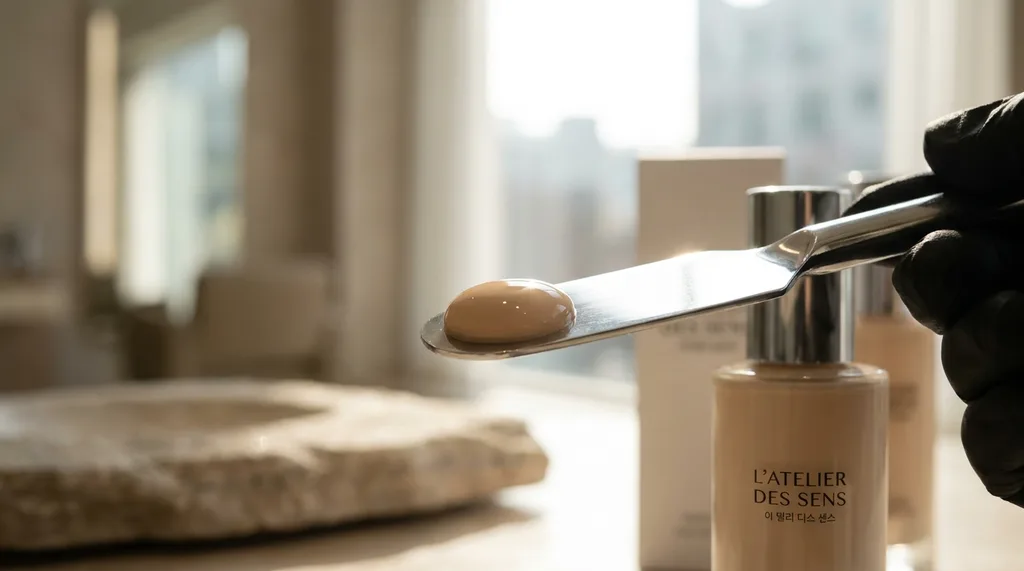
The most jarring sight in a Cheongdam-dong salon is not a high-tech machine, but a simple, thin metal spatula. While the rest of the world debates which beauty sponge absorbs the least product, the pros have abandoned sponges for the base layer entirely.
A metal spatula allows an artist to scoop a tiny amount of foundation and "spread" it across the skin like butter on toast. By flattening the product into a microscopic, uniform layer, you aren't piling pigment on top of your pores; you are creating a sheer, second-skin film. When you use a sponge, you are essentially pushing texture into your pores. When you use a metal tool, you are glazing the surface.
Pro Tip: If you want that idol-level translucency, pick up a stainless steel spatula. Apply the foundation to the back of your hand, coat the edge of the spatula, and swipe it onto your cheek. Only then, use a dry, firm cushion puff to gently press the edges. The key is the press, not the wipe.
The Incremental Setting Technique
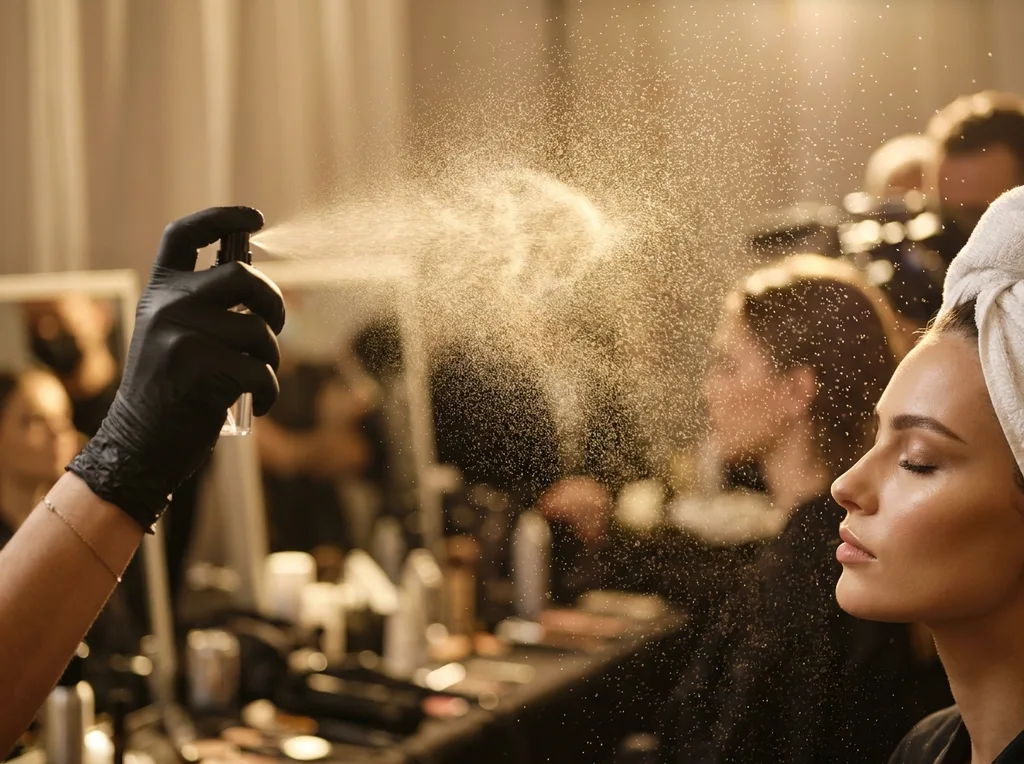
If you’ve ever wondered why your makeup slides off by lunch while an idol’s stays pristine through three costume changes, look at your setting spray. Most people use it once—at the very end. This is a fatal error in the humidity-drenched world of Seoul’s music stages.
Artists use a technique called "incremental setting." They spray a fine mist between the primer and the foundation. Then, they spray after the foundation is pressed in. They spray again after the concealer is spotted on. By building a sandwich of setting mist and pigment, they create a flexible, sweat-resistant "cage" around each layer. It doesn't just lock the makeup in; it seals the hydration in, keeping the skin looking chok chok (moist) without becoming greasy.
🎵 K-Mono Lofi — Seoul Study Beats
Read deeper with Seoul lo-fi in the background — curated by K-Mono Lofi
Strategic Mattification: The Art of Sculpting
There is a pervasive belief that "glass skin" means your entire face should be glossy. Walk into any major studio in Apgujeong, and you’ll see the exact opposite.
The idol glow is an illusion created by strategic contrast. If the whole face is shiny, the camera sees a flat, greasy surface. If only the cheeks and the center of the forehead catch the light, the face looks three-dimensional. Professionals use a small, dense powder puff to press fine-particle pressed powder only into the "danger zones": the sides of the nose, the corners of the mouth, and the area just under the brow bone.
By mattifying the brow bone, they create a soft, youthful shadow that makes the eyes pop. High-shine brow bones are often perceived as a "heavy" or "masculine" contouring trait in Korean aesthetics. By keeping the brow bone matte and the eyelid center sparkling, they achieve that signature "doll-eye" dimension that looks effortless, but is actually a masterpiece of selective light control.
The Evolution of the Lash
Stop reaching for the full-strip lash. The "idol eye" is almost exclusively built strand-by-strand. Whether it's a cat-eye flick or a wide-eyed "puppy" look, pros use individual clusters, placing them precisely where the natural lash is sparse.
They don't glue them to the skin—they glue them to the base of the natural lashes, waiting exactly ten seconds for the adhesive to become tacky. This creates a weightless, fluttering appearance that moves with the eye, rather than a stiff, heavy strip that sags at the corners after a few hours of wear.
The Hidden Cost of the "Perfect" Look
We must talk about the cost of this perfection. While the results are stunning, the layering process is aggressive. The skin is being constantly prepped, sprayed, powdered, and wiped clean with heavy-duty oil cleansers at the end of the day. Many idols deal with significant barrier compromise during promotional periods. If you choose to adopt these techniques, your skincare routine cannot be an afterthought—it must be an armor. You must prioritize barrier-strengthening ingredients like ceramides and centella asiatica to prevent the "makeup fatigue" that often plagues those who wear full stage-level coverage daily.
This article may contain affiliate links — if you buy through them, we may earn a small commission at no extra cost to you.
⚠️ Disclaimer: The beauty techniques described here are professional methods for stage and media and may involve heavy layering that is not suitable for all skin types. Always patch-test new products, and if you have acne-prone or sensitive skin, consult with a dermatologist before adopting high-coverage, multi-step makeup regimens. Consistent use of heavy cleansers to remove stage-grade makeup can lead to barrier disruption; ensure your routine includes adequate soothing and restorative care.
✓ Researched and compiled using verified data as of the publication date.
 Written by Jun Mi Jung for Quiet Korea | Contact: rsl.2001.1975@gmail.com
Comments
Post a Comment