[Haul & Commerce Review] K-Idol Salon
Walk into any high-end salon in Cheongdam-dong at 6:00 AM, and you won’t find a frantic search for the thickest, most pigmented concealer. Instead, you’ll witness a ritual of intense, almost surgical preparation. Before a single drop of foundation touches an idol's face, the skin is treated like a delicate ecosystem. It is cooled, saturated, and calmed. This is the secret that most global enthusiasts miss: the idol look isn't built on top of the skin—it is built into the hydration levels beneath it.
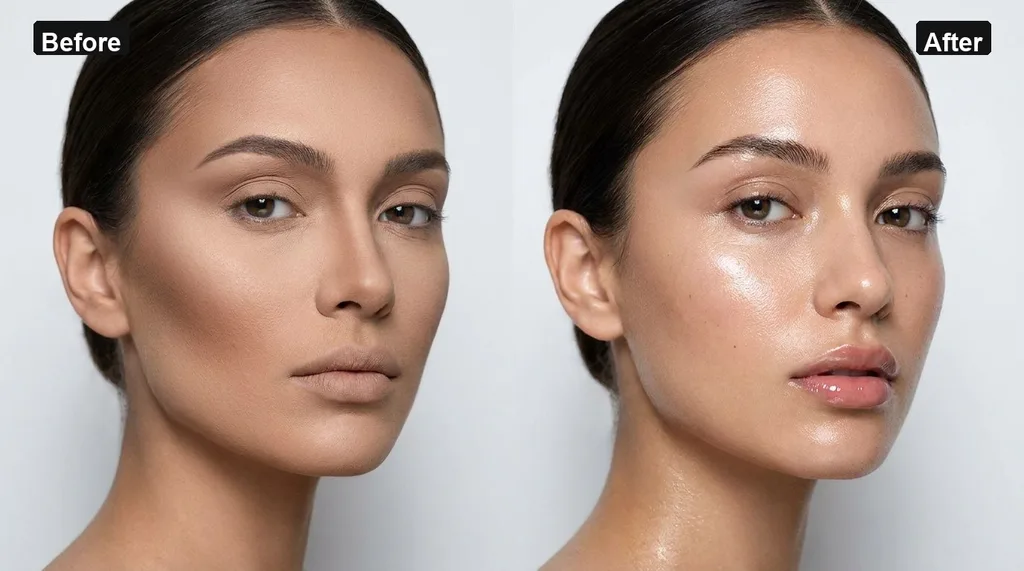
Key Takeaways * K-Idol makeup relies on the concept of Hwajalmeok (makeup-friendly skin), prioritizing skin temperature management and deep moisture over heavy pigment. * Glass skin is not a texture created by surface-level oils, but a result of multi-molecular hyaluronic acid layering that locks in hydration without oxidative stress. * Professional artistry focuses on "dimensional sculpting" through light reflection rather than the heavy, structural contouring common in Western beauty standards.
The Myth of Heavy Sculpting
The most common mistake for those trying to replicate the K-Pop aesthetic is the reliance on "Western-style" contouring. Heavy bronzers and sharp, grey-toned shadows are the death of the Mul-gwang (water-glow) finish. In the Cheongdam-dong studio, the goal is to make the face look "translucent"—as if the skin is a light-transmitting membrane.
When you carve out sharp cheekbones with heavy pigment, you disrupt this light flow. Instead, professional artists use subtle color correctors to neutralize redness or dullness, letting the skin's natural architecture show through. The "sculpting" is done with light, not shadow.
How Hyaluronic Acid Actually Works
The science of the idol glow is anchored in molecular biology. High-molecular-weight hyaluronic acid creates a breathable film on the stratum corneum, preventing the transepidermal water loss that causes makeup to oxidize or separate under hot stage lights. Meanwhile, low-molecular-weight hyaluronic acid penetrates deeper into the dermis to stimulate collagen support.
🎵 K-Mono Lofi — Seoul Study Beats
Read deeper with Seoul lo-fi in the background — curated by K-Mono Lofi
The Local Intelligence: Why Cooling Matters
In Seoul, you’ll see artists using toner pads not just for hydration, but for thermal management. When skin temperature rises, the sebaceous glands go into overdrive, leading to the dreaded "makeup breakdown." By applying chilled toner pads, the skin is brought to an optimal baseline temperature—a crucial step for Hwajalmeok. This is why, if you walk into any Olive Young, you will see toner pads dominating the shelves. They are the essential tool for the "fruit-juice" (Gwajeup-sang) look, ensuring the skin remains firm and the pores appear minimized before any color is applied.
Frequently Asked Questions
Can I use heavy contouring if I want the glass skin look? It is difficult to achieve both. Glass skin relies on light reflection; heavy, powdery contouring absorbs light and adds texture. Try using a shade just slightly darker than your skin tone in a cream formula instead.
How long does it take to see the effects of skin-prep? You will notice the immediate effect on makeup application—what we call Hwajalmeok—the very first time you properly cool and hydrate your skin before applying base products.
Why does my makeup still separate even after using a primer? Often, separation is caused by a moisture-oil imbalance. If your skin is parched, it will pull the moisture out of your foundation, leaving behind the pigments. Ensure your skin barrier is fully saturated with humectants before applying a long-wear base.
⚠️ Disclaimer: The information provided here is for educational purposes based on professional cosmetic practices in Seoul. It does not replace advice from a board-certified dermatologist. Always patch-test new products to check for allergic reactions, and consult with a specialist if you have chronic skin conditions.
This article may contain affiliate links — if you buy through them, we may earn a small commission at no extra cost to you.
✓ Researched and compiled using verified data as of the publication date.
 Written by Jun Mi Jung for Quiet Korea | Contact: rsl.2001.1975@gmail.com
Comments
Post a Comment