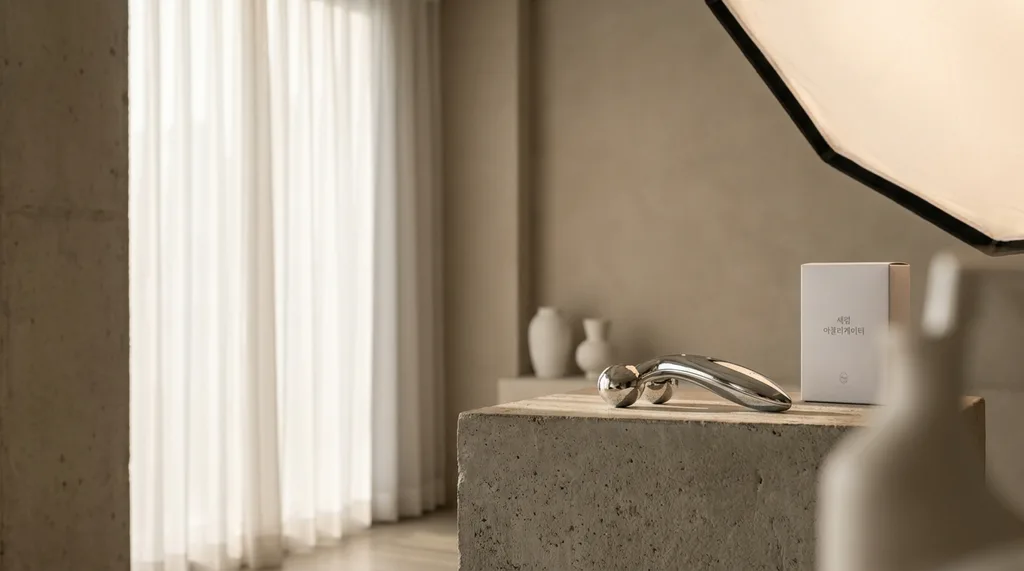
If you have ever stood before a mirror in London, New York, or Paris, attempting to replicate the "glass skin" look you saw on a K-pop performance video, you have likely encountered a frustrating wall. You have the cushion foundation, the subtle gradient lip, and the precision-placed under-eye shimmer. Yet, when you look back at your reflection, it doesn't look like an idol’s face. It looks like makeup sitting on top of skin.
The crack in that perception is simple: you are treating Korean beauty as a product category, while the industry treats it as a structural challenge.
In the elite salons of Cheongdam-dong, where the visuals for the world’s biggest stars are crafted, the philosophy is not to "apply" makeup, but to "engineer" a resilient, transparent film. They are not hiding the skin; they are modulating how the skin reflects light. If your makeup looks like makeup, it is because you are using Western techniques—concealing and sculpting—to achieve a Korean outcome, which relies entirely on revealing and enhancing.
Key Takeaways * Korean idol makeup focuses on "ultra-thin layering" rather than high-coverage foundation, using metal spatulas to prevent caking. * Strategic mattification—applying powder only to specific zones like the sides of the nose—is the true secret to preserving a youthful, radiant glow. * "Idol lashes" are built strand-by-strand to mimic natural growth, rather than relying on the heavy, uniform weight of a full-strip lash.
The Architecture of the Idol Base
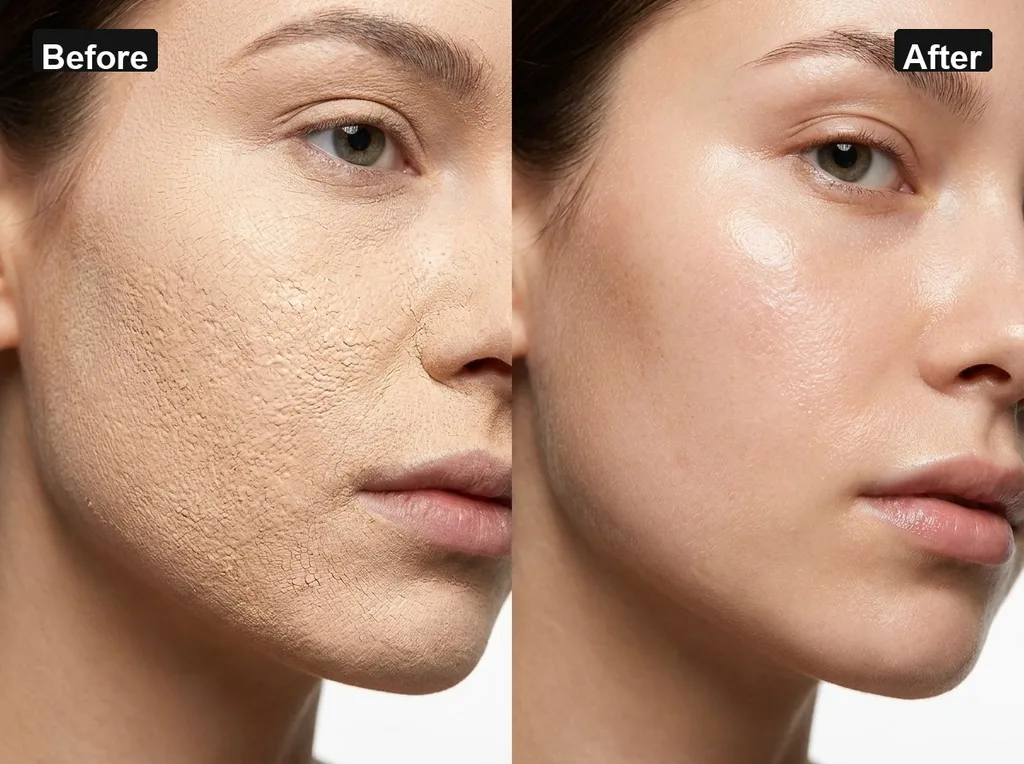
Walk into any top-tier salon in Seoul, and you will not see an artist grabbing a sponge and dabbing away. You will see a metal spatula. This is not a gimmick; it is an exercise in physics. By using a flat-edged metal tool, artists can press an infinitesimally thin layer of foundation onto the skin, ensuring the pigment fills the pores rather than bridging over them.
When foundation is applied with a sponge, you are effectively applying a wet blanket. When applied with a spatula, you are creating a second skin.
This is the foundation of the Ssaeng-eol (bare face) aesthetic. It is a masterclass in control. Once this micro-layer is in place, it isn't set with a single blast of spray at the end of the process. Instead, professionals employ "layered setting." They spray the skin after the foundation, after the concealer, and again after the powder. This creates a flexible, sweat-proof film that moves with the muscles of the face—vital for idols who must dance, sweat, and remain flawless for hours under high-intensity stage lighting.
🎵 K-Mono Lofi — Seoul Study Beats
Read deeper with Seoul lo-fi in the background — curated by K-Mono Lofi
Selective Mattification: The Hidden Sculpt
Western makeup culture has spent the last decade obsessed with contouring—carving out cheekbones and sharpening the jaw. But look closely at your favorite idol. Do you see harsh lines? Rarely.
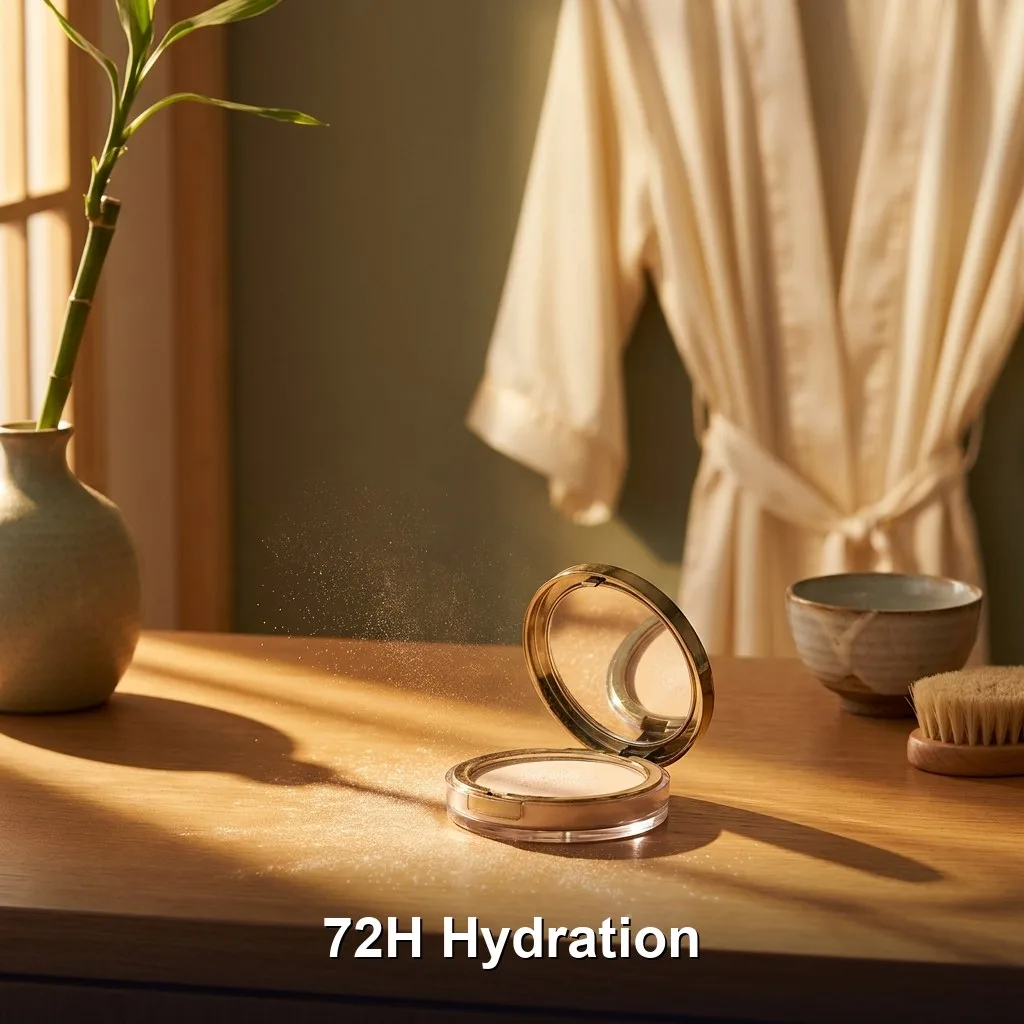
The secret is selective mattification. High-shine brow bones or a greasy chin can read as masculine or unkempt. By using a fine-particle pressed powder on only the brow bone, the sides of the nose, and the smile lines, artists create a "soft focus" effect. It leaves the center of the cheeks and the bridge of the nose free to catch the light. This contrast creates dimension without a single streak of bronzer. It is the art of the Eum-nyeong (shadowing) makeup, where the goal is for the observer to wonder if you’ve worn any makeup at all.
The Lash Evolution
Perhaps the most jarring difference between a stage-ready idol and a home-styled enthusiast is the lashes. If you are using a full-strip lash, you are creating a shelf above your eye that casts a shadow and drags the eye shape downward.
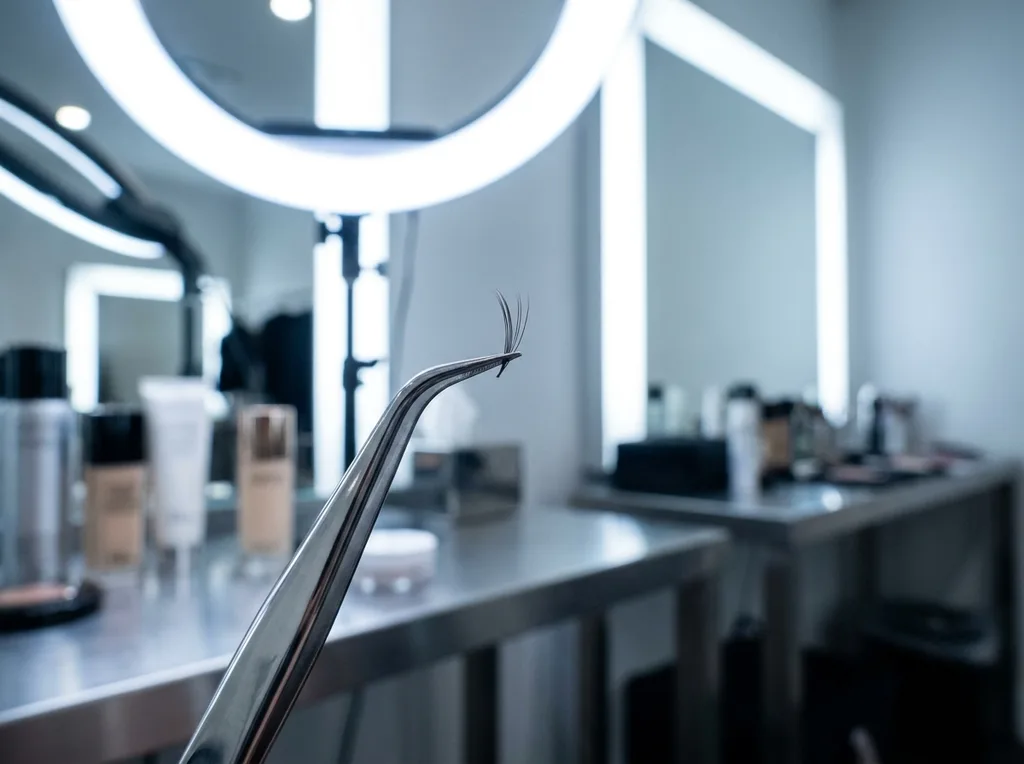
The "Idol Lash" is built from individual strands. Artists place these with surgical precision from the center of the eye outward, following the natural growth pattern of the lashes. This allows the MUA to open the eye, elongate the shape, or create a "doll-eye" effect that looks like a biological anomaly rather than a craft-store accessory. It is the ultimate expression of Ppali-ppali (quick-quick) culture—the speed of the industry is matched only by the extreme, meticulous patience required for these details.
Frequently Asked Questions
Can I achieve an idol-like base without professional tools? Yes. While a metal spatula is the professional standard, you can achieve a similar effect by using a very dense, flat-top synthetic brush to buff the foundation into your skin in thin, light layers. The key is to start with less product than you think you need and slowly build up.
Why does my highlighter look textured compared to an idol's? Highlighters often emphasize texture because they are packed with large shimmer particles. Professionals look for "bake beams" or balms that lack visible glitter. If your skin has texture, opt for a clear, dewy balm rather than a powder highlighter; it will reflect light without highlighting the bumps.
Is the "glass skin" look achievable for all skin types? Glass skin is primarily about hydration and barrier health, not just makeup. It is essentially Chok Chok (dewy) skin. If you have oily skin, you can still achieve this by focusing on water-based hydration layers and using the selective mattification technique mentioned above, rather than trying to matify your entire face.
⚠️ Disclaimer: This guide is for educational purposes based on professional makeup artistry techniques and should not be considered medical advice. Always perform a patch test when trying new cosmetic products, especially if you have sensitive skin or a history of contact dermatitis. If you have specific skin concerns, such as acne or chronic dryness, consult a board-certified dermatologist before changing your routine.
⚠️ Disclaimer: This article is for informational and educational purposes only and does not constitute medical, dermatological, or financial advice. Individual results vary — consult a board-certified dermatologist or physician before starting any new skincare routine, supplement, or procedure, especially if pregnant, nursing, or taking other medications. This article may contain affiliate links — if you buy through them, we may earn a small commission at no extra cost to you.
✓ Researched and compiled using verified data as of the publication date.
 Written by Jun Mi Jung for Quiet Korea | Contact: rsl.2001.1975@gmail.com
Comments
Post a Comment