Beyond the Factory Floor: How to Decode Seoul’s Aesthetic Industry
Walk into any high-traffic dermatology clinic in Gangnam, and you are immediately struck by a sensory paradox: the sterile, high-tech gleam of advanced lasers paired with the frenetic, retail-floor energy of a department store. You came for a consultation to address a specific skin concern, yet within ten minutes, you are sitting in a small, private office, staring at a printout of a "VIP multi-session package" that costs as much as a round-trip flight.
This is the "Gongjang-hyeong" or "factory-style" model. To the uninitiated, it looks like efficiency. To the insider, it is a high-volume sales engine where medical judgment often takes a backseat to the targets set by the Sangdam-siljang (consultation manager).
Key Takeaways * The "factory-style" clinic model prioritizes high-volume package sales over individualized medical assessment, often using non-medical managers to drive revenue. * Consumers can break the cycle of over-servicing by insisting on single-session trials and demanding physician-led consultations rather than manager-driven ones. * Always verify the clinic’s legal designation and read fine print regarding pre-payment (seon-nap) to avoid being locked into non-refundable, potentially unnecessary treatment plans.
The crack in the facade is simple: you have been conditioned to believe that more is better. You are told that a "total transformation package"—a cocktail of Botox, lasers, and boosters—is the only way to achieve "glass skin." But look closer at the clinical reality. Data from aesthetic research indicates that standardized, rushed application of even the most reliable injectables carries inherent risks, from brow ptosis to asymmetry. When the incentive structure rewards the speed of the procedure over the precision of the placement, the patient becomes a variable in a high-stakes volume game.
The Anatomy of the Sales Engine
The most dangerous misconception in K-Beauty is that the person wearing a blazer and holding a tablet in the consultation room is your advocate. In most factory-style clinics, this is the Sangdam-siljang. They are not doctors. They are expert sales professionals whose compensation is tied to your agreement to "pre-pay" (seon-nap).
This system relies on a specific psychological lever: the "package" discount. By presenting a bundle of ten sessions of laser toning at a steep discount, they turn a medical necessity into a commodity. The trap is the fine print. Once you pay upfront, the clinic has zero incentive to deviate from the protocol, even if your skin barrier is compromised or the treatment is proving ineffective. You are no longer a patient; you are an asset tied to a declining balance of pre-purchased sessions.
Asserting Your Clinical Sovereignty
How do you navigate this without becoming a victim of Gwa-ing-jin-ryo (over-servicing)?
First, shift the language. When you enter the clinic, stop asking, "What do you recommend for my skin?" This is an invitation to be sold a package. Instead, come with a clinical question: "I have noticed [specific concern, e.g., persistent redness]. What is the minimal intervention required to address this, and can I speak directly with the physician about the mechanism of action?"
Second, test the clinic. If a facility refuses to let you book a single session, or if they insist that a package is the only way to see results, walk out. A medical professional confident in their work does not need to hostage-take your budget to prove efficacy.
| Procedure | Clinical Risk Factor | The "Factory" Warning Sign |
|---|---|---|
| Botox | Brow Ptosis (3.1%) | Lack of individual muscle mapping |
| Juvelook | Nodules/Granulomas | Rushed, non-sterile preparation |
| Fillers | Vascular Occlusion | Pressure to use excessive volume |
| Laser Toning | Pigment Rebound | Protocol-driven, not results-driven |
🎵 K-Mono Lofi — Seoul Study Beats
Read deeper with Seoul lo-fi in the background — curated by K-Mono Lofi
The Reality of Downtime
Marketing copy in the aesthetic industry is allergic to the truth. You will hear "no downtime" for procedures that absolutely require recovery. If a clinic tells you a heavy laser treatment won't affect your daily life, they are lying. Down-time is the natural, inevitable price of biological remodeling. If you are prepping for a wedding or a big event, be skeptical of any clinic that tells you their "proprietary glow package" has zero recovery period. The truth usually appears three days later, when your skin is peeling or inflamed, leaving you with no recourse because you already signed the consent form for a ten-session package.
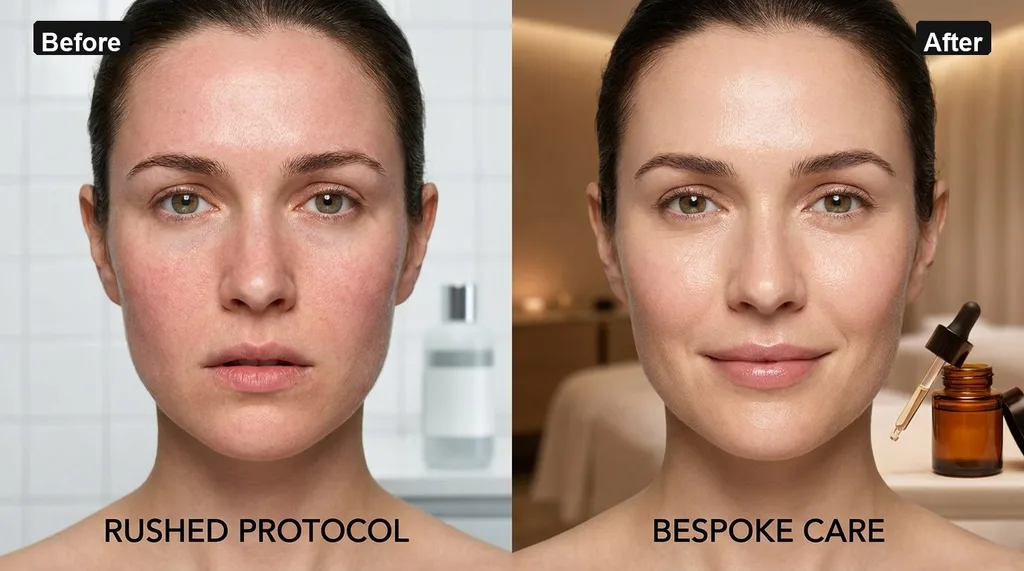
If you find yourself stuck in a clinic where the pressure feels suffocating, remember this: the most powerful word in your vocabulary is "no." No to the package. No to the "add-on" booster. No to the rush. Your skin is not a product to be manufactured on a conveyor belt; it is a complex, living barrier that deserves a bespoke approach.
Frequently Asked Questions
Can I really get a single-session treatment in a "factory-style" clinic? Technically, yes. Most will offer it if you are firm, but they will likely charge a premium compared to their "discounted" package rate. Treat this price difference as an insurance policy—you are paying for the freedom to leave if the results or the service level don't meet your standards.
What should I look for in a legitimate dermatologist? Look for the specific "Dermatology Clinic" (Pibugwa-uiwon) designation on the signage. This ensures the clinic is run by a board-certified dermatologist, not a general practitioner offering aesthetic services.
How do I handle the pressure from a consultation manager? Be polite but immovable. Use phrases like, "I prefer to start with one session to see how my skin responds before committing to a plan." If they insist, simply say, "I am not comfortable pre-paying for services I haven't tried yet," and leave. Your peace of mind is worth more than a 20% discount on a package you might regret.
⚠️ Disclaimer: This guide is for educational purposes and does not constitute medical advice. Aesthetic procedures involve risks, including infection, scarring, and adverse reactions. Always seek a consultation with a board-certified specialist before undergoing any procedure. If you have a compromised skin barrier or underlying health conditions, prioritize a diagnostic consultation over aesthetic trends. This article may contain affiliate links — if you buy through them, we may earn a small commission at no extra cost to you.
✓ Researched and compiled using verified data as of the publication date.
 Written by Jun Mi Jung for Quiet Korea | Contact: rsl.2001.1975@gmail.com
Comments
Post a Comment