Beyond the Folklore: The Science of Ancient Korean Beauty Rituals
Beyond the Folklore: The Science of Ancient Korean Beauty Rituals
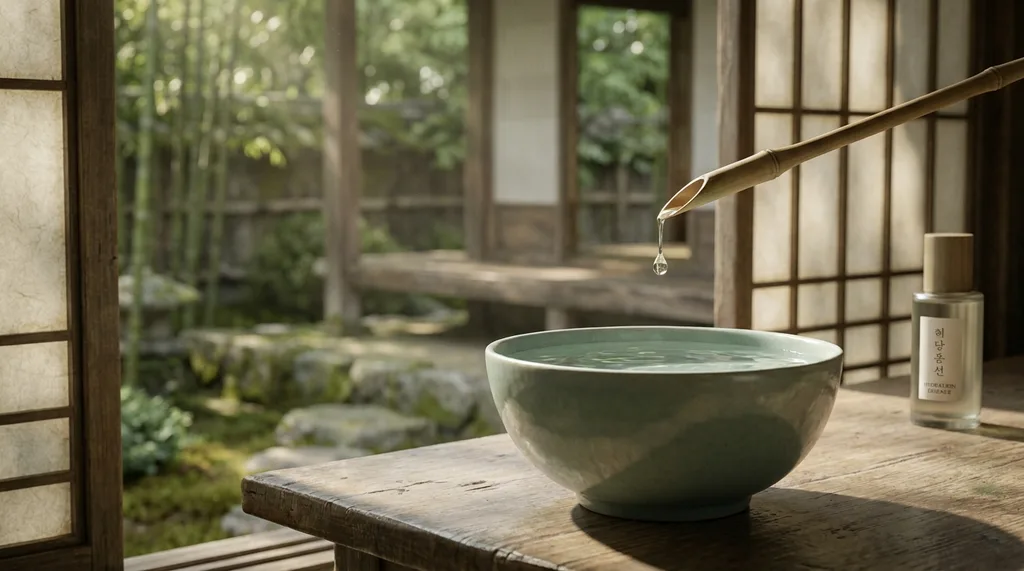
Walk into any home in Seoul, and you might see a grandmother rinsing white rice with a methodical, rhythmic intensity. To the uninitiated, this looks like simple kitchen prep. To the observant, it is the first step of a centuries-old skincare ritual. We have been sold a version of Korean beauty that focuses on the purchase: the ten-step routine, the latest serum, the high-tech packaging. But the real secret isn't on the shelf of an Olive Young—it's in the fermentation of ingredients that have been staples of Korean life for millennia.
- The Myth of the "Kitchen Mask"
- The Fermentation Unlock
- Bridging History and the Clinic
- Navigating the Heritage Market
- Explore Fermented Skincare
- Frequently Asked Questions
- Can I really replace my expensive serum with rice water?
- Are all fermented ingredients good for sensitive skin?
- Is "Hanbang" marketing or actual medicine?
Key Takeaways * Traditional "homemade" masks often fail because they lack the molecular refinement of professional formulas, posing risks of bacterial contamination and barrier disruption. * The true efficacy of legendary Korean ingredients—like rice, mung bean, and mugwort—is unlocked only through fermentation, which transforms raw botanical matter into bioavailable, skin-penetrating compounds. * Modern "Hanbang" (traditional medicine) skincare succeeds by marrying ancient botanical wisdom with rigorous clinical standardization, ensuring safety that DIY methods cannot guarantee.
The Myth of the "Kitchen Mask"
You have likely seen the tutorials: grind some mung bean, mix it with raw rice water, and paint it on your face for "glass skin." While these rituals are deeply rooted in Cheonyeon-paek (homemade natural face masks) culture, there is a reason professional dermatologists in Gangnam rarely recommend them.
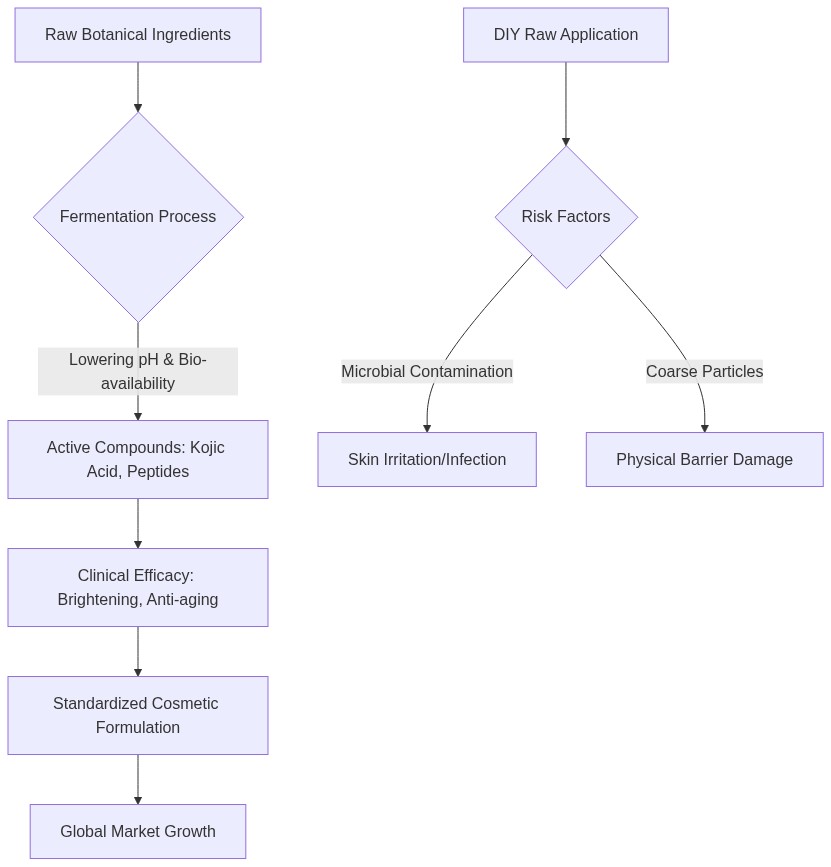
The raw ingredients you find in your pantry are structurally large and often pH-incompatible with your skin’s acid mantle. When you apply unfermented rice water directly, you aren't just applying vitamins; you are applying a chaotic mixture of starch, potential environmental bacteria, and varying concentrations that haven't been calibrated.
The "stinky sock syndrome"—the unpleasant aroma of poorly preserved DIY concoctions—is actually the smell of microbial spoilage. Applying these to compromised skin is the fastest route to contact dermatitis. The grandmother who used rice water wasn't just "doing DIY"—she was utilizing a freshly prepared, single-use extract that had not yet been exposed to the long-term oxidation and microbial growth that plagues bottled homemade mixtures.
The Fermentation Unlock
If you want the benefits of traditional Korean ingredients without the risk of an infection, look at the chemistry of the makgeolli (unfiltered rice wine) effect. In the lab, fermentation is the bridge between folklore and clinical results.
When Aspergillus oryzae or lactic acid bacteria interact with raw rice or mung beans, they do more than just change the smell. They act as molecular scissors, cutting large proteins into tiny, highly absorbable peptides. They shift the pH to a range that actually stabilizes your barrier, and they produce byproduct molecules like kojic acid—a potent tyrosinase inhibitor that targets hyperpigmentation.
This is the "aha!" moment for the modern beauty enthusiast: traditional ingredients aren't "miracle cures" in their raw state. They are raw data. It is the bio-transformation—the fermentation—that converts that data into a clinical, skin-brightening tool.
Bridging History and the Clinic
The most sophisticated brands in Korea are now moving toward a synthesis called Yakchim—a conceptual evolution where traditional herbal wisdom meets modern precision. Ingredients like Eoseongcho (Houttuynia cordata), once used as a simple steam, are now extracted under controlled pressures and paired with panthenol to ensure the anti-inflammatory benefits reach the deep strata of the dermis without causing the irritation common to traditional raw applications.
When you look for these ingredients, ignore the "all-natural" marketing fluff. Look for the process. Was the ingredient fermented? Is it standardized? Does it use modern delivery systems to ensure the Yak-kong (medicinal black soybean) peptides actually penetrate the stratum corneum?
🎵 K-Mono Lofi — Seoul Study Beats
Read deeper with Seoul lo-fi in the background — curated by K-Mono Lofi
Navigating the Heritage Market
If you are looking to incorporate these traditional powerhouses into your routine, remember the rule of the professional: sustainability is better than intensity. A gentle, fermented essence used twice daily is objectively superior to a harsh, raw-grain scrub that tears your lipid barrier once a week.
This article may contain affiliate links — if you buy through them, we may earn a small commission at no extra cost to you.
Frequently Asked Questions
Can I really replace my expensive serum with rice water?
No. Raw rice water lacks the concentration, pH stability, and purity of a lab-tested serum. While it contains trace vitamins, it cannot compete with the targeted, standardized efficacy of a formulated product.
Are all fermented ingredients good for sensitive skin?
Generally, yes, as fermentation lowers the pH and removes large, irritating proteins. However, if you are prone to fungal acne or have a history of reactions to specific ferments (like galactomyces), always introduce new products slowly.
Is "Hanbang" marketing or actual medicine?
It is a conceptual framework. While the ingredients are historical, the "medicine" part refers to the belief that the body is a system. Modern brands use this philosophy to create well-rounded products, but the active results come from the clinical grade of the extract, not the historical origin.
⚠️ Disclaimer: The information provided here is for educational purposes and does not constitute medical advice. Traditional beauty practices carry risks of irritation and contamination when performed improperly at home. Always perform a patch test when trying new ingredients, and consult with a board-certified dermatologist before incorporating active herbal extracts into your routine, especially if you have chronic skin conditions.
✓ Researched and compiled using verified data as of the publication date.
 Written by Jun Mi Jung for Quiet Korea | Contact: rsl.2001.1975@gmail.com