Beyond the Folklore: The Real Science of Korean Rice Rituals
Beyond the Folklore: The Real Science of Korean Rice Rituals
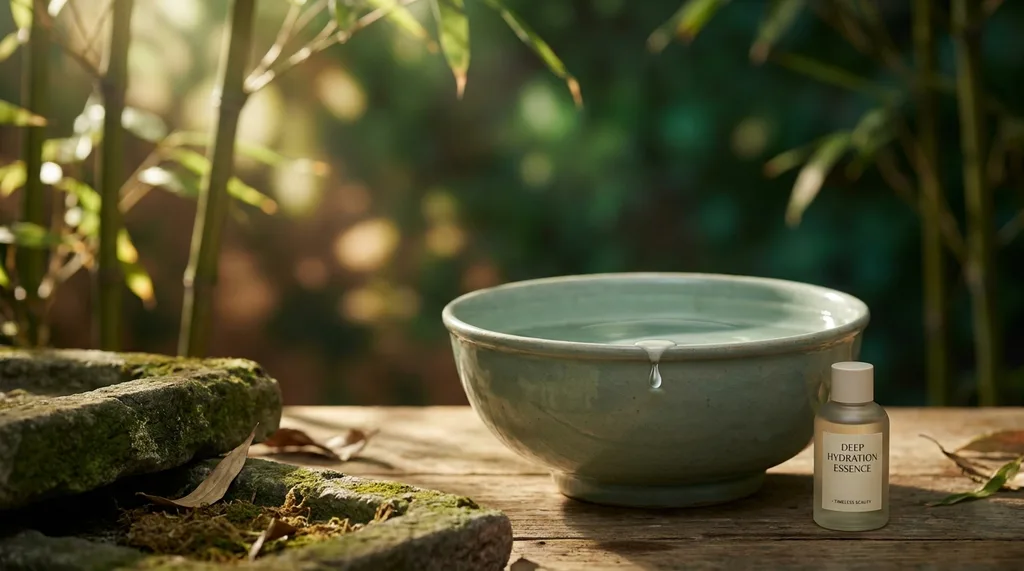
In the quiet, predawn light of a Seoul kitchen, a ritual unfolds that has remained largely unchanged for generations. It is a moment of domestic economy: the final rinse of white rice, saved in a ceramic basin, destined for the face. To the uninitiated, this is merely a folk remedy, a charming scrap of ancient beauty tradition. But look deeper, and you find that the women practicing this were engaging in empirical science long before the laboratories of Gangnam existed.
Key Takeaways * Rice water functions primarily as a pH-balancing surface treatment, providing immediate, visible shine and smoothness to hair and skin. * The genuine bioactive potential of rice lies in myo-inositol, a potent signaling molecule that supports metabolic skin health at the cellular level. * The industry is shifting from inconsistent DIY preparations to stabilized, fermented rice filtrates that deliver controlled concentrations of beneficial compounds.
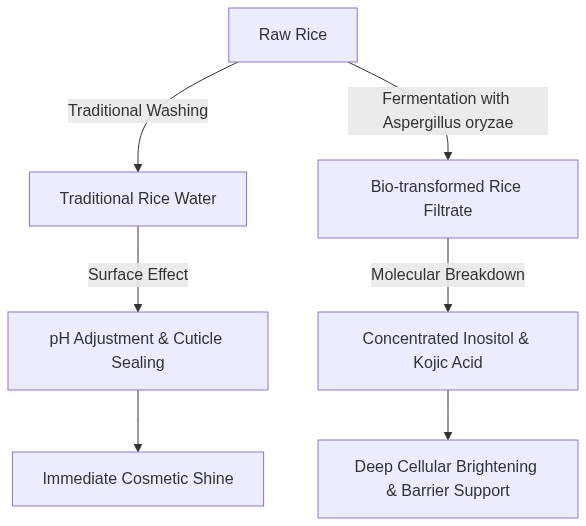
For years, the internet has hailed rice water as a miracle cure for hair growth, often blurring the line between myth and biology. To understand the truth, we must strip away the hyperbole. There is no clinical evidence that topical rice water acts as a pharmacological intervention for hair loss. Instead, its power is physical and chemical. When rice is washed or fermented, the liquid achieves a pH of approximately 4.0. This acidity is the key: it effectively seals the hair cuticle, smoothing the surface to increase light reflection—what we perceive as "shine"—and significantly reducing friction between strands. It is a brilliant, immediate, and entirely temporary cosmetic upgrade.
The Molecular Truth of Inositol
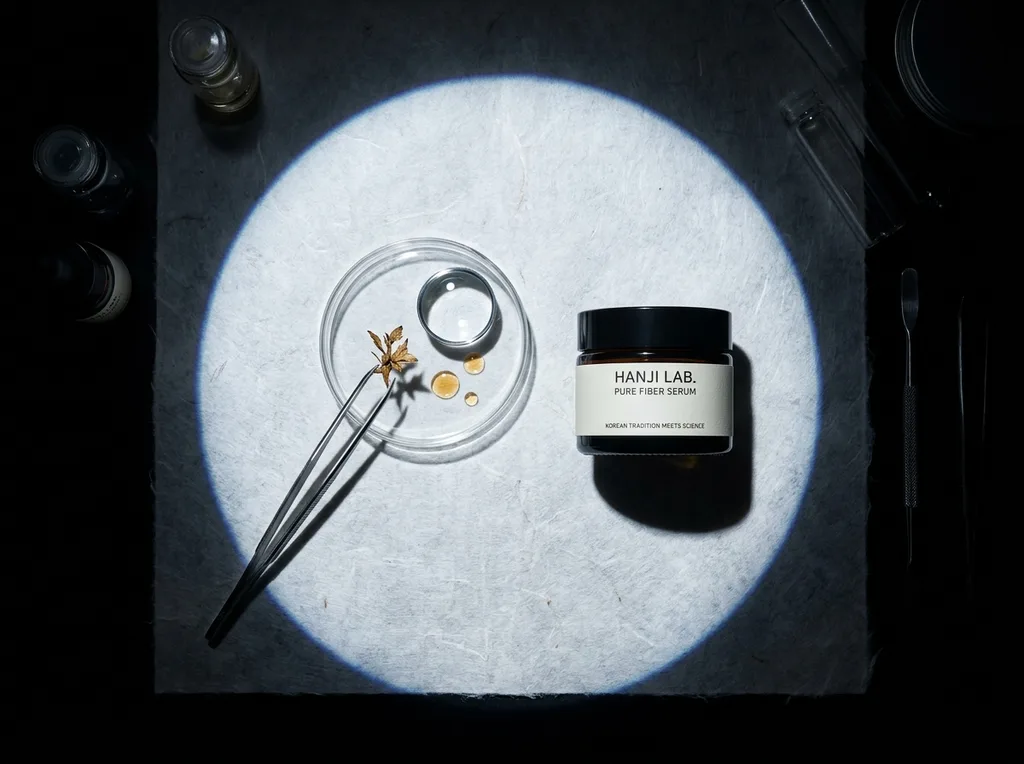
While the surface-level benefits are real, the obsession with rice water often misses the true biological actor: myo-inositol.
[K-Beauty 101] Rice-washed water (Ssaltteumul) — The milky, starchy byproduct of rinsing white rice. Historically used as a skin and hair rinse, its effectiveness in providing a smooth, bright complexion is due to its mild acidity and natural mineral content.
In modern dermatology, myo-inositol is not just a nutrient; it is a signaling powerhouse. It modulates the AKT signaling pathway and supports mitochondrial health in dermal fibroblasts. Yet, here lies the critical disconnect for the DIY enthusiast: the human skin barrier is designed specifically to keep substances out.
The concentration of inositol in a bowl of kitchen-prepared rice water is highly variable and lacks the stabilization required for significant dermal penetration. When you use a DIY rinse, you are washing your skin in a gentle, slightly acidic humectant. When a clinical researcher uses inositol, they are utilizing highly purified, stabilized compounds designed to reach the cellular level. The result is that while your rice-water rinse will leave your skin feeling soft and looking temporarily bright, it is not—and cannot be—a replacement for targeted, lab-stabilized skincare.
The Industrial Shift to Bio-Availability
If you walk into an Olive Young today, you will see a massive pivot away from the simple "rice water" products of the early 2010s. The market is moving toward fermented rice filtrates. By introducing specific strains of Aspergillus oryzae (the same koji mold used to brew sake), manufacturers can dismantle the complex starches in rice that are too large to penetrate the skin.
This fermentation process acts as a biological "pre-digestion." It liberates trapped nutrients, transforming them into bioavailable forms like kojic acid—a known melanin inhibitor—and concentrated inositol. This is the bridge between the grandmother’s basin and the modern serum bottle: the goal is to capture the spirit of the tradition while enforcing the precision of modern science.
🎵 K-Mono Lofi — Seoul Study Beats
Read deeper with Seoul lo-fi in the background — curated by K-Mono Lofi
The Hidden Costs of the DIY Ritual
Before you commit to a daily rice-water routine, consider the reality of the shelf life. Because rice water is essentially a nutrient-rich broth, it is an ideal breeding ground for bacteria if not handled with absolute caution. A batch left at room temperature for more than a few hours is no longer a beauty treatment; it is a microbial experiment.
If you choose to use ssaltteumul, do so once, freshly prepared, and discard the remainder immediately. If your skin is compromised—if you have acne, eczema, or a broken lipid barrier—avoid DIY rinses entirely. The lack of preservatives makes them a significant risk for those with sensitive skin.
This article may contain affiliate links — if you buy through them, we may earn a small commission at no extra cost to you.
⚠️ Disclaimer: The information provided here is for educational purposes only. DIY skincare rituals involving perishables like rice water carry a risk of bacterial contamination. If you have active skin conditions, consult a board-certified dermatologist before applying non-sterile, homemade formulations to your skin.
✓ Researched and compiled using verified data as of the publication date.
 Written by Jun Mi Jung for Quiet Korea | Contact: rsl.2001.1975@gmail.com