Why Korean Skincare Works Differently on Western Skin — And What Nobody Is Telling You
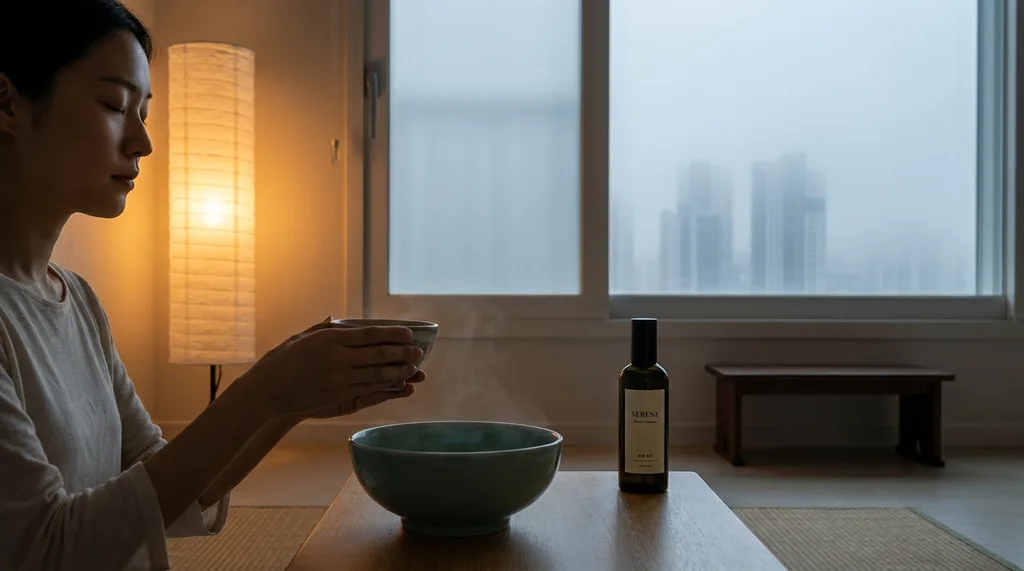
Korean dermatologists have a phrase for what they increasingly see when Western patients walk into their clinics: skin that has been worked to exhaustion. Not neglected — exhausted. Overclocked. Pushed past its natural recovery threshold by the very routines designed to improve it.
Key Takeaways - K-Beauty's core advantage is philosophical, not ingredient-based: it treats skin as a biological ecosystem to protect, not a problem to chemically correct — a distinction that changes everything about how products are formulated and applied. - Many Western users experience diminished results from Korean skincare because they arrive with pre-compromised skin barriers — the collateral damage of high-concentration Western actives that K-Beauty was never designed to repair, only maintain. - South Korea's MFDS regulatory framework enforces strict, evidence-backed concentration standards for functional ingredients (like 2–5% Niacinamide), creating a layer of consumer protection largely absent in Western cosmetic markets.
That loop — the reason Korean women in their 30s and 40s regularly stop dermatologists mid-examination, not because of what they're applying, but because of what they've never done to their skin — doesn't open with a serum ingredient. It opens with a philosophy. And that philosophy is the thing most Western consumers never actually import when they fill their Olive Young carts.
The Misdiagnosis Nobody Talks About
Walk through any K-Beauty comment section after a global beauty creator posts their Korean skincare haul, and a pattern emerges almost immediately. Someone writes: "I tried this for three months and my skin got worse." Another: "Broke me out instantly." And a third, more quietly: "I don't understand — everyone says it's gentle, but it burned."
The instinct is to blame the product. The reality, according to Korean skincare researchers and community consensus on platforms like Hwahae — the ingredient-transparency app that effectively functions as the industry's unofficial regulator — is almost always something else entirely.
[K-Beauty 101] Hwahae (화해) — Korea's dominant cosmetics analysis app, where users cross-reference full ingredient lists against verified skin type data. The name literally means "reconciliation" — a peace treaty between consumer skin health and an industry that doesn't always tell the truth.
The diagnosis that Western beauty media keeps missing: most global consumers approach Korean skincare as a product system. They adopt the 10-step structure as a script, importing the steps without the underlying framework that decides which steps, when, and why. Korean skincare specialists call this the diagnostic gap. The routine is not a template — it's a flexible response protocol shaped by a daily, almost clinical assessment of what the skin actually needs on a given day, in a given season, under given stress conditions.
Research into East Asian beauty consumer behavior consistently shows that Korean skincare devotees — known affectionately as Ko-deok (코덕), the self-appointed quality gatekeepers who memorize ingredient lists and share unsponsored reviews before brands can write a press release — are not simply applying more products. They are applying fewer products more precisely. The difference is invisible from the outside, but it is the entire game.
🎵 K-Mono Lofi — Seoul Study Beats
Read deeper with Seoul lo-fi in the background — curated by K-Mono Lofi
What Korean Skin Science Actually Sees
The physiological differences between East Asian and Caucasian skin are documented in dermatological literature, though the industry rarely leads with them because nuance doesn't sell. What the research from ResearchGate's review of Asian skin biophysical properties indicates: East Asian skin generally presents with a thinner stratum corneum — the outermost layer of the epidermis — and a higher density of eccrine (sweat) glands. This structural profile creates a skin that responds more intensely to both chemical stressors and mechanical friction.
This is not a weakness. It is simply a different baseline, one that Korean cosmetic science has been calibrating to for decades. The result is a formulation philosophy that prioritizes what experts call "barrier-first" thinking — the understanding that a functioning skin barrier is the prerequisite for everything else. Hydration, brightness, elasticity, resilience: none of them are achievable at a meaningful level if the barrier is compromised.
🇺🇸 Western "Correction-First" Model
Skin is treated as a problem to solve. High-concentration AHAs, prescription-strength retinoids, and potent exfoliants force rapid cellular turnover.
Philosophy: break it down faster so it rebuilds better.
⚠️ Risk: Accelerated turnover without barrier recovery leads to chronic inflammation, sensitivity, and trans-epidermal water loss (TEWL).
🇰🇷 Korean "Barrier-First" Model
Skin is treated as a living ecosystem to protect. Ceramide biosynthesis, inflammation suppression, and gentle hydration layering are the priority.
Philosophy: strengthen what exists so the skin heals itself.
✅ Design intent: Maintenance of a healthy baseline, with targeted actives introduced only after the barrier is intact.
What Western markets underestimate is just how regulated this philosophy is in Korea. The South Korean Ministry of Food and Drug Safety — known as the MFDS — enforces a strict "Functional Cosmetic" classification system. For a product to legally claim brightening or whitening (mi-baek, in Korean skincare terminology), it must use ingredients within verified concentration windows. Niacinamide, for instance, requires 2–5% to qualify as a functional brightening agent under MFDS standards. This isn't marketing — it's a legal threshold backed by clinical evidence.
[K-Beauty 101] Gi-neung-seong Hwa-jang-pum (기능성 화장품) — "Functional cosmetic." A legal MFDS classification for products with proven, specific benefits verified by clinical evidence. The designation carries real weight: it means the claim has been tested, not invented by a copywriter.
The platform Hwahae emerged from exactly this regulatory culture. Korean consumers — particularly the Ko-deok community — began demanding full ingredient transparency (jeon-seong-bun, the complete INCI list) and cross-referencing formulations against MFDS standards long before "clean beauty" became a Western hashtag. That culture of ingredient scrutiny, built into the consumer DNA, is part of what makes Korean formulations behave differently: the market punishes products that cut corners.
Why Your Previous Routine May Be Working Against You
Here is the part that tends to land uncomfortably. When Korean skincare "doesn't work" for Western users — when the hyped ceramide cream feels tacky, when the 7-skin toner method leaves skin congested, when the Centella Asiatica (Cica) serum seems to do nothing — the temptation is to blame Korean formulations for being designed for different skin. That explanation is partly true but mostly incomplete.
The more uncomfortable truth, which Korean dermatologists discuss openly in clinical literature: Western skincare's emphasis on high-concentration acids, mechanical exfoliation, and potent retinoids at clinical frequencies has, for many users, produced chronic barrier disruption. When someone arrives at a K-Beauty routine after years of 10% glycolic acid, nightly tretinoin, and daily physical scrubbing, they are not starting from zero. They are starting from negative.
K-Beauty's barrier-reinforcing formulas were designed for maintenance — for skin already functioning at a healthy baseline, receiving gentle, consistent support. They were not designed as emergency reconstruction. The ceramide creams and the Cica essences work best when the barrier they're supporting is already partially intact. Applied to severely depleted skin, they can feel ineffective because the gap between where the skin is and where the product can take it requires clinical-level intervention first.

This is the diagnostic gap in action. Korean skincare specialists report that the most common error global adopters make is jumping directly to the layering protocol without first assessing barrier integrity. The community concept of overkare — the trap of too many actives, too many steps applied without clinical rationale — is something Korean beauty culture actively warns against. South Korea's beauty enthusiasts treat it as one of the field's most persistent failure modes.
The honest counterpoint is also worth stating plainly: not every K-Beauty product outperforms its Western equivalent, and not every Korean formulation is suitable for every skin type. Research on racial and ethnic skin differences confirms that Caucasian skin tends to have a thicker stratum corneum and different melanogenesis pathways — meaning some K-Beauty brightening formulas, calibrated for East Asian melanin distribution patterns, may produce less dramatic visible brightening results on deeper Western skin tones. This doesn't invalidate the products. It means the diagnostic step matters: understanding which mechanism your skin needs addressed before selecting a product designed around a different baseline.
The Viscosity Principle — and What It's Actually Doing
The iconic layering sequence — the move from water-thin toner to essence to serum to cream — is routinely described as a "ritual," which frames it as cultural tradition rather than applied chemistry. Korean formulation chemists would push back on that framing.
The viscosity principle is not ceremony. It is occlusion management. By applying the most water-soluble, low-molecular-weight ingredients first — when the skin surface is most permeable — and progressively sealing them beneath increasingly occlusive layers, the routine maximizes absorption while preventing trans-epidermal water loss. The toner opens the channel. The essence delivers the active payload. The serum concentrates the benefit. The cream closes the system.
What the Western version of "hydration layering" often misses is the wait time between layers — a detail that Korean users report as non-negotiable. Each layer requires between 30 seconds and two minutes to absorb before the next is applied. Compress those steps, and the layers compete rather than cooperate. The product doesn't fail — the application does.
This is where Hwahae's broader cultural function becomes relevant. The app functions not just as an ingredient checker but as a real-time review aggregator, where Korean users share application techniques alongside efficacy ratings. The community understanding of how to apply is treated with the same seriousness as what to apply — a nuance that typically doesn't survive the translation into Western beauty media coverage.
The most quietly radical insight buried in all of this: the advanced direction Korean cosmetic science is moving — toward purified botanical ferments, DNA-fragment skin rejuvenation technologies, and targeted ceramide biosynthesis stimulation — represents a clinical sophistication that requires the barrier-first foundation to be in place before the advanced actives can function. The innovation pipeline assumes healthy skin. That assumption is where the translation breaks down, every time, for Western consumers who skip straight to the headline ingredient.
Frequently Asked Questions
Does Korean skincare actually work differently on Western skin because of biology? Partially. Research confirms that East Asian skin generally has a thinner stratum corneum and different eccrine gland density than Caucasian skin, which influences how Korean formulations are calibrated. However, the larger variable is prior skincare history — Western users who have heavily used AHAs and retinoids often have barrier compromise that Korean maintenance-oriented products weren't formulated to address first.
Can people with deeper skin tones benefit from K-Beauty brightening products? Yes, but with realistic expectations. The MFDS brightening framework targets melanin transfer inhibition — Niacinamide at 2–5% can reduce melanosome transfer by 35–68% in clinical studies — but the mechanism is most visible on skin with specific melanogenesis patterns. For deeper tones, the more universal benefits (barrier repair, hydration, inflammation reduction) are often more immediately impactful than the brightening claims.
Why does the 10-step routine sometimes make Western skin worse? Because it was never meant to be applied rigidly every day. Korean skincare practitioners use the full multi-step system in response to skin stress — pollution, seasonal change, sleep deprivation — not as a fixed daily minimum. Applying ten products daily to a compromised barrier adds occlusive load and potential irritants faster than the barrier can recover.
What's the best starting point for a Western user new to K-Beauty? Dermatological consensus in Seoul suggests starting with a two-step reset: a gentle low-pH cleanser followed by a ceramide-rich moisturizer, for at least two to four weeks, before introducing any actives. This allows baseline barrier integrity to establish before layering begins — which is the sequence Korean skincare was designed to build on.
Is the MFDS regulatory standard meaningfully stricter than Western standards? In the specific domain of functional cosmetic claims, yes. The MFDS requires ingredient concentration verification for any product making brightening, wrinkle, or sun protection claims — a requirement that sits between the FDA's cosmetic and drug classifications. For the consumer, this means a Korean "brightening" claim carries more clinical weight than a comparable Western cosmetic claim.
The most successful Korean skincare ritual isn't ten steps. It is one decision, made consistently: to treat your skin like a living ecosystem worth protecting, not a problem worth solving. Every product in the routine flows from that premise. Without it, you're not doing Korean skincare. You're just using Korean bottles.
⚠️ Medical & Skincare Disclaimer: This article is for informational and educational purposes only and does not constitute medical or dermatological advice. Skin biology varies significantly between individuals, and no single skincare philosophy or product category is appropriate for all skin types or conditions. If you are experiencing persistent skin sensitivity, barrier disruption, or adverse reactions to skincare products, consult a licensed dermatologist before introducing new actives or changing your routine. Patch-test all new products before full application, particularly if you have a history of reactive or compromised skin. Regulatory standards referenced (MFDS) apply to products sold in South Korea and may differ from standards in your region.
This article may contain affiliate links — if you buy through them, we may earn a small commission at no extra cost to you.
✓ Researched and compiled using verified data as of the publication date.
 Written by Jun Mi Jung for Quiet Korea | Contact: rsl.2001.1975@gmail.com
Comments
Post a Comment