[Haul & Commerce Review] 20 Regional Korea
The global perception of K-Beauty is often trapped in the neon-lit corridors of Myeongdong. We are sold the fantasy of the "10-step routine" in a sterile Gangnam clinic, overlooking the fact that the most potent innovation in Korean skincare today is not happening in the capital’s high-rent districts. It is happening in the volcanic soil of Jeju, the ancient hanbang apothecaries of Jeonju, and the specialized hot spring resorts of Icheon.
For those who have navigated the surface-level marketing of Hallyu, there is a lingering intuition that something deeper exists. You are right. Behind the glossy packaging and the viral "glass skin" claims lies a sophisticated industrial machine that has effectively bridged the gap between professional dermatology and mass-market accessibility. But how do you separate the marketing noise from the real, clinical-grade efficacy that regional Korean beauty culture offers?
Key Takeaways * High-Performance Accessibility: PDRN and clinical-grade actives have moved from private dermatology clinics to daily skincare, transforming Korea into a "practical laboratory" for high-efficacy beauty. * Regional Innovation: The "Beyond Seoul" movement leverages geothermal mineral profiles and centuries-old botanical traditions, which are now being integrated into scalable, digital-first indie brands. * Regulatory Trust: Korea’s Ministry of Food and Drug Safety enforces strict categorization (Functional vs. General), creating a "halo effect" that guarantees scientific validation for products regardless of price point.
The Shift Toward Clinical-Grade Minimalism
The era of aggressive, multi-step layering is fading in favor of "intentional minimalism." Walk into any local Olive Young in 2026, and you will see shelves dominated by PDRN (Polydeoxyribonucleotide)—the salmon-derived DNA extract once exclusive to high-end rejuvenation procedures. This is the new baseline.
The industry has moved toward a "clinical-grade home care" model. Brands are no longer competing on aesthetic branding alone; they are competing on the concentration of active compounds. For the global enthusiast, this means the barrier between professional treatment and consumer-facing product has collapsed.
How Hyaluronic Acid Actually Works
While popular culture simplifies hyaluronic acid as a simple "moisturizer," the reality is a complex molecular dance. In the context of Korean regional formulations, the focus is on "molecular weight stratification." By using a blend of high, medium, and low molecular weights, these products don't just sit on the surface; they modulate the inflammatory cascade within the stratum corneum.
The full ingredient autopsy, for the truly curious →
The Regional Beauty Map
We are witnessing a "Beauty-Marble" (Byu-ru-ma-bul) phenomenon, where experiential retail hubs in districts like Seongsu-dong serve as testing grounds. These pop-ups are not just retail—they are data-collection points where brands measure real-time consumer reaction to high-efficacy formulas.
It is here that the regional ingredients—the volcanic scoria of Jeju, the fermented hanbang extracts from Jeonju—meet the agility of the digital-first OEM/ODM ecosystem. This synthesis is why an independent Korean brand can scale globally through TikTok Shop or Amazon with a speed that legacy European houses cannot match.
🎵 K-Mono Lofi — Seoul Study Beats
Read deeper with Seoul lo-fi in the background — curated by K-Mono Lofi
Navigating the Market with Intent
As you explore these regional developments, remember that the "Made in Korea" label is a legal framework as much as it is a brand identity. The Chaekim Panmae Eopja (Market Authorized Holder) ensures that every functional claim—whitening, anti-aging, UV protection—has survived rigorous pre-market evaluation.
The Reality of Side Effects and Hidden Costs
Honesty is the antidote to the industry's dark side. Not every "functional" product is a miracle. High-concentration niacinamide, while excellent for barrier repair, can lead to localized dermatitis if the PH balance of the formulation is not precisely calibrated. Similarly, the trend of using "natural" fermented ingredients can trigger contact allergies in those with compromised lipid barriers.
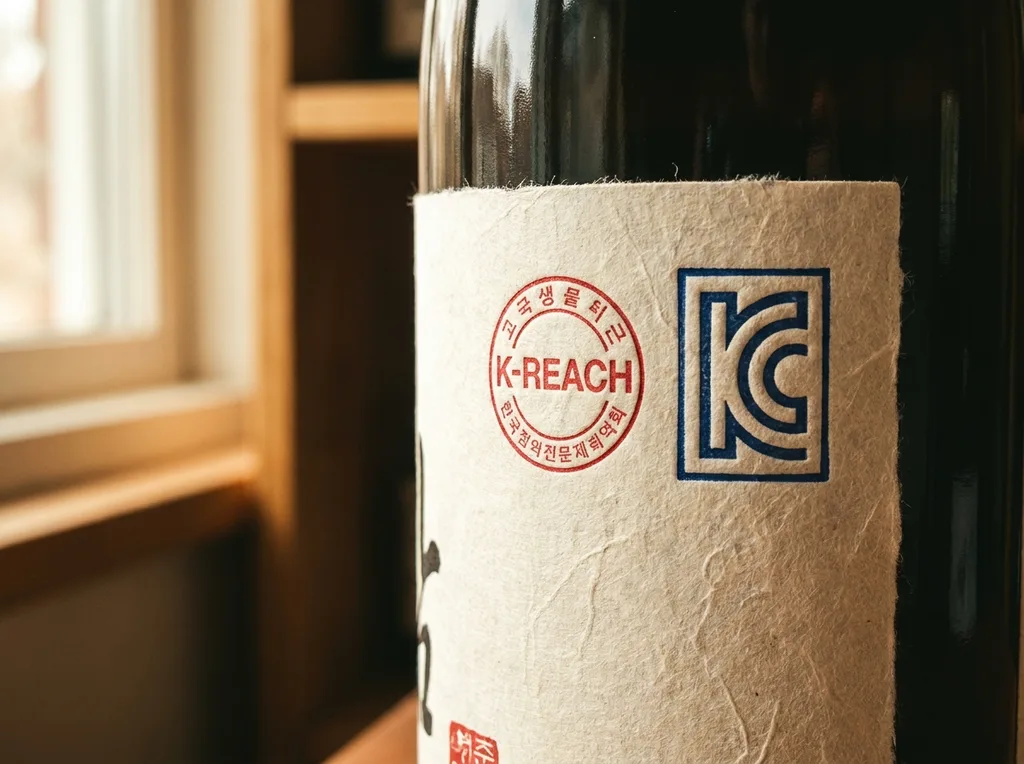
Always look for the Gijeongseong Hwajangpum (Functional Cosmetic) certification on the back of the bottle. If it is missing, you are buying a lifestyle accessory, not a scientific solution.
⚠️ Disclaimer: The information provided here is for educational purposes and does not constitute medical advice. Always perform a patch test when introducing high-concentration active ingredients into your routine. If you have underlying skin conditions or are currently undergoing clinical treatments, consult a board-certified dermatologist before modifying your regimen.
This article may contain affiliate links — if you buy through them, we may earn a small commission at no extra cost to you.
✓ Researched and compiled using verified data as of the publication date.
 Written by Jun Mi Jung for Quiet Korea | Contact: rsl.2001.1975@gmail.com
Comments
Post a Comment