The Science of Inner Beauty: Why Korean Women Prioritize "Beauty from Within"
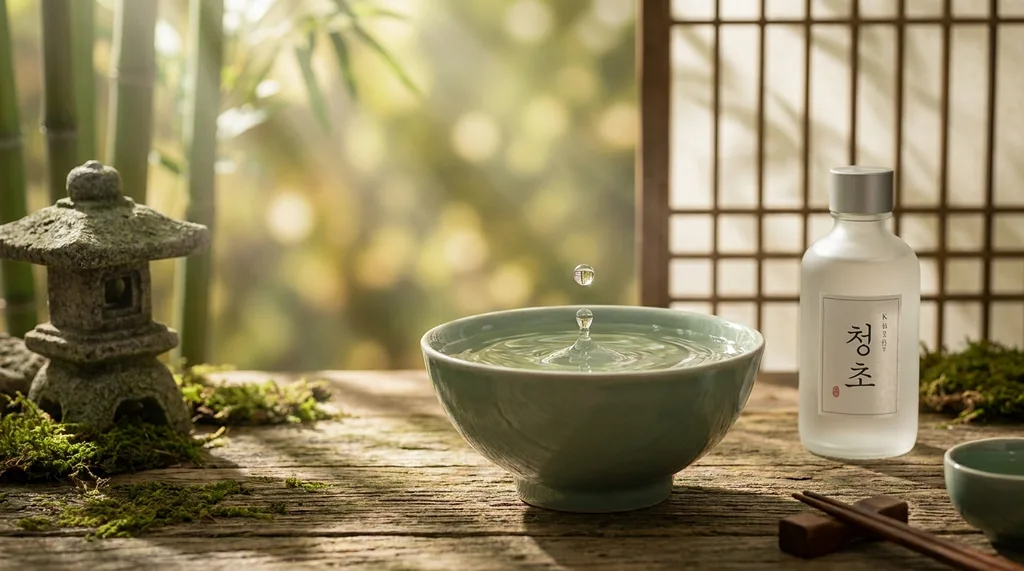
In the crowded aisles of Seoul’s Olive Young, the most profound trend is not the latest serum bottle. It is the movement toward Hwajangpum Diet—a calculated reduction of superficial application in favor of systemic, internal health. If you have ever wondered why skincare enthusiasts in Korea seem to possess a glow that transcends their topical routine, the answer rarely lies in a single miracle cream. It resides in the disciplined, diagnostic approach to internal supplementation, a standard practice in Korean dermatology that treats skin health as an extension of metabolic equilibrium.
🎵 K-Mono Lofi — Seoul Study Beats
Read deeper with Seoul lo-fi in the background — curated by K-Mono Lofi

Before diving into the supplements, understanding how Korean dermatology approaches skin from the inside changes everything. Read: [K-Beauty Columnist (애드센스 승인용 칼럼니스트)]
The Korean Clinic Standard: Beyond Marketing
In South Korean skin clinics, the prescription for clear, resilient skin is rarely just a topical treatment. Instead, dermatologists emphasize a protocol often dubbed "inner beauty." This is not the whimsical "wellness" often marketed in the West; it is a clinical strategy. When a patient presents with Sok-geonjo (deep-layer dryness)—the frustrating sensation of tight, parched skin that sits beneath an oily surface—the focus shifts immediately to cellular hydration.
Korean practitioners often recommend collagen peptides, specifically those with a low molecular weight, to act as signaling molecules. The clinical logic is that by providing the skin with bioavailable building blocks, you are not just moisturizing the surface; you are instructing the dermis to maintain its structural integrity. This diagnostic approach allows the skin to move from a state of Dwijib-eojida (sudden, severe reaction) toward a balanced, Yurial Pibu (glass skin) state.
Evaluating the Evidence: What Actually Works
Not all supplements are created equal. While marketing often pushes "glow-enhancing" proprietary blends, clinical data points toward specific compounds that directly influence the skin’s lipid barrier and antioxidant capacity.
| Ingredient | Clinical Basis | Effective Daily Dose | Typical Results Timeline |
|---|---|---|---|
| Low-MW Collagen | Peptide Signaling | 2,500mg – 5,000mg | 8–12 weeks |
| Niacinamide (Oral) | Barrier Modulation | 50mg – 100mg | 6–8 weeks |
| Ceramides (Phytoceramides) | Lipid Barrier Repair | 30mg – 70mg | 4–6 weeks |
It is essential to be honest: many "skin supplements" are over-hyped. Ingredients like biotin, while vital for overall health, often do little for skin barrier function unless you are clinically deficient. The most robust evidence currently supports collagen peptides (specifically those under 500 Da, like the 234 Da variants favored in Korean clinical trials) and phytoceramides for direct, measurable improvements in skin hydration and elasticity.
The Systematic Routine
Korean consumers—often called Ko-deok (beauty obsessives)—treat their supplement routine with the same architectural precision as their ten-step skincare.
The "Cosmetic Diet" philosophy dictates that you should not overwhelm the body. If you are targeting Sok-geonjo, focus on one or two high-impact supplements for at least three months. This patience is the "secret" to the Korean glass skin standard.
Where to Buy: Global Access
Because of the prevalence of counterfeit products in the supplement market, sourcing is as important as the formula itself. iHerb provides a reliable, direct-to-consumer channel for the same clinically-backed ingredients used in Korean domestic routines.
| Product | Availability | Sourcing | Best For |
|---|---|---|---|
| Collagen Peptides (234 Da) | iHerb | Verified | Structural Hydration |
| Phytoceramides | iHerb | Verified | Barrier Repair |
| Niacinamide Complex | iHerb | Verified | Tone & Texture |
Safety First: The Founder’s Responsibility
Supplements are potent biological tools, not candy. If you are pregnant, nursing, or currently taking prescription medications—particularly for autoimmune conditions or blood pressure—you must consult a physician before adding these to your routine. Korean dermatology emphasizes that "more" is rarely "better." Over-supplementation can lead to unnecessary metabolic stress. Start with the lowest effective dose, monitor for any signs of Dwijib-eojida, and prioritize a consistent, long-term protocol over short-term intensity.
⚠️ Disclaimer: This guide is for educational purposes only and does not constitute medical advice. Always perform a patch test when introducing new topical products and consult with a board-certified dermatologist before beginning any new supplement regimen, especially if you have pre-existing health conditions or are taking prescription medication.
This article may contain affiliate links — if you buy through them, we may earn a small commission at no extra cost to you.
✓ Researched and compiled using verified data as of the publication date.
 Written by Jun Mi Jung for Quiet Korea | Contact: rsl.2001.1975@gmail.com
Comments
Post a Comment