The Great K-Beauty Myth: Why Your Wallet Needs a Reality Check
If you’ve spent any time in the crowded aisles of an Olive Young at midnight, you’ve likely felt the gravitational pull of the "10-step routine." It’s an alluring promise: ten bottles, ten promises, and the inevitable glow of chok chok (dewy) skin. But if you look closely at the women—and, increasingly, men—navigating these shelves, you’ll notice a shift. They aren’t grabbing the most expensive bottle on the top shelf. They are checking labels, comparing concentrations, and hunting for the "Double Gihwek" (Double Special Planning) bundles that provide twice the product for half the price.
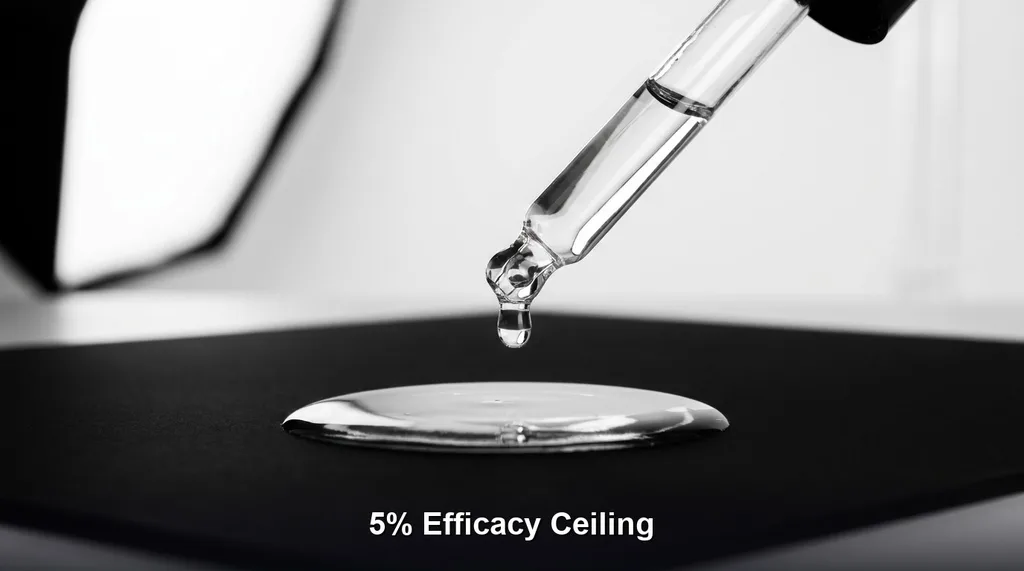
The crack in the facade of luxury skincare is widening. For years, global consumers have been sold the idea that a higher price tag correlates to a higher concentration of "miracle" ingredients. However, the ko-deok (Korean beauty obsessive) knows better. They understand that in the world of dermatology, more is rarely better—it’s often just expensive.
Key Takeaways * Diminishing Returns: Clinical data confirms that active ingredients like niacinamide hit their efficacy ceiling at 4-5%; higher concentrations often lead to irritation, not improved results. * The Gasungbi Shift: Savvy consumers now prioritize "Gasungbi" (cost-effectiveness), utilizing bundle deals to secure high-performance formulas without the luxury markup. * Beyond the Routine: The true secret of Korean skin health is not the quantity of products, but the "Yak-san-seong" (pH-balanced) barrier integrity and the systematic timing of application.
The Science of the "Skinification" Ceiling
Why does a $15 serum often outperform a $150 equivalent? The answer lies in the formulation vehicle, not the scarcity of the active ingredients. Experts in Seoul point out a recurring marketing trap: the "percentage game." Brands often tout 10% or even 20% niacinamide, hoping you’ll interpret the larger number as a shortcut to faster results. Yet, clinical literature is clear: 2% is the threshold for barrier repair, and 4-5% is the sweet spot for pigment regulation and anti-aging.
When you push past that, you aren’t buying "stronger" skin—you are buying a higher risk of transepidermal water loss and barrier damage. This is the paradoxical trap of over-care, where the pursuit of an aesthetic ideal results in a compromised barrier.
Why "Gasungbi" is the New Status Symbol
In Korea, Gasungbi isn't just about being thrifty; it’s a form of intellectual pride. It signals that a consumer has done their Fact-check and refused to pay the "luxury tax" for branding. This has forced even the most prestigious labs to pivot. They aren't just selling individual bottles anymore; they are mastering the Double Gihwek strategy. By bundling products into sets that include high-value trial sizes, they lower the barrier to entry while keeping the consumer within their ecosystem.
🎵 K-Mono Lofi — Seoul Study Beats
Read deeper with Seoul lo-fi in the background — curated by K-Mono Lofi
This shift has created a unique "derma-science" marketplace. Take a look at the current industry trajectory:

The Honest Cost of the Glow
If you find yourself struggling with sok-geonjo (inner dryness), the solution isn't necessarily a more expensive moisturizer. It’s often a re-evaluation of your layering order. Korean skincare is, at its heart, a study in humectants—layering water-based hydrators before sealing them with occlusives.
But here is the truth that rarely makes it into a marketing pamphlet: if you are layering five different actives from five different "luxury" brands, you are likely causing more harm than good. A minimalist skip-care approach, focusing on simple, pH-balanced hydration, often delivers better results than a chaotic, expensive routine.

⚠️ Disclaimer: The information provided here is for educational purposes based on current dermatological trends and market analysis. Always perform a patch test when introducing new active ingredients to your skin. If you have chronic skin conditions, such as rosacea or severe acne, consult a board-certified dermatologist before altering your skincare regimen.
This article may contain affiliate links — if you buy through them, we may earn a small commission at no extra cost to you.
✓ Researched and compiled using verified data as of the publication date.
 Written by Jun Mi Jung for Quiet Korea | Contact: rsl.2001.1975@gmail.com
Comments
Post a Comment