[Supplement Guide] K-Beauty Hidden Healing Spots
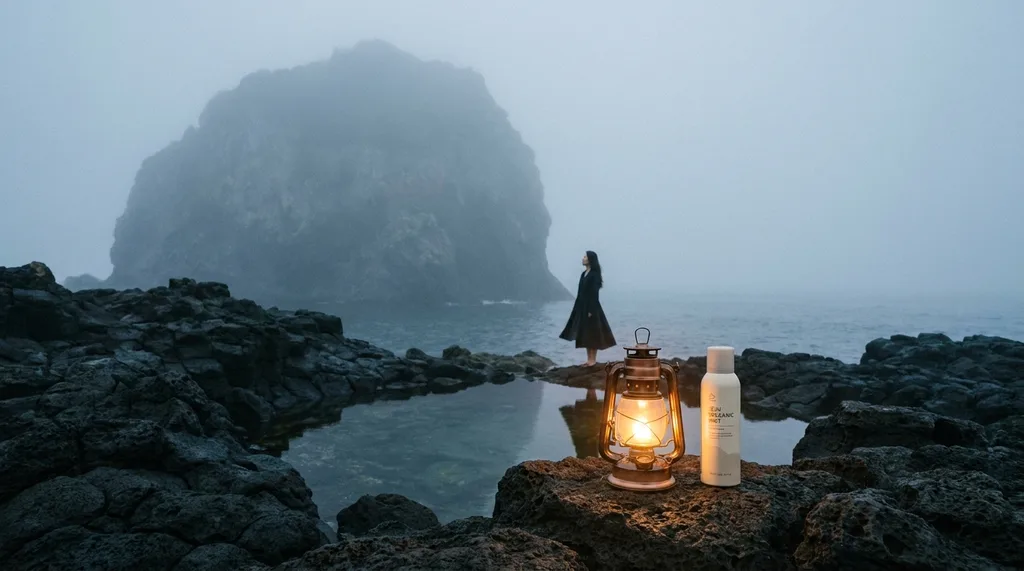
There is a version of Korean skin wisdom that never made it onto YouTube, never got a hashtag, and will never appear in a brand collaboration. It lives in the memory of a grandmother's hands pressed flat against steaming water. It exists in the mineral-thick air of a mountain valley at 6 AM, where three generations of women are already submerged up to their shoulders, not saying much, just breathing. Korean women with the most resilient skin in their 40s and 50s — the ones whose faces dermatologists quietly study — share one habit that has nothing to do with what's on their skincare shelf. And if you've spent years optimizing your routine, what you're about to read might reframe everything.
- The Shelf Can't Do What the Spring Does
- Where Korea Actually Goes to Heal
- Sanbangsan Carbonate Hot Spring, Jeju Island
- Cheoksan Hot Springs, Sokcho (Gangwon-do)
- Gurye's Cypress Forests, Jeollanam-do
- How Long to Stay — and When It Stops Helping
- The Noji Philosophy — Why Location Is the Active Ingredient
- The Practical Circuit: A Two-Day Healing Protocol
- What the Products Can't Replace
- Book Korean Oncheon & Wellness Experiences
The global K-Beauty industry is a staggering machine. By 2024, South Korea's wellness tourism sector alone was estimated at somewhere between $8.3 billion and $9.3 billion, with projections that could push it past $20 billion by 2030. Those numbers mean serums, ampoules, clinic visits, BB cushions, and glass-skin tutorials. But Koreans know that market exists on the surface of something older and, in many ways, more effective. Beneath the entire industry is a current of water — literal, mineral-rich, thermal water — and the philosophy that your skin doesn't just need products. It needs to be taken somewhere.
The Shelf Can't Do What the Spring Does
Here is what most K-Beauty content will not tell you: the skin barrier is a self-regenerating system. Korean dermatologists know this. It's not a secret in Seoul's medical community. What they also know — and what aggressive skincare marketing prefers you not think about — is that a compromised barrier cannot be "fixed" by adding more to it. Layering an essence over an already stressed epidermis is like putting a second coat of paint on a wall that's still damp. The barrier needs conditions, not products.
Carbonated hot spring water — tansan oncheon — provides those conditions in a way no bottle can replicate.
When skin is submerged in carbonate-ion-enriched water at approximately 42°C, something happens at the molecular level that dermatologists find genuinely compelling. Studies show that this specific thermal-mineral environment triggers increased expression of matrix metalloproteinases MMP-2 and MMP-9. These enzymes are responsible for tissue remodeling — the same biochemical pathway that expensive laser treatments in Gangnam clinics are designed to activate. Histological research has found reduced inflammatory cell infiltration and increased vessel density in granulation tissue after carbonate spring immersion. Separately, compounds like potassium alum, present in certain mineral springs, actively promote the formation of tight junctions between epidermal keratinocytes — meaning the physical "seal" of the skin barrier gets reinforced, not from the outside in, but from within the tissue itself.
[K-Beauty 101] Tansan Oncheon (탄산온천) — Carbonated hot spring. Unlike ordinary thermal baths, carbonate springs release free carbonic acid that absorbs transdermally, triggering a vasodilatory response and, critically, the biological cascade that remodels connective tissue. Locals describe leaving a good tansan oncheon with skin so soft it no longer needs lotion — not a marketing claim, a mineral reality.
This is not the same as soaking in a warm bath at home. Carbonation concentration matters. Temperature matters. Mineral composition matters. And because every spring has a different geological fingerprint, where you go is as important as how long you stay.
But here's what even the science doesn't capture: the context. Because the Koreans who benefit most from these springs don't just visit them. They go there as part of something larger — a deliberate withdrawal from the conditions that were breaking their skin down in the first place.
Where Korea Actually Goes to Heal

[K-Beauty 101] Mul Joeun Got (물 좋은 곳) — "A place with good water." This is how Koreans evaluate healing destinations. Not by price point or amenity stars, but by the quality of the water itself. When someone says a spring's water is "smooth" (miggeureopda), they mean it carries enough dissolved minerals to leave the skin with a texture that no moisturizer fully replicates. Finding a mul joeun got is still passed down within families, not by travel bloggers.
🎵 K-Mono Lofi — Seoul Study Beats
Read deeper with Seoul lo-fi in the background — curated by K-Mono Lofi
Sanbangsan Carbonate Hot Spring, Jeju Island
On the southwestern coast of Jeju, tucked at the base of Sanbangsan Mountain in Andeok-myeon, Seogwipo City, sits one of Korea's most beloved carbonate springs. The outdoor pools face volcanic rock formations and, on clear mornings, the sea. What draws locals is not the view — it's the water. The Sanbangsan spring carries a specific mineral profile shaped by the same basaltic geological layers that give Jeju its distinctive volcanic soil and water purity.
The experience here is deliberately unpretentious. No grand resort architecture. The water is the point. Visitors report that familiar post-immersion sensation — skin that feels lightly tightened but deeply smooth, a quality Korean women describe as miguiseurom, as if the surface itself has been quietly reorganized.
Getting there: From Jeju International Airport, the most practical route is by rental car — approximately 45 minutes to an hour via the 1132 Coastal Road heading southwest toward Seogwipo. Public buses do run (look for routes serving Andeok-myeon), but schedules are sparse and transfers add significant time. For first-time visitors, a car rental booked through Klook provides flexibility to combine the spring with Sanbangsan's hiking trails and the nearby Yongmeori Coast.
Where to stay: Search Agoda for accommodations in Seogwipo or Andeok-myeon. Staying in Seogwipo keeps you within easy reach of both the spring and Jeju's southern coastline. A two-night stay in this area gives enough time to visit the spring twice — morning immersions, when the pools are quietest, are considered optimal.
Cheoksan Hot Springs, Sokcho (Gangwon-do)
On the opposite end of the peninsula, in the northeastern coastal city of Sokcho, Cheoksan Hot Springs have served as a family wellness destination for generations. Located in Cheoksan-dong within Sokcho City, these springs sit near Seoraksan National Park — one of Korea's most dramatic mountain landscapes. The combination of pine forest air and alkaline thermal water creates an environment that functions as a compound treatment: the forest itself contributes phytoncides (antimicrobial compounds released by conifers) while the water addresses the skin directly.
Korean families with skin-conscious members have made Cheoksan an annual ritual. It is not a trending destination. It is a consistent one, which in Korea is a different kind of endorsement entirely.
Getting there: From Seoul Express Bus Terminal (Gangnam), direct express coaches to Sokcho run regularly and take approximately 2.5 to 3 hours. From Sokcho Bus Terminal, a short taxi ride reaches the Cheoksan area. Klook often lists bus tickets and Seoraksan area activity packages that can be combined efficiently.
Where to stay: Sokcho has a solid range of accommodation from budget guesthouses to mid-tier hotels. Search Agoda for "Sokcho" or "Seoraksan" — properties near the mountain offer mountain air as an added benefit for those prioritizing the full respiratory-and-skin reset.
Gurye's Cypress Forests, Jeollanam-do
Not every healing spot involves water. In Gurye, a small city in South Jeolla Province, ancient cypress forests near Jirisan National Park have gained recognition among wellness practitioners for their phytoncide density — measurably high concentrations of airborne plant compounds that research associates with reduced cortisol levels and enhanced natural killer cell activity. Cortisol, as anyone who's watched a stress breakout appear before a deadline knows, is among the skin's most consistent enemies.
Forest bathing here is less a tourist activity and more a community practice. Locals walk the trails in the early morning, not for exercise, but for air. The distinction matters.
Getting there: Gurye is accessible by intercity bus from Seoul (approximately 4 hours) or by train to Suncheon followed by a connecting bus. From Gwangju, bus connections are shorter — around 1 to 1.5 hours.
🌋 Jeju — Sanbangsan
Water type: Carbonate (volcanic basalt mineral profile)
Best for: Barrier repair, dull skin, post-travel recovery
Base city: Seogwipo — search Agoda
🏔️ Sokcho — Cheoksan
Water type: Alkaline thermal spring
Best for: Family ritual reset, mountain + mineral combination
Base city: Sokcho — search Agoda or Klook
🌲 Gurye — Jirisan Cypress
Healing type: Forest phytoncide immersion
Best for: Cortisol reset, stress-driven skin conditions
Base city: Gurye or Suncheon
How Long to Stay — and When It Stops Helping
This is the part most travel content leaves out, because it doesn't serve anyone's commercial interest to say it. But Korean women who use these springs regularly have an instinct about dosing that's worth understanding.
The optimal window for carbonate spring immersion — where tissue remodeling mechanisms engage without the thermal stress of prolonged exposure — appears to be 20 to 40 minutes. Under that, you're warm but not therapeutically engaged. Over 60 minutes at high temperatures, you're fighting against the same barrier you came to repair. Korean women at these springs don't stay in for hours. They get in, get out, rest, hydrate, and sometimes re-enter. The protocol is rhythmic, not continuous.
A few populations should approach thermal spring bathing with genuine caution: anyone with cardiovascular conditions, active inflammatory skin conditions (rosacea flares, open eczema wounds), high blood pressure, or pregnancy should consult a physician before immersion in high-temperature thermal water. The heat-induced vasodilation that benefits healthy skin can create real systemic stress for vulnerable bodies. This is not a disclaimer for decoration — Korean jjimjilbang (public sauna bathhouse) culture has always had unwritten rules about who steps out of the pool and rests. Honor those rules.
The Noji Philosophy — Why Location Is the Active Ingredient
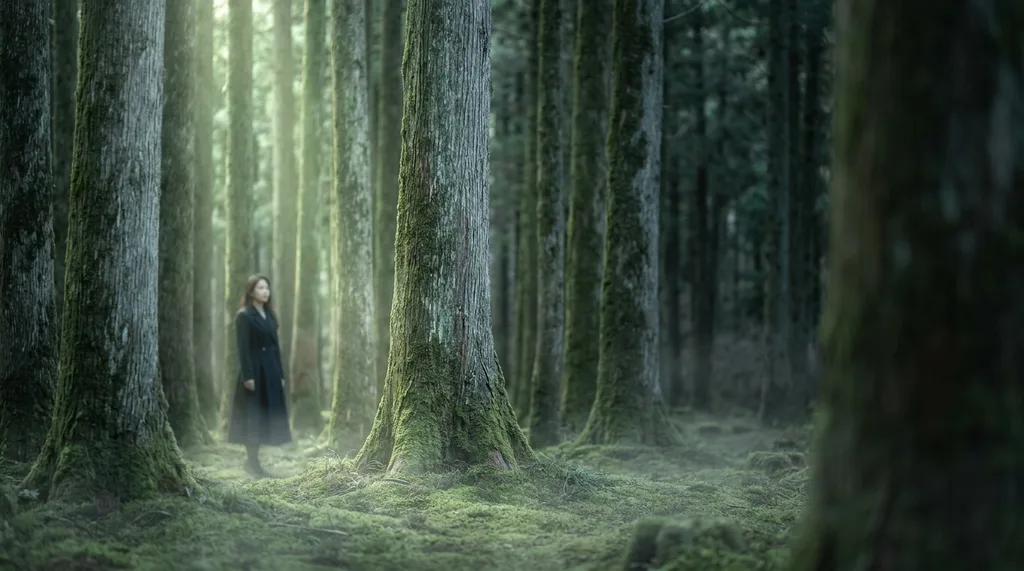
Korea's younger wellness generation has developed a practice called noji camping — immersion in undeveloped wild land, away from urban infrastructure. At first it sounds like ordinary camping. But within the Korean wellness context, noji and its adjacent practice of chabak (sleeping in your car in remote nature) represent something more pointed: a deliberate removal of the stimuli that keep cortisol elevated and the skin barrier chronically stressed.
The concept of camping-byeong — "camping sickness," the irresistible urge to escape the city — is recognized not as a leisure preference but as a biological signal. Seoul's urban density, screen exposure, and professional pressure create a cortisol baseline that no serum addresses. The skin barrier, regulated partly by the autonomic nervous system, can't fully repair under those conditions. Noji camping paired with a nearby carbonate spring visit creates what Korean wellness practitioners now call a "complete reset" — systemic nervous system downregulation followed by molecular-level skin support.
This is not mysticism. It is sequencing: calm the system first, then give the skin what it needs to rebuild. The products come after. They have always been the after.
The smartest K-Beauty enthusiasts outside Korea have started to understand this, which is why wellness tourism to Korea's spa and oncheon regions has grown steadily even as global tourism has become more sophisticated. They're not coming for a hotel's hot tub. They're coming because somewhere in their body, they've registered that what they've been buying hasn't been doing the whole job.
The Practical Circuit: A Two-Day Healing Protocol
If you're building a trip around this, the Cheoksan-Sokcho circuit is the most accessible from Seoul for a weekend. The Jeju-Sanbangsan circuit requires a flight but rewards with more dramatic scenery and the unique basaltic mineral profile of Jeju's water.
A realistic two-day protocol:
Day 1 — Arrive and decompress. Check in to accommodation. Do not immediately rush to the spring. Walk. Eat simply. If you're near Seoraksan, take a short trail in the late afternoon. Let the nervous system register that you have genuinely left.
Day 2 — The spring, done properly. Morning immersion (20-35 minutes). Exit. Rest in the rest area for at least 30 minutes — Korean spas always have these for good reason. Hydrate. A second shorter immersion (15-20 minutes) in the afternoon if the body feels ready. Eat warm food in the evening. Sleep in the dark.
For Jeju, Agoda carries a wide range of Seogwipo accommodations across every price point. For the Sokcho circuit, Klook lists both express bus tickets and experience packages for the Seoraksan area that can be bundled efficiently. Neither platform requires booking far in advance for these destinations, but weekend availability near popular springs can thin out during Korean public holiday windows.
What the Products Can't Replace
There's an honest limit to what any external product accomplishes on skin that is perpetually under systemic stress. Korean dermatology understands this — the growing integration of traditional thermal therapy with clinical skin care in Korean wellness clinics reflects a consensus that the two work best as a sequence, not a competition.
The carbonate spring doesn't replace Centella Asiatica. The forest phytoncides don't replace a solid ceramide moisturizer. But if you've ever used a full routine faithfully for months and still felt your skin was fighting something it couldn't name, the answer may not be a new serum. It may be geography. A few days in a mul joeun got — a place with genuinely good water — has a way of doing what 40 product steps couldn't.
The products on your shelf are the maintenance plan. Korea's real secret is that you cannot maintain what you never allowed to heal.
Medical & Financial Disclaimer:
⚠️ Disclaimer: The information in this article is educational and does not constitute medical advice. Thermal hot spring bathing carries real cardiovascular risks for individuals with heart conditions, hypertension, circulatory disorders, or during pregnancy. Consult a qualified physician before undertaking any thermal therapy program. The skin benefits described are based on published research into carbonate spring chemistry and are not a guarantee of individual results. Mineral water composition varies by location and season — specific therapeutic claims made by individual commercial facilities should be evaluated critically. Travel bookings and accommodation choices are the sole responsibility of the reader. Exchange rates, facility hours, and operational status of springs can change; verify locally before travel.
This article may contain affiliate links — if you buy through them, we may earn a small commission at no extra cost to you.
✓ Researched and compiled using verified data as of the publication date.
 Written by Jun Mi Jung for Quiet Korea | Contact: rsl.2001.1975@gmail.com
Comments
Post a Comment