K-Idol Salon
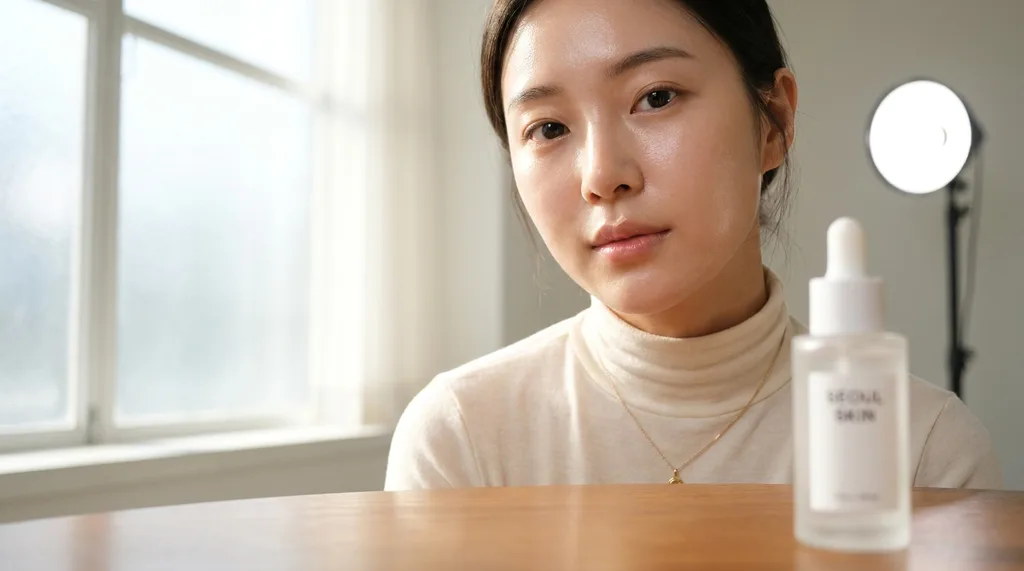
The secret to a K-pop idol’s stage-ready complexion is not found in a bottle of expensive foundation. If you have spent a small fortune on the latest Korean cushions, only to find the finish looks like a mask rather than skin, you are falling for the most common trap in the beauty industry: the belief that "Glass Skin" is a product category.
In the high-stakes world of a Cheongdam-dong salon, where an idol’s face must survive twelve hours of sweat, stage lights, and high-definition cameras, makeup is not applied—it is constructed. The look you covet, the Yuri-al Pibu (glass-bead skin), is actually 70% preparation and 30% technical application. It is the art of Hwal-jal-meok—the state of skin so perfectly saturated with moisture that makeup loses its "caked-on" weight and becomes part of the skin’s own reflection.
Key Takeaways * Glass skin is a byproduct of skin barrier density, not surface pigment; it requires multi-weight Hyaluronic Acid to trap moisture at varying depths. * Professional K-idol makeup relies on the "Mil-chak" technique, where products are pressed into the skin with metal spatulas to eliminate texture. * True luminosity is achieved through "negative space," leaving the high points of the face free from heavy base coverage to let natural hydration shine through.
How Hyaluronic Acid Actually Works
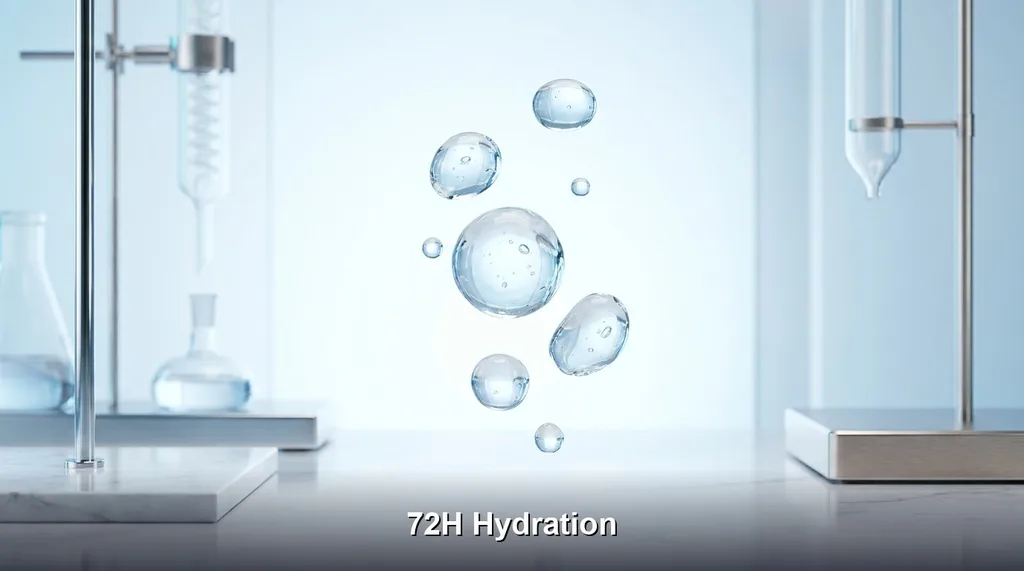
To achieve the "water-glow" (Mul-gwang) that seems to defy physics, you must abandon the idea of a single moisturizer. Locals know that high-molecular-weight Hyaluronic Acid (HA) is a superficial comfort—it sits on top, plumping the surface for a few hours. But the true K-idol "inner glow" (Sokgwang) comes from low-molecular-weight HA, which penetrates the stratum corneum to bind water where it matters.
When you layer these weights correctly, you aren't just hydrating; you are building a biological scaffold. The serum doesn't sit on you; it becomes a structural component of your skin’s extracellular matrix. Without this saturation, no foundation—no matter how expensive—will ever mimic the translucency of glass. It will only ever look like makeup sitting on a dry, thirsty surface.
🎵 K-Mono Lofi — Seoul Study Beats
Read deeper with Seoul lo-fi in the background — curated by K-Mono Lofi
The Cheongdam-dong Construction
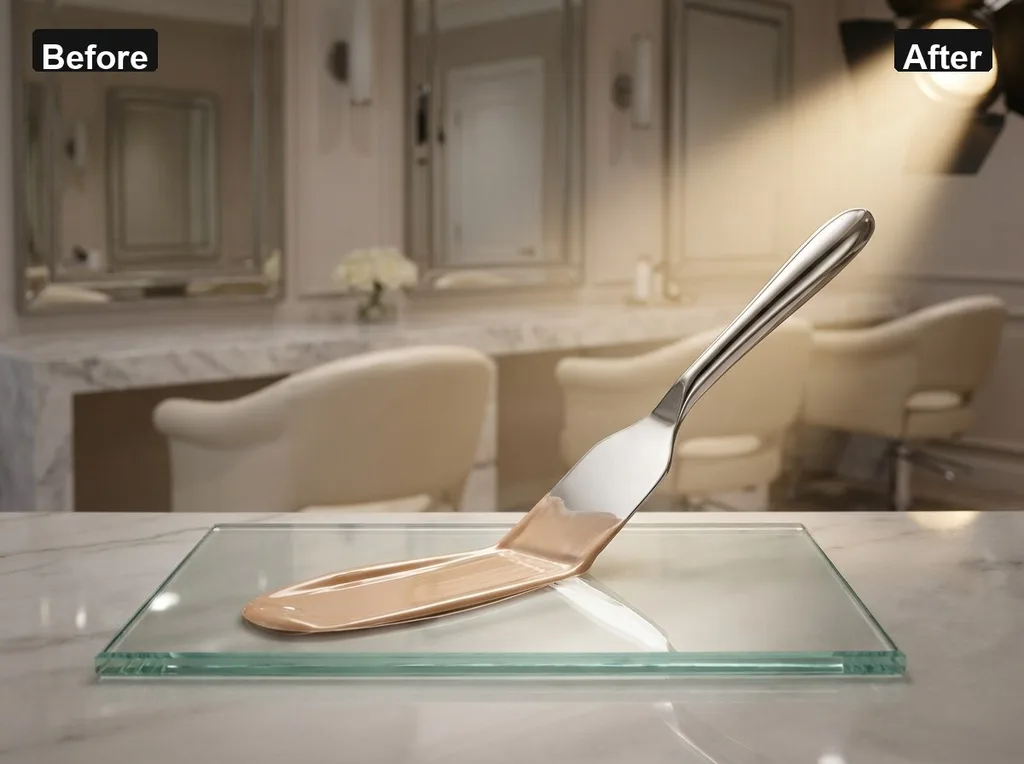
Walk into any top-tier salon in Cheongdam, and you will notice that brushes are rarely the star of the show. Instead, you see a collection of surgical-grade metal spatulas. The technique is deceptively simple: take a tiny amount of foundation, spread it thin on the back of your hand, and use the edge of the spatula to pick up a sheer, ribbon-like layer.
By pressing this into the skin rather than buffing it, you achieve Mil-chak—high adherence. The goal is to make the foundation invisible. If you can see the pigment, you have applied too much. The most guarded secret of the pros? They often skip the nose and the center of the forehead entirely, leaving the skin bare so that natural light hits the high points of the face without fighting through a barrier of makeup.
[K-Beauty 101] 속광 (Sokgwang) — Inner radiance. Unlike a highlighter that sits on the surface, this is the glow that appears to emanate from deep within, signaling a state of peak biological hydration.
The Cost of the "Glass" Look
It is time for the uncomfortable truth. The "Glass Skin" aesthetic is a demanding master. It requires a relentless commitment to barrier maintenance. If you use harsh physical scrubs or over-strip your skin with high-pH cleansers, you are creating micro-cracks in the barrier that make Mul-gwang impossible.
Furthermore, the K-idol look is often a product of "Personal Color" diagnostics—a rigid adherence to warm or cool palettes that prevents the face from looking muddy. If you are a cool-toned (Cool-ton) individual forcing a warm-toned (Warm-ton) foundation, your skin will look gray rather than radiant, no matter how much serum you apply. The trap of "viral" beauty is the assumption that one technique fits all. The reality is that the best K-beauty look is the one that respects your specific skin chemistry.
Frequently Asked Questions
Can I achieve glass skin if I have oily skin? Yes, but you must shift your focus from adding oil to balancing water. Oily skin often overproduces sebum because it is dehydrated; using a lightweight, low-molecular-weight HA serum will satisfy the skin’s thirst, reducing the need for excess sebum production.
How long does it take to see the results of this routine? While the "glass" look is an immediate aesthetic choice, the "skin-first" foundation requires consistency. You will see an improvement in hydration levels within 1-2 weeks of proper layering, but the true transformation of the skin barrier typically occurs after 6 weeks of disciplined care.
Is it necessary to buy expensive makeup tools? Not at all. The professional spatula technique is effective because it forces a thin application, not because of the tool itself. You can achieve similar results by using a clean, flat-edged stainless steel knife or even a rigid plastic palette knife from an art supply store.
⚠️ Disclaimer: The information provided here is for educational purposes regarding cosmetic techniques and skin health philosophy. It is not medical advice. If you suffer from chronic skin conditions, rosacea, or dermatitis, consult a board-certified dermatologist before introducing multiple layering steps or potent actives to your routine. Always perform a patch test when trying new formulations.
This article may contain affiliate links — if you buy through them, we may earn a small commission at no extra cost to you.
✓ Researched and compiled using verified data as of the publication date.
 Written by Jun Mi Jung for Quiet Korea | Contact: rsl.2001.1975@gmail.com
Comments
Post a Comment