K-Idol Salon
The secret of an idol’s glow isn't found in a highlighter. It isn't found in a contour kit. If you have ever stood before a mirror with the same high-end products your favorite K-pop star uses, only to find yourself looking "heavy" rather than "luminous," you have fallen for the most common trap in modern beauty: the assumption that makeup is something you apply to the face.
In the world of Cheongdam-dong—the elite district in Seoul where the world’s most famous faces are prepped for the stage—makeup is not a layer. It is a fusion. When you see an idol under the harsh, unforgiving glare of stage lighting, you aren't seeing a mask of pigment. You are seeing a complexion that has been treated as a living, breathing organ.
The Western approach to beauty is architecture: we carve, we shade, we build. We use pigment to create an illusion of bone structure. But K-Idol makeup is meteorology. It is about managing the weather of the skin. If the skin is too hot, it rejects the pigment. If the skin is too dry, it cracks. The masters of the craft know that a perfect look begins not with a brush, but with a thermometer.
Key Takeaways * Temperature is everything: Professional artists use cooling toner pads to drop skin surface temperature by nearly 6°C, preventing makeup oxidation and "sliding" under hot studio lights. * Molecular weight dictates glow: The "glass skin" effect relies on multi-molecular hyaluronic acid, creating a breathable film that locks in moisture rather than just coating the surface. * Skin-first, color-second: In the Cheongdam-dong philosophy, 70% of the makeup's success is decided during the skin preparation phase (Hwajalmeok), leaving only 30% for actual color application.
How Hyaluronic Acid Actually Works
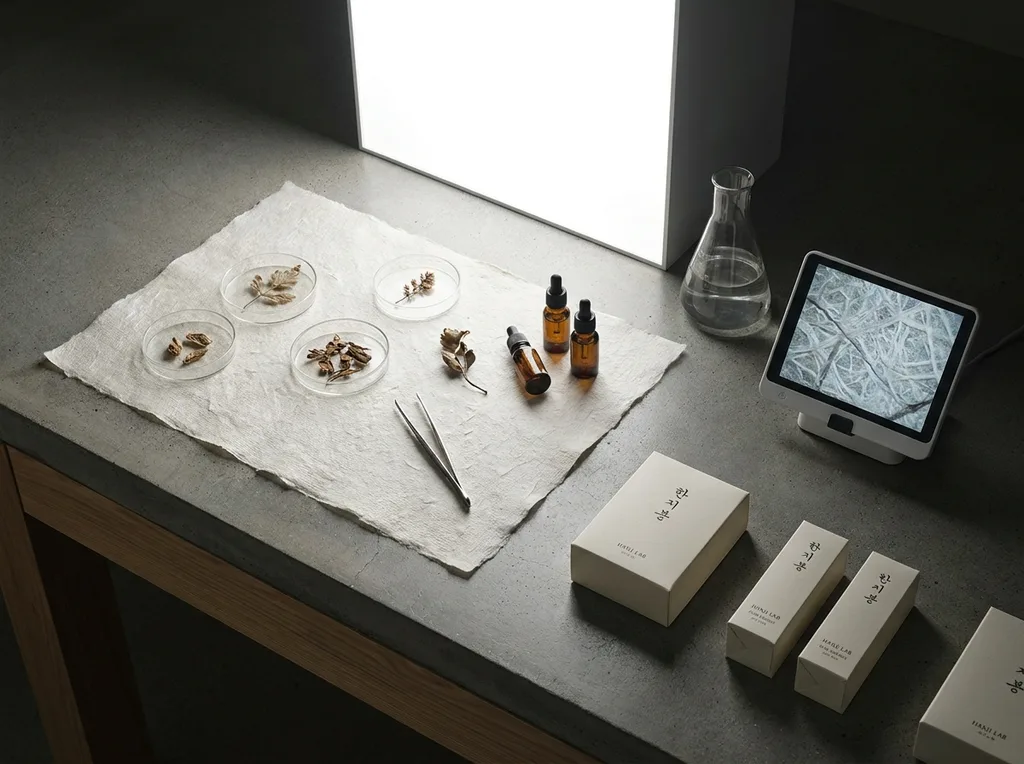
The difference between a sticky, superficial shine and the sought-after Mul-gwang (water-glow) is a matter of physics. Most users apply a "moisturizer" and assume they are hydrated. An artist in a Seoul salon sees it differently. They use multi-molecular weight hyaluronic acid—a blend of large molecules that sit on the surface to prevent moisture loss, and tiny, low-molecular weight chains that actually penetrate the stratum corneum.
When the skin is truly saturated, it becomes Hwajalmeok—or "makeup-eating" skin. It accepts the pigment. It doesn't fight it. When your skin is dehydrated, it creates tiny, microscopic fissures in the base layer, which is exactly where your foundation settles and creases. By managing the hydration cycle with the precision of a lab technician, the idol look bypasses the need for heavy, pore-clogging coverage.
The science of the cooling pre-prep, revealed →
The Architecture of Light vs. The Architecture of Shadow
Walk into a standard Western makeup counter, and you will be sold a palette of browns and greys to "sculpt" your cheekbones. Walk into a salon in Cheongdam-dong, and you will see the artist reaching for a peach-toned corrector. Why? Because the K-Idol aesthetic is built on the philosophy of Sokgwang—an inner radiance.
If you shade the face, you flatten it. You hide the skin. If you illuminate the skin from within—using color-correcting light rather than shadow-casting pigment—you retain the dimension of the face while making the skin appear healthier.
🎵 K-Mono Lofi — Seoul Study Beats
Read deeper with Seoul lo-fi in the background — curated by K-Mono Lofi
This is why the "gradient lip" (Ombre) and the "wide-set blush" (Gwajeup-sang) are so effective. They aren't trying to make your face look like someone else’s. They are designed to draw the eye to the center of the face, where the skin is most plump and dew-rich. By pulling the blush high under the eyes and keeping the lips soft and diffused at the edges, you mimic the natural flush of a youthful complexion. You aren't painting; you are directing the observer's focus toward the areas that best reflect light.
The Reality of the Idol Standard
It is important to be honest about the cost of this perfection. While the Hwajalmeok philosophy is accessible to anyone, the idol aesthetic is maintained under extreme conditions. The "glass skin" you see on stage is a product of professional-grade lighting, immediate touch-ups, and a skin barrier that is constantly under medical-grade care.
If you find that your "glass skin" attempt results in a look that feels more "greasy" than "glowy," you are likely using too much occlusive (heavy oil/wax) and not enough humectant (water-binding moisture). The goal is transparency, not a slick. A true glass finish shouldn't feel heavy; it should feel like you’ve just stepped out of a humid, refreshing mist.
⚠️ Disclaimer: This guide is for informational purposes only and does not constitute medical advice. K-beauty routines involve active ingredients; always perform a patch test when introducing new skincare, especially if you have sensitive skin or a compromised barrier. For professional procedures or concerns regarding skin conditions, consult a board-certified dermatologist.
This article may contain affiliate links — if you buy through them, we may earn a small commission at no extra cost to you.
✓ Researched and compiled using verified data as of the publication date.
 Written by Jun Mi Jung for Quiet Korea | Contact: rsl.2001.1975@gmail.com
Comments
Post a Comment