K-Idol Salon: Beyond the Filter
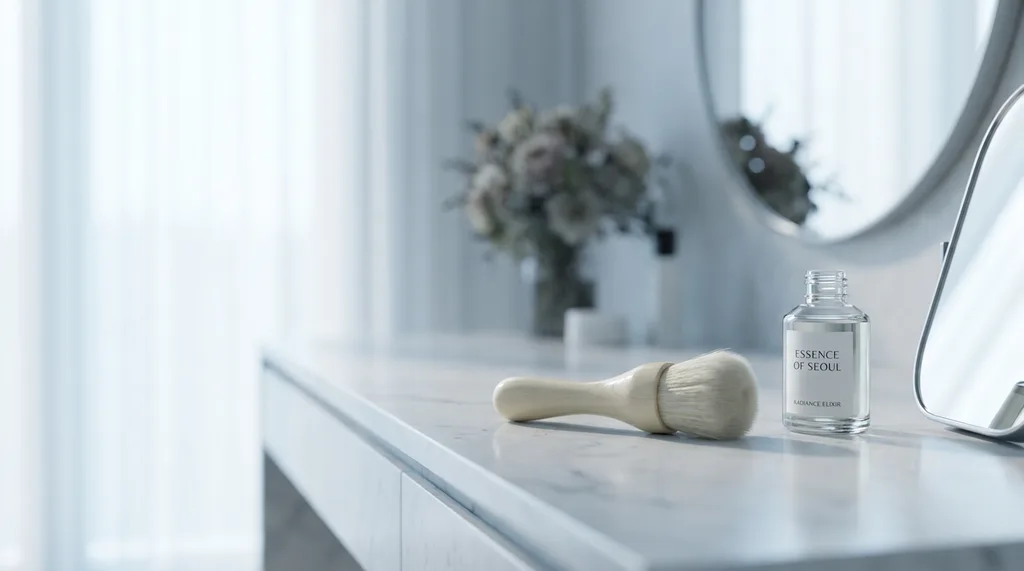
If you have ever spent an hour meticulously recreating a K-pop idol’s makeup look—layering the cushion foundation, carefully placing the under-eye liner, and perfecting the gradient lip—only to catch your reflection and see a face that looks like a mask rather than a star, you are not failing at makeup. You are simply using the wrong language.
Western beauty is an architecture of concealment and sculpture. We are taught to erase our skin with heavy pigments and redefine our bone structure with high-contrast contouring. But walk into any elite salon in Cheongdam-dong, and you will find that the goal is the exact opposite. K-Idol makeup does not want to sculpt; it wants to reveal. It is a philosophy of light management.
Why is it that K-pop idols can endure sixteen hours of stage lighting, sweat, and movement while their skin still looks like a fresh, dew-kissed peach? The answer is not in the bottle of foundation you bought. It is in the "how"—the invisible labor that happens before the first brush touches the skin.
Key Takeaways * Temperature Management: K-Idol makeup begins by cooling the skin to "lock" the base, preventing the heat-induced melting that ruins makeup under stage lights. * Thin-Layer Adhesion (Milchak-ryeok): The secret to the idol glow is not one heavy coat of coverage, but five microscopic, translucent layers that bond to the skin surface. * Strategic Architecture: Powder is never used as a blanket; it is used as a surgical tool, applied only to peripheral zones to protect the "inner glow" (Sok-gwang) in the center of the face.
The Physics of the "Inner Glow"
The biggest mistake most enthusiasts make is trying to mimic the "glass skin" effect with highlighters. If you are relying on shimmer to get that look, you are fighting physics. In the Cheongdam-dong aesthetic, the light must come from inside the skin.
This starts with Hwajalmeok—the state of "makeup-friendly skin." In the professional chair, an artist will never skip the prep. They use cooling toner pads, often chilled in a small refrigerator, to physically reduce the surface temperature of the face. When your skin is calm and cool, the capillaries are less dilated, and the base product adheres like a second skin rather than sitting on top of the heat-expanded pores.
The Art of Milchak-ryeok (Adhesion)
If you have ever wondered why your foundation looks "cakey" after three hours, it is likely because you are applying it with a "coverage" mindset. Idols are painted with a "clinging" mindset.
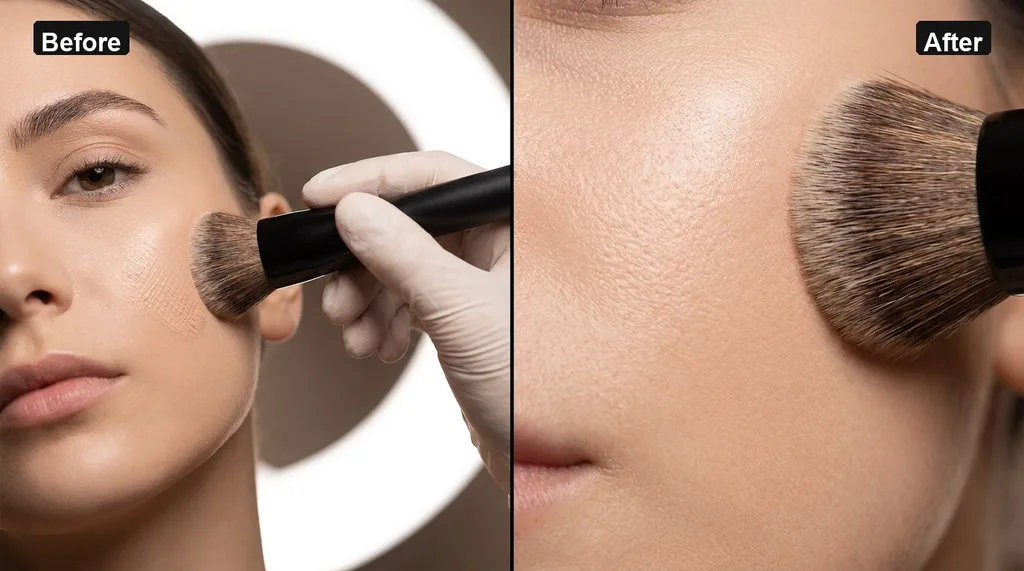
Professional artists use a cross-hatch technique with dense, flat brushes. They pick up a tiny amount of product—less than you think—and tap it into the skin in horizontal, then downward strokes. This forces the formula into the texture of the skin, creating a bond known as Milchak-ryeok. Think of it like a thin sheet of plastic wrap pulled tight over a surface; it doesn't move because it has nowhere to go.
🎵 K-Mono Lofi — Seoul Study Beats
Read deeper with Seoul lo-fi in the background — curated by K-Mono Lofi
Strategic Architecture: Where to Stop
The most counterintuitive part of the idol look is the strategic use of powder. In the West, we are taught to powder the "T-zone." In a K-Idol salon, powder is a weapon used against the edges of the face.
Artists leave the center of the forehead, the nose bridge, and the apples of the cheeks strictly bare. These are your "light-capture zones." If you powder these, you kill the glow. Instead, they apply a translucent setting powder only to the hairline, the jawline, and the perimeter of the nose. By creating a matte frame, the center of the face—kept hydrated and dewy—looks three-dimensional by comparison, without a single streak of bronzer.
[K-Beauty 101] 애교살 (Aegyo sal) — The puffy area of fat directly under the lower eyelid. While Western trends often focus on minimizing under-eye puffiness, K-Beauty highlights this feature with a touch of shimmer to create an expression of youth and "innocence," balancing the intensity of stage-ready eye makeup.
The High Stakes of the Idol Look
There is a dark side to this obsession with perfection. The pressure to maintain Yuri-al Pibu (glass skin) 24/7 in an industry powered by Ppali-ppali (hurry-hurry) culture can be crushing. When you see an idol’s skin looking poreless, remember that it is a performance. It requires a level of dermatological intervention and maintenance that isn't just about toner pads; it’s about professional-grade aesthetic treatments.
If your skin isn't "perfect," that is normal. The goal of learning these techniques shouldn't be to hide your humanity, but to understand how to work with your skin’s natural light, rather than against it.
Frequently Asked Questions
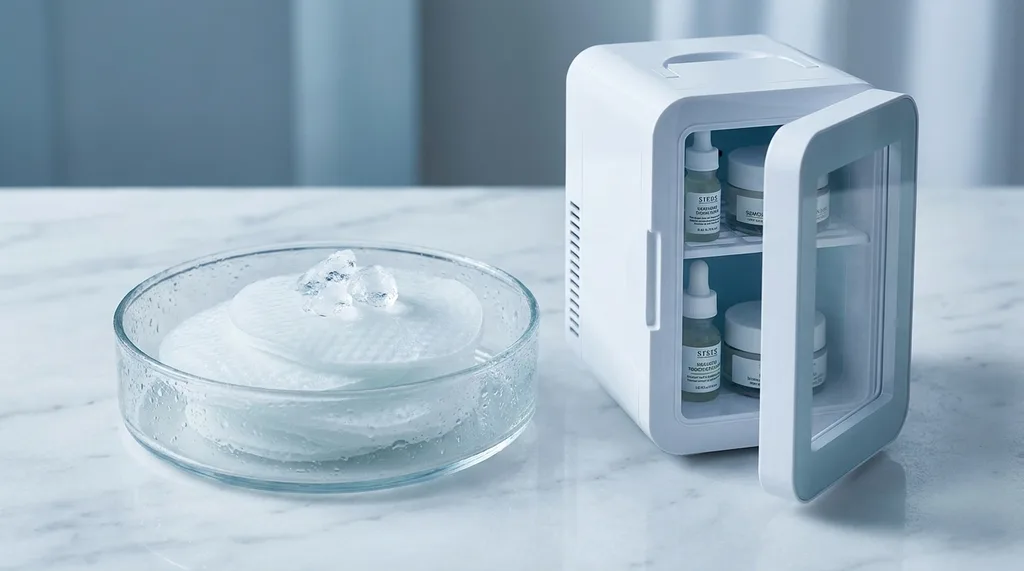
Does this "cooling" technique work for every skin type? Yes, cooling the skin is universally beneficial for reducing inflammation, but those with extremely dry skin should focus on hydrating toners, while those with oily skin should use alcohol-free, astringent-based cooling pads.
Can I achieve the idol look with matte foundation? Technically, yes, but it defeats the philosophy. The idol aesthetic relies on the light-reflecting properties of semi-matte or dewy formulas. A heavy matte foundation will "seal" the skin and prevent the Sok-gwang (inner glow) from showing through.
How do I prevent my under-eye area from creasing? The secret is the "thin-layering" rule. If your concealer is creasing, you are using too much. Apply a tiny dot in the center of the under-eye triangle and blend outward with a damp puff, ensuring the product is pressed into the skin rather than painted on.
⚠️ Disclaimer: The techniques described here are for aesthetic purposes only. K-Beauty rituals often involve layering multiple products, which can increase the risk of skin irritation or clogged pores. Always patch-test new products on your inner arm for 24 hours before applying them to your face. If you have active acne, rosacea, or severe skin conditions, consult a board-certified dermatologist before adopting intensive multi-step routines.
This article may contain affiliate links — if you buy through them, we may earn a small commission at no extra cost to you.
✓ Researched and compiled using verified data as of the publication date.
 Written by Jun Mi Jung for Quiet Korea | Contact: rsl.2001.1975@gmail.com
Comments
Post a Comment