K-Beauty Trend Radar
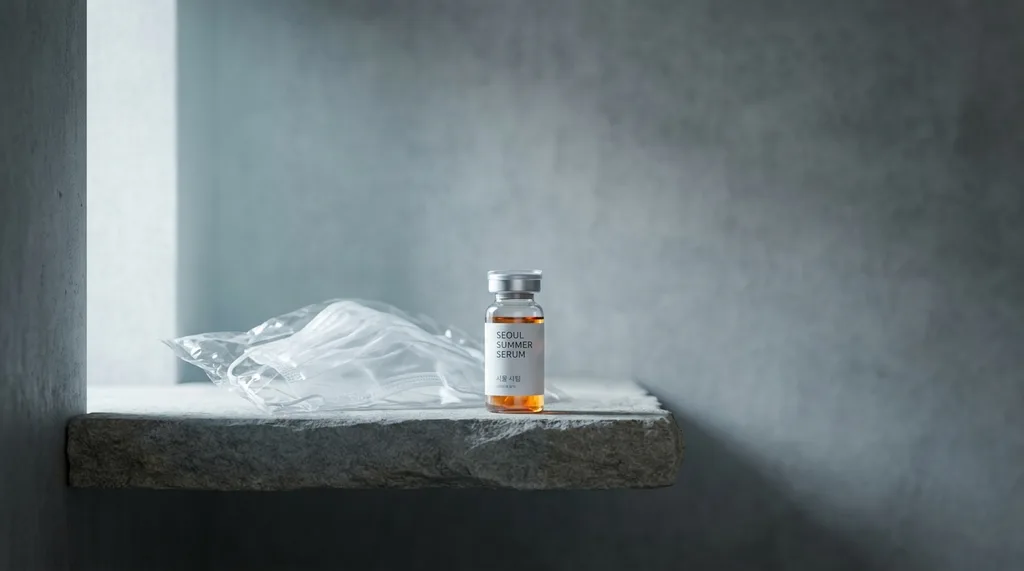
Right now — this summer, as Korea's humidity climbs and the Olive Young at the corner of every busy Seoul intersection restocks its shelves for the third time this week — something deeply strange is happening in the world's most scrutinized beauty market. The two fastest-growing K-Beauty categories of 2025 couldn't look more different. One is a 3,000-won product from a discount retailer that keeps selling out before lunch. The other is a 5th-generation injectable skin booster, engineered from the same structural proteins as your own dermis, administered in a Gangnam dermatology clinic that requires a reservation two months out.
- The Great Bifurcation — and What's Being Crushed in the Middle
- The Hwahae Effect — When Every Buyer Has a Lab Coat
- Scalps, Boosters, and the Disappearing Line Between Clinic and Bathroom
- The Viral Architecture — TikTok as Export Infrastructure
- What Hits Global Next — Your Action Guide
- Explore Clinical-Grade K-Beauty Actives
- Frequently Asked Questions
These two things should have nothing to do with each other. Except they do. And the reason they do is the signal everyone outside Korea is missing.
Key Takeaways - K-Beauty in 2025 has split into two poles — ultra-clinical ECM treatments and ultra-affordable Daiso-tem — with mid-range novelty products being squeezed out. Understanding why tells you exactly where global beauty is heading. - The Hwahae ingredient-analysis platform has created the world's most data-literate beauty consumers, making both cheap-but-clinical and expensive-but-proven equally viable — and exposing "concept ingredients" (marketing-only actives) faster than any Western media outlet could. - The line between a clinical dermatology procedure and a daily home skincare routine is actively dissolving in Seoul right now — and that dissolution is the next major K-Beauty export.
The Great Bifurcation — and What's Being Crushed in the Middle
For the better part of two decades, the K-Beauty industry ran on a single engine: novelty at accessible price points. Sheet masks shaped like animals. Cushion compacts that felt like a magic trick. Snail mucin appearing in polite Western magazines as a charming quirk. The game was: produce something interesting, price it low, watch it travel.
That engine has not stopped. But something else has started alongside it — something that's pulling the market in two completely opposite directions simultaneously.
Walk into any Daiso in Seoul right now and you'll find shelves stocked with collaboration products from brands that normally sell at premium counters. These are not the watered-down, private-label fillers that Westerners associate with dollar-store beauty. Korean consumers have tested them on Hwahae — the country's dominant ingredient-analysis platform — and confirmed that the formulations are substantively identical to their full-price siblings. The result is what the Korean internet is calling the Daiso-tem (다이소템) phenomenon: a genuine sold-out frenzy that treats a 3,000-won product with the same scarcity urgency once reserved for limited-edition luxury drops.
At the exact same time, the dermatological end of the market is experiencing its own rupture. Skin boosters — once the exclusive vocabulary of clinics — are evolving into what practitioners are calling 5th-generation ECM (extracellular matrix) treatments. Earlier generations targeted volume or wrinkle depth. This generation targets the skin's actual structural architecture: collagen fibers, elastin networks, and the hyaluronic acid matrix that gives skin its bounce and translucency. Products in this category work not by adding something foreign but by replenishing the specific proteins and polysaccharides the dermis uses to rebuild itself.
What's getting crushed is the comfortable middle. Mid-range novelty products — the ones competing on concept rather than clinical backing — are losing on both ends. Korean consumers who can verify an ingredient list in 30 seconds on Hwahae have no patience for a $30 serum built around a "concept ingredient" with no peer-reviewed evidence. And Korean consumers who want genuine efficacy increasingly understand that either the science is cheap enough to democratize through Daiso or sophisticated enough to require clinical delivery.
This is the bifurcation. This is what's coming to your market next.
📦 K-Beauty 1.0 (2010–2022)
Novelty-first formulation. Packaging as marketing. 10-step routines as content. Sheet masks as gateway. Concept ingredients sold on storytelling alone. Export model: same product, everywhere.
🔬 K-Beauty 2.0 (2023–Present)
Clinical rigor as baseline. Ingredient transparency enforced by consumer data platforms. Skin architecture targeted (ECM, barrier, microbiome). Export model: localized reformulation by market. Efficacy proven or exposed — no middle ground.
The Hwahae Effect — When Every Buyer Has a Lab Coat
Here is the mechanism nobody outside Korea is tracking closely enough. Hwahae — think of it as a cross between Consumer Reports and Reddit's skincare community, built entirely around verified ingredient analysis — has fundamentally altered the power relationship between brands and consumers in Korea. When a new product launches, the Hwahae community reverse-engineers it before the press release finishes loading.
This has consequences that look paradoxical from the outside but are perfectly logical from the inside.
It simultaneously validates cheap products and destroys expensive frauds. A 3,000-won Daiso moisturizer containing the same ceramide complex as a 45,000-won department store cream gets a top Hwahae rating. The expensive cream loses its argument. But a new indie serum claiming "stem cell rejuvenation" at a premium price, with a formula that delivers those stem cell derivatives at a concentration too low to cross the stratum corneum? Hwahae's community flags it as a concept ingredient play. Sales collapse.
The regulatory environment is amplifying this. Korea's Ministry of Food and Drug Safety (MFDS) has moved toward an EU-equivalent Product Information File framework — requiring comprehensive toxicological safety assessments, stability data, and real-world exposure analysis for functional cosmetics claims. The era of launching a product with a great story and figuring out the safety file later is over. The MFDS now conducts post-GMP checks on a three-year cycle, and for 2025, that scrutiny has expanded to include over a thousand domestically produced products and more than a thousand products entering through international direct purchasing channels.
For indie brands, this is brutal. For consumers, it's the best possible news.
[K-Beauty 101] Sok-geonjo (속건조) — Deep-skin dryness that persists even when the surface appears normal. This is a diagnostic concept unique to Korean dermatology: your face might look fine in the mirror while the dermis itself is structurally dehydrated, disrupting the skin's ability to produce its own lipids and proteins. It's the condition driving the entire "routine-centric" consumption wave — no single product fixes it; only consistent barrier-supporting layering does.
The regulatory cascade, visualized:

The brands surviving this consolidation share one trait: they can prove what their products do at a molecular level, and they have the clinical data to back it. Everyone else is being forced to either find a Daiso collaboration partner or find the door.
🎵 K-Mono Lofi — Seoul Study Beats
Read deeper with Seoul lo-fi in the background — curated by K-Mono Lofi
Scalps, Boosters, and the Disappearing Line Between Clinic and Bathroom
There's a third trend embedded inside the clinical shift that's getting less attention than it deserves — and it's quietly reshaping an entirely new product category.
Korean consumers are skinifying their scalps.
Not in the aspirational, marketing-speak sense of "treat your scalp like your face." In the obsessive, methodical, six-product-layering sense that used to be reserved exclusively for facial routines. Scalp exfoliating scrubs. Scalp toners applied with the same deliberate patting technique as a second essence. Pre-shampoo treatments designed to address what Korean dermatologists diagnose as scalp barrier dysfunction. The same granular concern that K-Beauty built for facial gyeol (결 — skin texture and grain, the smoothness of the surface) is now being applied follicle by follicle.
[K-Beauty 101] Subuji (수부지) — The portmanteau for oily-dehydrated skin (oily surface, parched deeper layers). It's the most common skin diagnostic in Korea, and it maps directly onto the scalp concern gaining traction now: a scalp that over-produces sebum precisely because its moisture barrier has been stripped by harsh sulfate cleansers. The solution — barrier-rebuilding, not stripping — is the same whether you're treating a cheek or a hairline.
Meanwhile, at the clinical end, the ECM booster category is producing results that are genuinely redefining what a non-surgical anti-aging treatment can accomplish. Legacy biostimulators like Rejuran (polynucleotide-based collagen stimulation) and Juvelook (lyophilized hyaluronic acid matrix) remain clinic staples, but the conversation has moved toward what practitioners call structural building block therapy: directly supplying the dermis with collagen precursors, elastin components, and native hyaluronic acid in molecular weights calibrated for dermal integration rather than epidermal surface effects. The goal is not to look filled. The goal is to make the skin capable of filling itself.
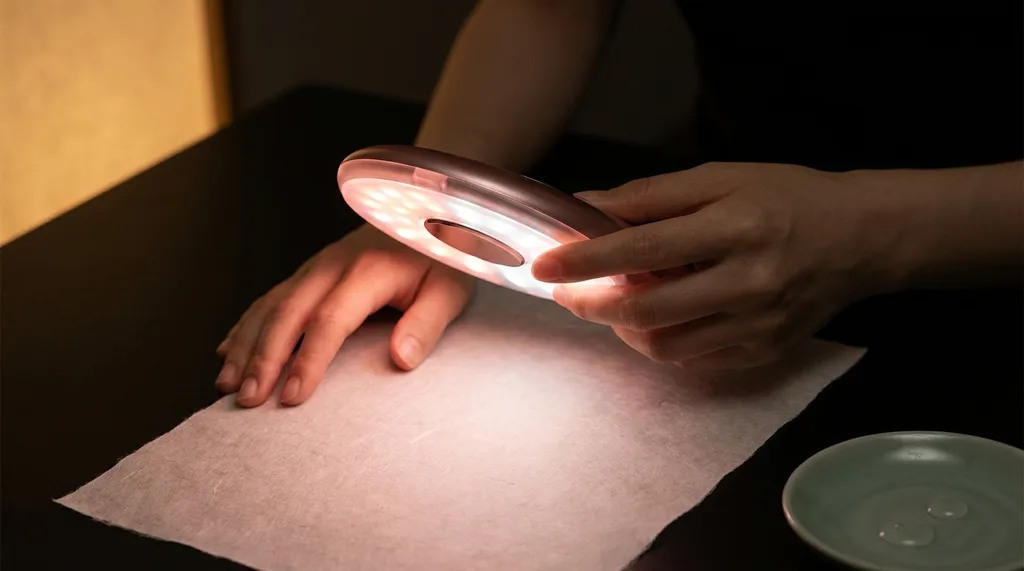
The consumer device market has followed directly. Home tools calibrated to enhance topical booster absorption — microcurrent, low-level LED, focused ultrasound at safe consumer-grade intensities — are now marketed alongside clinical booster protocols as a "home maintenance" layer. The treatment happens at the clinic. The maintenance happens on your bathroom counter, every morning, with a device that costs roughly what a single clinic session does.
This is the line dissolving. And it's the answer to the question planted at the top of this article: why are a 3,000-won Daiso product and a Gangnam skin booster both winning simultaneously? Because they are both, fundamentally, the same argument. What you put on or in your skin should earn its place there. The Korean market — armed with Hwahae, pressured by the MFDS, and advised by dermatologists who post on Naver — has decided it will no longer accept anything less.
The Viral Architecture — TikTok as Export Infrastructure
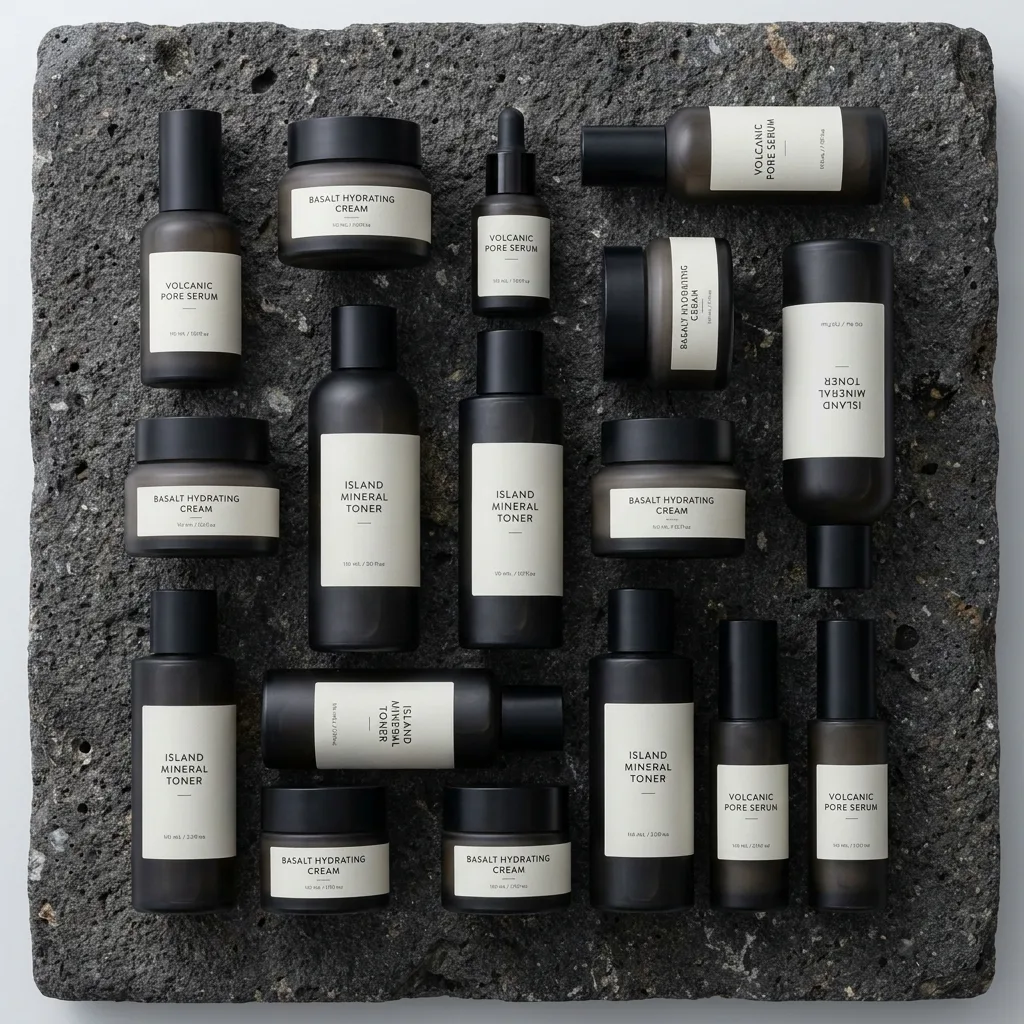
Understanding where a Korean trend goes next requires understanding how it travels. And the pipeline has become remarkably mechanical.
The sequence works like this: a product with an unusual texture, a before-and-after that photographs in under three seconds, or a routine step that looks wrong until it looks genius — these hit Korean short-form platforms first. Within weeks, the creator economy on TikTok and Instagram carries it westward. By the time Allure is running a feature, Korean brands have already moved to the next iteration.
What's changing in 2025 is that the content itself is getting smarter. Hybrid products — the "올라운더 제품" (all-rounder) philosophy, combining what used to be three separate steps into one application — are designed explicitly for demonstration. A tinted SPF that transforms from stick to serum on contact. A scalp toner that foams at the roots. A glass-effect lip treatment that shows visible change in real time. These are not products that happen to be filmable. They are filmed before they are formulated.
AI skin diagnostics are accelerating the personal stakes. Korean consumers — and increasingly global consumers — are submitting selfies to AI analysis tools that identify whether their concern is Sok-geonjo (deep-skin dryness), barrier compromise, or sebum imbalance, then receiving a curated product sequence. This has produced what the industry calls "routine-centric" consumption: instead of buying individual products, consumers are purchasing holistic systems targeted at a single diagnosed condition. Curated multi-product kits from brands like Torriden are outselling their individual flagship products precisely because they solve the whole problem, not just a symptom.
The localization shift is equally significant. The most successful K-Beauty export brands in 2025 are not sending Korean products abroad. They're reformulating for local climate, local skin microbiome data, and local distribution channels. The texture that sells in humid Seoul can fail in dry Denver. The same brand is now two or three brands, built on the same clinical backbone but calibrated for the market it's entering.
What Hits Global Next — Your Action Guide
Here is what the Korean market is signaling, clearly enough to act on.
ECM-targeting ingredients are about to become the new niacinamide. Peptides that stimulate collagen and elastin synthesis — think acetyl hexapeptide complexes, palmitoyl tripeptide-38, and native hyaluronic acid in dermal-penetrating molecular weights — are moving from clinic serums to consumer products. The brands getting ahead of this are building formulas around extracellular matrix support rather than simple surface hydration. Look for this language on packaging; it's the signal that the brand is tracking clinical trends rather than marketing ones.
Scalp care is the next facial skincare. The category is early enough globally that entering now — with scalp exfoliation, barrier-supporting scalp toners, and peptide-infused pre-shampoo treatments — puts you ahead of a wave that is clearly gathering force in Korea. The Hwahae community has already validated the science; the global content machine just hasn't fully caught up yet.
Demand Hwahae-equivalent transparency from your brands. Korean consumers have the most powerful ingredient-accountability tool in the global beauty market. Globally, the closest equivalent is community-driven ingredient databases and dermatologist creator accounts. Follow the ones who read labels for a living and treat "no clinical evidence" as a disqualifying fact, not an opinion.
The home device + topical booster pairing is the format to watch. If the next five years in K-Beauty follow the pattern of the last two, the at-home device category — microcurrent, LED, low-intensity ultrasound — will move from luxury to standard. These devices are increasingly designed to be paired with specific topical formulas, creating what effectively functions as a two-part clinical protocol. Products designed for device-enhanced absorption (thinner molecular weight actives, lower viscosity, no occlusive barriers) are a distinct category from regular serums and should be treated as such.
| Trend Category | Current Stage in Korea | Estimated Global Arrival | What to Look For |
|---|---|---|---|
| ECM-targeting topicals | Growth phase | 12–18 months | Peptide + HA matrix complexes on INCI |
| Scalp skinification | Mainstream | 18–24 months | Pre-shampoo treatment SKUs |
| Daiso-tem phenomenon | Peak (domestic) | Already arriving via mass-market retail | Budget-tier brand collaborations |
| Home device + booster pairing | Early mainstream | 24–36 months | "Device-activated" formula language |
| AI skin diagnostics + routine kits | Growth phase | 12–18 months | Skin-type-specific curated sets |
Frequently Asked Questions
What exactly is the Daiso-tem trend and will it translate outside Korea? The Daiso-tem phenomenon refers to high-quality beauty products — often collaborative releases from reputable Korean brands — sold at the discount retailer Daiso for around 3,000 won (approximately $2–3 USD). The reason it works in Korea is that consumers use Hwahae to verify that the formula is genuinely effective, so price becomes irrelevant to quality judgment. Outside Korea, the equivalent would be drugstore or mass-market products from clinical-grade brands — the trend is already arriving as Korean brands expand into Target and Ulta with accessible price points backed by genuine clinical data.
What are ECM skin boosters and are they safe for home skincare routines? ECM stands for extracellular matrix — the structural scaffolding of your dermis made up of collagen, elastin, and hyaluronic acid. Professional-grade ECM boosters are injected at dermatology clinics and require a licensed practitioner. At-home, the equivalent comes through high-penetration topical peptides and low-molecular-weight hyaluronic acid that support ECM function at the epidermis-dermis junction. These are safe for home use when formulated correctly, but the injectable versions should only be administered in a clinical setting with a qualified provider.
How do I find Hwahae-equivalent ingredient analysis outside Korea? Hwahae is not available in English as a full consumer-facing platform, but its business insights are published in English on their business portal. For practical ingredient analysis, Korean-literate beauty creators on YouTube and Instagram regularly translate Hwahae community findings. INCI Decoder, CosDNA, and Paula's Choice ingredient dictionary offer partial equivalents. For the most rigorous approach, search for dermatologist creators who evaluate peer-reviewed evidence rather than brand-supplied data.
Is skin cycling still relevant in 2025, or has K-Beauty moved past it? Skin cycling — rotating actives like retinol and chemical exfoliants on a four-day schedule — remains scientifically sound and is still recommended by Korean dermatologists as a way to prevent cumulative barrier damage. What has evolved is the sophistication around it: in 2025, the Korean market has moved toward personalizing the cycle length based on individual barrier resilience (diagnosed either by AI analysis or clinical consultation) rather than applying a universal four-day template.
What's the difference between a 5th-generation skin booster and standard hyaluronic acid filler? Standard hyaluronic acid fillers add volume and are used for structural correction — lifting, plumping, contouring. Fifth-generation skin boosters use much lower concentrations of HA in higher-water-retention molecular formats, combined with ECM building blocks, to improve the skin's intrinsic quality: luminosity, elasticity, and fine-line texture. They are injected superficially into the dermis, not deeply into subcutaneous tissue. The goal is skin health, not structural change — which is why the results look like "better skin" rather than "different face."
The deepest thing Korean beauty has figured out in 2025 is not a product or an ingredient. It's a standard. Korean consumers now hold every product — from a 3,000-won Daiso collaboration to a Gangnam booster protocol — to the same question: does this actually do what it claims, at a level that science can confirm? That question, spreading globally through TikTok and ingredient databases and communities of people who simply stopped trusting marketing copy, is the real K-Beauty export. Everything else is just the container it arrives in.
⚠️ Medical & Financial Disclaimer: This article covers professional dermatological procedures (including injectable skin boosters and ECM treatments) as well as at-home skincare devices and product formulations. Professional injectable treatments should only be performed by a licensed, board-certified dermatologist or plastic surgeon in a clinical setting — never at home or by unlicensed practitioners. At-home skincare devices should be used strictly according to manufacturer guidelines; consult a dermatologist before use if you have active inflammatory skin conditions, rosacea, or a history of photosensitivity. Perform a patch test on any new topical product, including budget-tier or collaboration products, before full-face application. Product categories and formulations mentioned reflect reported market trends and general ingredient science — they do not constitute personalized medical or skincare advice. Market data cited reflects ranges from available industry sources and should be used for directional context only.
This article may contain affiliate links — if you buy through them, we may earn a small commission at no extra cost to you.
✓ Researched and compiled using verified data as of the publication date.
 Written by Jun Mi Jung for Quiet Korea | Contact: rsl.2001.1975@gmail.com
Comments
Post a Comment