[Haul & Commerce Review] Glass Skin Masterclass
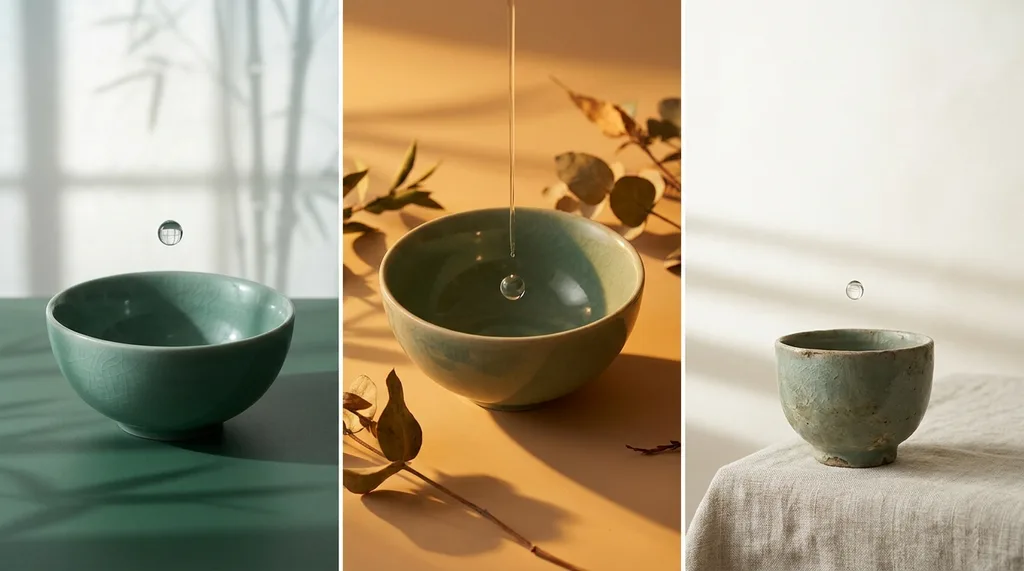
The women who actually have glass skin — the ones your algorithm serves you at 11pm, whose before-photos barely look different from their afters because their baseline was already this good — most of them are not using the products being marketed to you as "glass skin essentials." Korean community forums, the kind where real women post furious updates about products that overpromised and underdelivered, have one consistent finding: the routines that work don't look anything like the ones being sold internationally under that label.
What separates the two isn't brand prestige. It's understanding what kind of glow you're actually chasing — and building toward it in the right order.
What Korean Women Are Actually Buying
Korean skincare culture has spent the last several years quietly divorcing itself from the 10-step routine aesthetic it exported to the world. What's trending on local platforms now is closer to precision: fewer products, higher function per step, and an almost obsessive focus on two metrics that most international haul content never mentions.
The first is cleanser pH. Korean dermatology boards have been consistent on this for years — the effective range is 5.0 to 6.5, matching the skin's own mildly acidic mantle. Low-pH cleansers now dominate the bestseller shelves at Olive Young precisely because Korean consumers tracked the downstream damage: over-alkaline formulas strip the lipid matrix, the ceramide-cholesterol-fatty acid "mortar" that holds the skin barrier together. Once that mortar weakens, no serum can fix the problem it caused.
[K-Beauty 101] 속광 (Sok-gwang) — Inner glow, the radiance that surfaces from structurally healthy skin. Not a cosmetic finish. Not a product outcome. A biological state — built over months through consistent barrier maintenance, impossible to apply topically. The moment you understand this distinction, your purchasing decisions change permanently.
The second metric is TEWL: transepidermal water loss. Healthy skin on the cheeks loses roughly 5 to 15 grams of water per square meter per hour. Once the barrier is compromised, that number climbs — and no humectant can compensate for water that keeps escaping before it can be bound. The products Korean women are currently obsessing over are the ones that address this exit problem rather than simply adding more water to a leaking container.
🎵 K-Mono Lofi — Seoul Study Beats
Read deeper with Seoul lo-fi in the background — curated by K-Mono Lofi
At the product level, this translates to three categories dominating real Korean community traffic: barrier-repair cleansers (low-pH, non-stripping, deeply unexciting), hydrating first toners (lightweight, designed for immediate absorption on damp skin), and ceramide-forward moisturizers that actually seal the barrier rather than float on top of it.
[K-Beauty 101] 물광 (Mul-gwang) — Water glow: the luminous, almost-wet-looking radiance produced when skin is fully saturated with hydration. Unlike sok-gwang, this one is achievable with products and technique. The catch — it only sustains past noon on skin with a functional barrier underneath. Without that foundation, mul-gwang is a two-hour performance.
This is the distinction every working Korean glass skin routine is built on. Mul-gwang is the destination visible in the mirror. Sok-gwang is the infrastructure that makes it last.
The Honest Breakdown
Here's where most haul content fails you: it evaluates products on how they feel in the first week, not what they build in the first month. And it almost never tells you who should skip the product entirely.
The glass skin category has a specific failure mode that Korean dermatology communities call 속건조 (sok-geonjo) — a condition where the deep dermal layers are dehydrated despite visible surface oiliness. It looks like combination skin. It behaves like combination skin. But it's actually a barrier that has been stripped, often by over-exfoliation or high-pH cleansers, and is now overproducing sebum to compensate for the moisture it's losing faster than it can hold.
If your skin looks shiny by midday but feels tight or rough in texture, this is likely you. And here is the warning that no sponsored haul video will print: adding layered toners on top of a compromised barrier will not fix sok-geonjo. It temporarily plumps the surface while the underlying damage continues. The first investment has to be barrier repair — ceramides, cholesterol, fatty acids in formulations that have enough of each to actually function — before any hydration layering begins.
With that established — here is an honest evaluation of what a glass skin routine needs to deliver, by category:
The Korean community's consistent verdict: the cleanser is the most underinvested step in almost every failing routine, and the toner layering technique matters more than the toner's brand or price tier. A mid-range hyaluronic acid toner pressed in with genuine patience — palms held warm against the skin for 30 seconds between each layer — outperforms an expensive serum patted on in 10 seconds and immediately followed by the next product.
Getting There From Wherever You Are

Olive Young ships globally, and the three categories described above are well-represented there. The first toner and barrier moisturizer segments are where Korean brands lead at every price point — the formulation philosophy reflects decades of barrier-first thinking that Western drugstore brands are only beginning to approximate.
For those without direct access to Korean retailers, iHerb carries a strong selection of the key actives, often at higher concentrations than entry-level Korean products and at competitive pricing. The ingredients worth searching:
Multi-weight hyaluronic acid — look for formulations listing both high and low molecular weight versions. High molecular weight creates the visible mul-gwang surface effect; low molecular weight penetrates deeper for structural hydration. Formulations that do both are the actual workhorses.
Full ceramide complex — ceramide NP, AP, and EOP together with cholesterol. A moisturizer listing a single ceramide type is less effective than one that mirrors the skin's own lipid ratio. The research on this is consistent and has been for years.
Beta-glucan — underused by Western formulators, standard in Korean ones. Calming, deeply hydrating, increasingly available on iHerb in standalone serum form. Worth adding before a ceramide moisturizer in any barrier-repair protocol.
Use code QAK3042 at iHerb checkout for an additional discount across all of these categories.
The honest price comparison: a complete barrier-repair plus hydration-layering routine built from iHerb's available actives sits at a fraction of what's being charged for internationally marketed "glass skin sets." This isn't a statement about quality. It's a statement about what glass skin chemically requires — which is not complexity or rarity. It's precision and consistency, applied daily, over time.
The Upgrade Path
Once the barrier is stable — you'll know because the tight, over-oily feeling of sok-geonjo stops happening, and the shiny-but-dry contradiction resolves — the meaningful upgrades become narrow and specific.
A higher-concentration hyaluronic acid essence (2% or above, multi-molecular-weight). A Centella Asiatica or panthenol-based barrier serum if any sensitivity lingers. And sunscreen — SPF 50+, every morning without negotiation — because UV degradation is the largest external driver of barrier breakdown, and the fastest way to undo a glass skin routine that took months to build.
The most expensive thing in a glass skin routine is not the products. It is the time lost starting over after the barrier breaks again.
Read next: → Glass Skin Masterclass — the full science behind why this routine works at the molecular level, including the barrier biology that makes sok-gwang possible in the first place.
⚠️ Medical & Skin Safety Disclaimer: The skincare information in this article is educational and does not constitute dermatological advice. Ingredient sensitivities vary significantly between individuals — always patch-test new products on a small area of skin for 24 to 48 hours before full application. If you are experiencing active skin conditions including severe barrier disruption, cystic acne, eczema, or rosacea, consult a board-certified dermatologist before beginning any new layering protocol. Note: postmenopausal individuals experience significantly elevated baseline water loss through the skin compared to premenopausal skin, and may require more intensive barrier support than standard glass skin routines provide — discuss appropriate adjustments with a healthcare provider. Product availability, pricing, and formulations referenced in this article are subject to change; verify directly with retailers before purchase.
This article may contain affiliate links — if you buy through them, we may earn a small commission at no extra cost to you.
✓ Researched and compiled using verified data as of the publication date.
 Written by Jun Mi Jung for Quiet Korea | Contact: rsl.2001.1975@gmail.com
Comments
Post a Comment