Beyond the Oil: Solving the Paradox of Subuji Skin
If your skin feels like a landscape of contradictions—oily enough to shine by noon, yet tight enough to feel like it’s pulling at your pores by three o'clock—you have likely encountered the most misunderstood state in Korean skincare: Subuji.
For years, the beauty industry has sold a simple, binary lie: you are either "dry" or "oily." You are told to strip the oil if you’re shiny, or smother the skin in heavy creams if you’re parched. But Subuji (oily-dehydrated) defies this logic. It is the skin’s desperate cry for help, caught in a cycle of surface-level overproduction and deep-tissue thirst. If you are here because your skin is acting out, take a breath. You don’t need more products; you need a strategy that stops the fight against your own biology.
Key Takeaways * Subuji is a state of dehydration, not a fixed skin type; surface oiliness is often a defensive reaction to a damaged moisture barrier. * Aggressive stripping with harsh cleansers paradoxically signals the skin to produce more sebum to compensate for the lack of protection. * The solution is "Skinimalism": prioritize low-molecular-weight humectants and ceramide-based barrier repair over heavy, pore-clogging occlusives.
The Vicious Cycle of Stripping
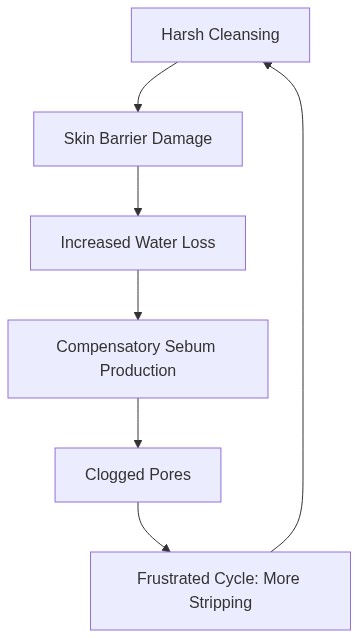
Walk into any Olive Young in Seoul at midnight, and you will see the same scene: someone desperately searching for a "quick fix" for their shine. The impulse is always the same—reach for the strongest foaming cleanser or an aggressive acid toner to "clear out" the oil.
But here is the crack in that belief: your sebaceous glands do not care about your aesthetic preference for a matte finish. When you strip away the natural lipids that hold your skin together, you fracture the Pibu Jangbyeok (skin barrier). The skin, sensing this loss of integrity, enters a panic state. It triggers an inflammatory cascade, signaling the glands to produce more oil to plug the gaps. You aren't fixing the oil; you are fueling the fire.
The goal isn't to remove the oil—it’s to restore the water so the skin no longer feels the need to protect itself through constant secretion.
How Hyaluronic Acid Actually Works
Most readers assume that if they buy a bottle labeled "Hydrating," their skin will instantly drink it up. But the chemistry is more nuanced. When you have Subuji skin, you need ingredients that can actually penetrate the stratum corneum without sitting on the surface like a film, which only contributes to that "clogged" feeling.
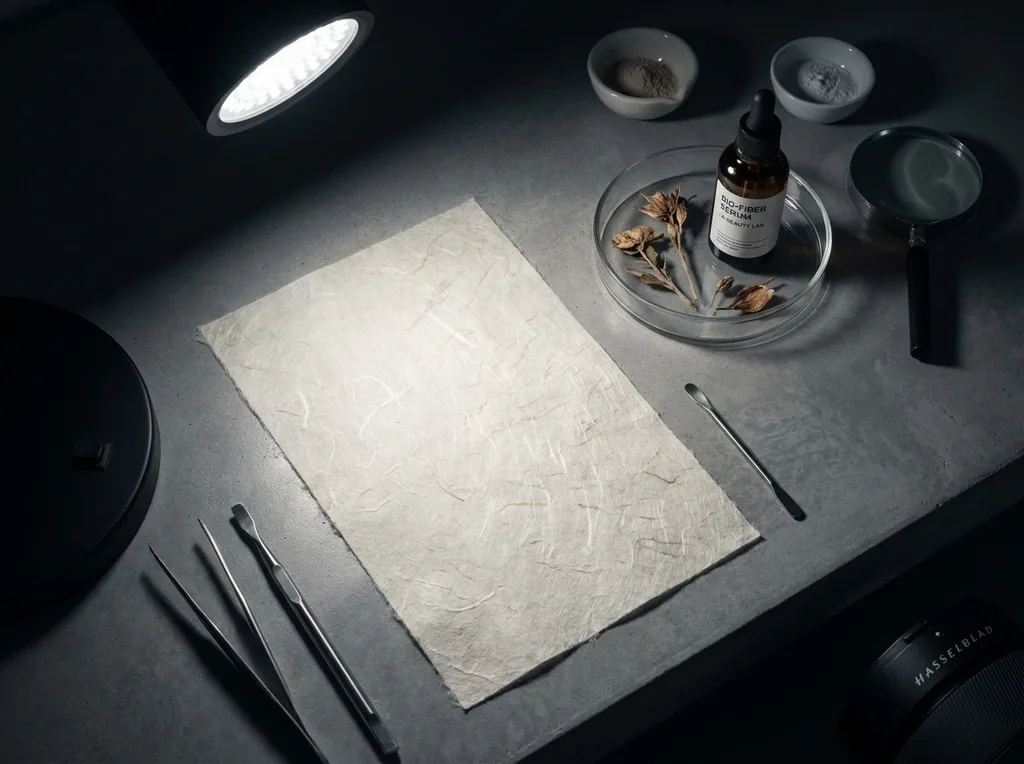
Low-molecular-weight hyaluronic acid is the secret here. Unlike its larger counterparts that sit on top of the skin, these smaller molecules travel deep into the epidermis to bind with water where it’s needed most. When paired with ceramides—the "cement" between your skin cells—you rebuild the wall that keeps the hydration in and the irritation out.
The Art of Skinimalism
The era of the 10-step routine is fading, replaced by a philosophy of "sophisticated simplicity." If your skin is inflamed and producing excess sebum, it is exhausted. It doesn't want ten layers of conflicting actives; it wants a reset.
Focus your routine on three pillars: 1. Low-pH Cleansing: If your skin feels "squeaky" after washing, your cleanser is too harsh. Find a gentle, non-stripping formula that maintains your barrier. 2. Layered Hydration: Use a watery toner (not an astringent one) and press it into the skin. This is the foundation of Hwajalmeok—the state where your skin is so perfectly plumped that makeup sits seamlessly, without sinking into pores. 3. Barrier Sealing: A lightweight, ceramide-rich emulsion is often better than a heavy cream. It seals in the moisture without suffocating the skin's natural breathability.
🎵 K-Mono Lofi — Seoul Study Beats
Read deeper with Seoul lo-fi in the background — curated by K-Mono Lofi
Frequently Asked Questions
Can I use niacinamide with my oily skin? Yes, it is one of the few ingredients that manages sebum production while supporting the skin barrier. However, keep the concentration around 5% or lower; anything higher can sometimes lead to irritation, which triggers more oil production.
How long until I see results? The skin’s natural turnover cycle is roughly 28 days. You should notice a decrease in that "tight but oily" sensation within the first two weeks, but true barrier stabilization takes about a full month of consistency.
Is it okay to skip moisturizer if I'm oily? Never. Even oily skin needs moisture. Skipping moisturizer leads to Sok-geonjo (inner dryness), which forces your skin to overproduce oil. Choose a gel-based emulsion rather than a heavy cream to keep the texture light.
This article may contain affiliate links — if you buy through them, we may earn a small commission at no extra cost to you.
⚠️ Disclaimer: This guide is for educational purposes only and does not replace professional medical advice. If you are experiencing severe breakouts, persistent redness, or inflammatory skin conditions, please consult a board-certified dermatologist. Always perform a patch test on your inner arm before introducing new active ingredients to your face.
✓ Researched and compiled using verified data as of the publication date.
 Written by Jun Mi Jung for Quiet Korea | Contact: rsl.2001.1975@gmail.com
Comments
Post a Comment