Beyond the Folk Tale: Why Your Grandmother’s Skincare Ritual Was Actually Applied Science
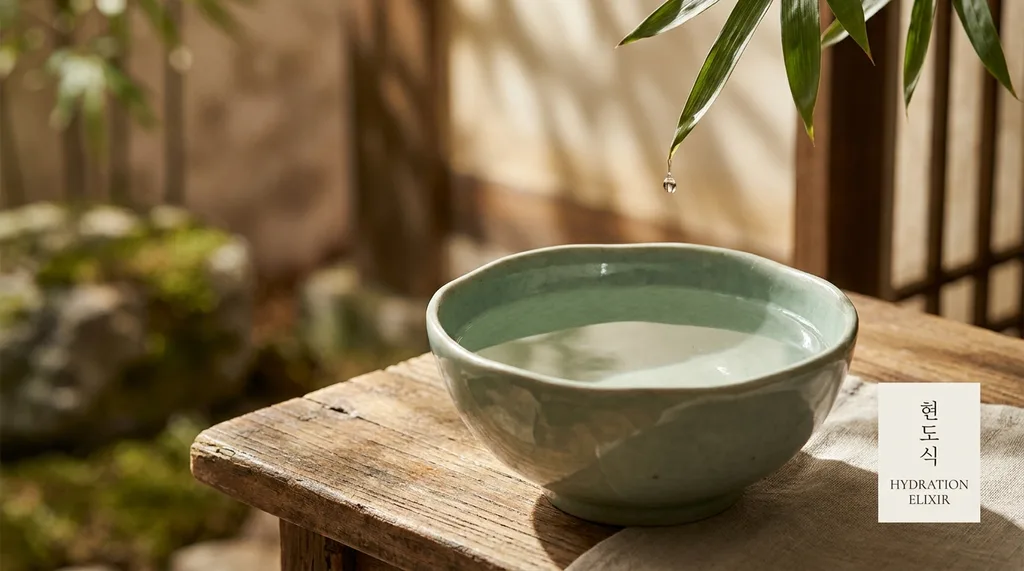
Walk into any high-end dermatology clinic in Seoul’s Gangnam district, and you will see shelves stocked with serums costing hundreds of dollars. But walk into the kitchen of a traditional Korean home at sunrise, and you might find something far older: a bowl of cloudy, white liquid—the byproduct of rinsing rice for breakfast—being patted gently into the skin.
For decades, the global beauty industry dismissed these practices as mere "folk wisdom" or quaint superstitions. But modern analytical chemistry tells a different story. When your grandmother used ssaldteumul (rice water) to wash her face, she wasn't just following a habit; she was performing a crude, highly effective biochemical extraction. She was applying a solution rich in inositol, ferulic acid, and B-vitamins—the very same compounds that modern clinical research now isolates and stabilizes in million-dollar laboratories.
Key Takeaways * Traditional Korean rituals are not folk myths; they are centuries-old empirical experiments that modern cosmetic science has validated as biologically active. * The "DIY" trend often misinterprets these practices by ignoring the critical need for hygiene and standardized concentration, which is why modern Korean consumers prefer stabilized, clinical formulations of these same traditional ingredients. * The future of skincare lies in the "Hybrid Framework"—using the anti-inflammatory and barrier-repair properties of traditional botanicals like eoseongcho and yak-kong within rigorously tested, stable delivery systems.
The Myth of the "Clean" Kitchen Recipe
There is a dangerous romanticism surrounding DIY skincare. YouTube is filled with tutorials on how to mash mugwort or ferment rice in your pantry. However, the Korean beauty market has undergone a massive, silent shift in the last decade. While consumers still crave the emotional comfort of hanbang (traditional herbalism), they have largely abandoned raw, kitchen-made concoctions in favor of scientifically stabilized versions of those same ingredients.
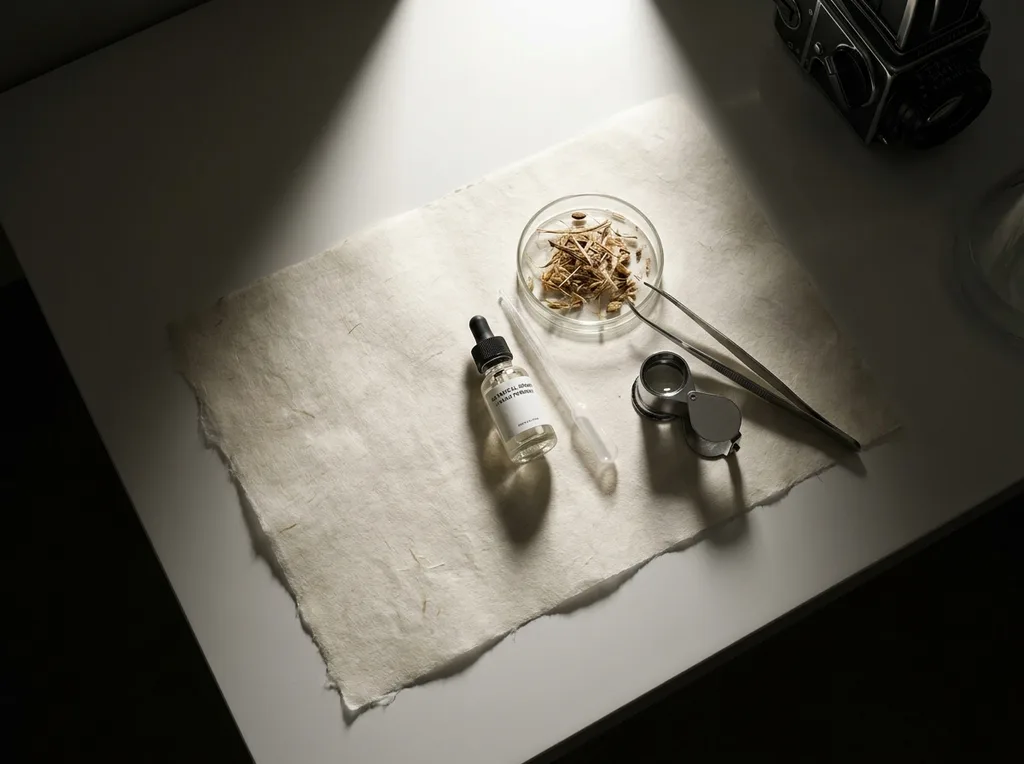
Why? Because the human face is not a laboratory. When you ferment rice in an uncontrolled environment, you aren't just creating beneficial probiotics; you are creating a petri dish for pathogenic bacteria. The modern Korean consumer has learned this the hard way. They know that while 율무 (yulmu) (Job's tears) might have traditional applications for brightening, applying raw, unsterilized powders can cause micro-tears in the skin barrier and severe contact dermatitis.
The Evolution of Traditional Wisdom
The Korean beauty philosophy has successfully bridged the gap between ancestral knowledge and clinical necessity by focusing on "bio-transformation."
Take 어성초 (eoseongcho) (heartleaf). In traditional hanyakbang (herbal shops), it was boiled into a tea or a steam. Today, it is the star of the most popular soothing serums in Olive Young. The difference? Modern extraction methods use ultrasonic waves or cold-press fermentation to isolate the specific flavonoids responsible for calming inflammation, while removing the plant proteins that can cause allergic reactions.

Why Stabilized Science Beats Raw DIY
If you are looking to incorporate these traditional secrets into your routine, you are better off seeking out products that utilize these ingredients in a lab-tested format. The "science" of these rituals—the reason they survived for centuries—is that the ingredients themselves have intrinsic merit.
- Rice Water (ssaldteumul): Modern toners utilize rice fermentation filtrates that provide the same vitamins and amino acids as the kitchen version, but with a pH-balanced, preserved formula that prevents fungal overgrowth.
- Mung Bean (nokdu): Traditional exfoliating powders were harsh. Modern cleansers use pulverized mung bean extracts that provide the same saponin-based cleansing without the mechanical abrasion that damages your lipid barrier.
- Camellia Oil (dongbaek oil): This is the one traditional ingredient that requires the least intervention. Its fatty acid profile is so close to human sebum that it is, perhaps, the most scientifically "perfect" oil.
🎵 K-Mono Lofi — Seoul Study Beats
Read deeper with Seoul lo-fi in the background — curated by K-Mono Lofi
The Clinical Reality
When you look at the ingredients list of the most successful K-beauty products today, you are essentially reading a list of traditional Korean botanicals translated into INCI nomenclature. The success of the Korean beauty industry is not that it invented new chemicals; it is that it mastered the art of making traditional wisdom "stable enough for a bottle."
If you are currently using an aggressive, high-concentration acid peel from a Western brand, you are essentially treating your skin like a surface to be sanded. The Korean traditional approach—even in its modern form—is to treat your skin like a barrier to be reinforced.
Frequently Asked Questions
Can I make my own rice water at home safely? While it is technically possible, it is highly discouraged. Homemade rice water lacks preservatives, meaning it can harbor bacteria within hours of preparation. If you want the benefits, look for "Rice Ferment Filtrate" or "Aspergillus/Rice Ferment" on the ingredient list of a toner.
Are traditional ingredients like mugwort safe for all skin types? Generally, yes, but botanical extracts are potent. If you have a history of contact dermatitis or allergies to plants in the Asteraceae family (like ragweed), you should patch test any mugwort-based product on your inner forearm for 48 hours before applying it to your face.
Why are some K-Beauty products more expensive than DIY ingredients? You are paying for the safety, stability, and delivery systems. A $30 toner isn't just "water and extract"; it’s the cost of ensuring that the extract is pure, the formula is free of contaminants, and the active molecules can actually penetrate your skin instead of sitting uselessly on the surface.
⚠️ Disclaimer: The information provided here is for educational purposes and does not constitute medical advice. DIY skincare practices using raw food-grade ingredients carry a high risk of bacterial contamination and skin irritation. Always conduct a patch test before introducing new topical products to your routine, and consult with a board-certified dermatologist if you have specific skin concerns or pre-existing conditions.
⚠️ Disclaimer: This article is for informational and educational purposes only and does not constitute medical, dermatological, or financial advice. Individual results vary — consult a board-certified dermatologist or physician before starting any new skincare routine, supplement, or procedure, especially if pregnant, nursing, or taking other medications. This article may contain affiliate links — if you buy through them, we may earn a small commission at no extra cost to you.
✓ Researched and compiled using verified data as of the publication date.
 Written by Jun Mi Jung for Quiet Korea | Contact: rsl.2001.1975@gmail.com
Comments
Post a Comment