Beyond the 10-Step Myth: Why Your Skin is Still Thirsty
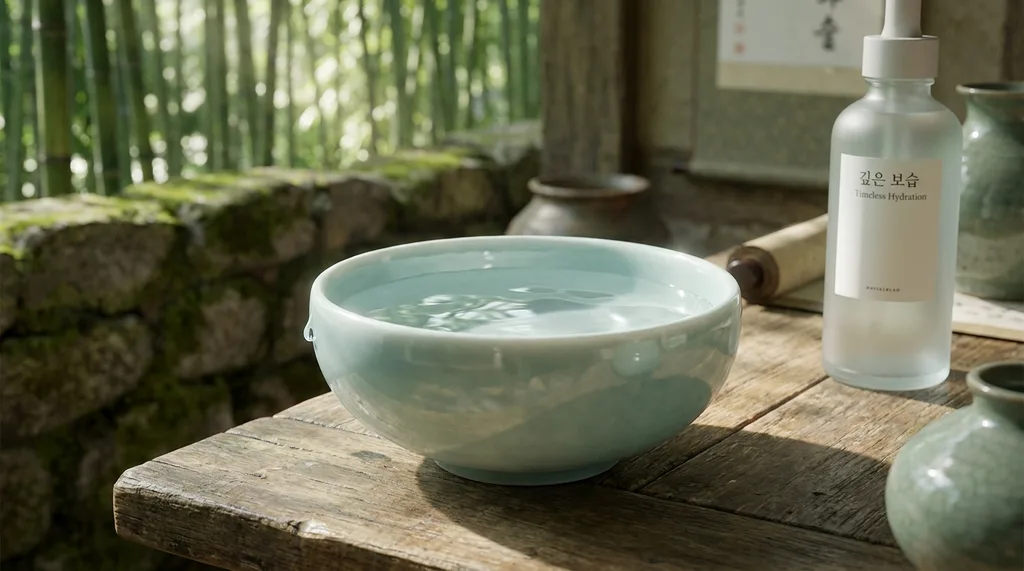
You have likely stood in the fluorescent glow of an aisle at a local beauty shop, your basket heavy with serums, toners, and creams, hoping that the next layer would finally silence the tightness under your skin. You are told to hydrate, to exfoliate, to brighten. But if you are experiencing that paradox—a face that glows with oil by noon while feeling pulled taut by a phantom dryness—you are not fighting a lack of products. You are fighting a structural failure.
Key Takeaways * The skin barrier is not a wall to be painted, but a living mortar-and-brick structure that requires a precise 3:1:1 molar ratio of ceramides, cholesterol, and fatty acids to function. * "Skinimalism"—or Hwajangpum Diet—is not just a trend; it is the most effective way to allow your lipid matrix to self-repair without the interference of excessive chemical actives. * If your skin feels oily yet tight, you are likely suffering from sok-geonjo (inner dryness), which cannot be solved by more layers, but only by structural lipid replenishment.
The Architecture of a Healthy Barrier
To understand why your skin feels perpetually parched despite your best efforts, think of your epidermis as a brick wall. The bricks are your skin cells, and the mortar holding them together is the lipid matrix. When we over-cleanse or overwhelm our skin with ten different steps of "miracle" ingredients, we are essentially sandblasting that mortar away.
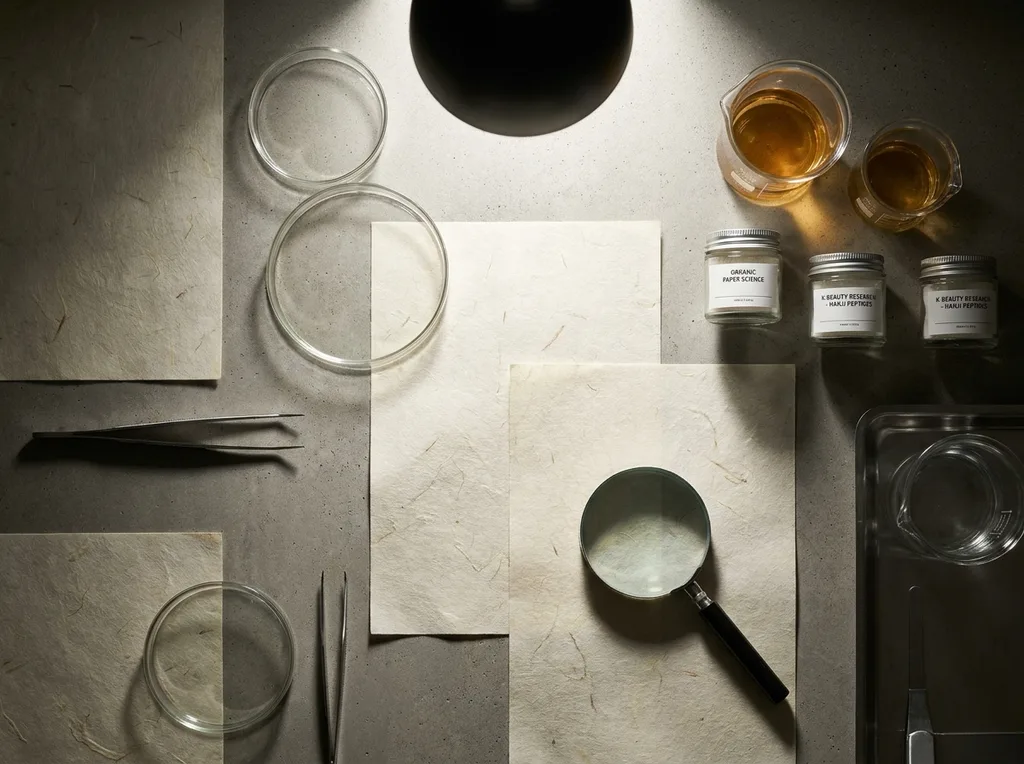
What many global beauty enthusiasts miss is that the mortar is not just "moisture." It is a specific blend of three lipids: ceramides, cholesterol, and free fatty acids. Clinical consensus in Seoul now points to a non-negotiable "golden ratio": 3:1:1.
When a moisturizer lacks this precise molar balance, your skin recognizes the deficiency. It tries to compensate by churning out excess sebum—which is why you see oil on the surface—but because the "mortar" remains broken, the water simply evaporates. This is the definition of sok-geonjo, or inner dryness. You aren't lacking oil; you are lacking the structural integrity to hold onto the water you already have.
The Myth of the "Ceramide-Infused" Label
Walk into any Olive Young at midnight, and you will see shelves lined with products claiming to be "ceramide-rich." But here is the secret that insiders know: ceramides are incredibly difficult to formulate. With a melting point above 90°C, they are notorious for crystallizing. If a product is formulated poorly, those ceramides aren't healing your skin; they are sitting on the surface as inert, potentially irritating grains.
[K-Beauty 101] Sekolji (세콜지) — A shorthand for the complex of Ceramide, Cholesterol, and Fatty Acid. It treats skincare as a form of architectural restoration for the skin barrier rather than just surface-level hydration.
Many mainstream products are what experts call "ceramide theater." They contain just enough to feature on the label but lack the supporting cast—the cholesterol and fatty acids—needed to integrate into your skin’s lamellar structure. If you are using a product that leaves your skin feeling "coated" but not "healed" after an hour, you are likely using a petroleum-based emollient that mimics protection rather than building it.
Your Path to Recovery: The Skinimalism Strategy
If your skin is currently reacting, stinging, or feeling tight, the bravest thing you can do is stop. The Hwajangpum Diet is the most respected "treatment" in Korea for a reason: it removes the noise.
- Simplify to Survive: Strip your routine to a non-stripping, low-pH cleanser and a moisturizer that focuses on the 3:1:1 lipid balance. Remove all acids, retinols, and high-concentration brightening agents for at least 14 days.
- Respect the Cleansing Ritual: Most barrier damage begins at the sink. If you use a harsh foaming cleanser that leaves your skin "squeaky," you are undoing your barrier repair before you even start.
- Patience is an Active Ingredient: The skin’s turnover cycle is approximately 28 days. Do not expect a miracle overnight. Consistent application of a structurally sound moisturizer allows the lamellar layers to reorganize.
🎵 K-Mono Lofi — Seoul Study Beats
Read deeper with Seoul lo-fi in the background — curated by K-Mono Lofi
Frequently Asked Questions
Can I use retinol while repairing my skin barrier? No. Retinol is a powerful tool for long-term health, but it acts by accelerating cell turnover. If your barrier is compromised, using retinol is like trying to renovate a house while the foundation is still crumbling. Pause all actives until your skin no longer feels tight after washing.
How long does it take to see results? If you have committed to a minimalist routine, you should notice a reduction in surface sensitivity within 7 to 10 days. True structural repair—where the "tight" feeling of sok-geonjo disappears—typically takes one full skin cycle, or about 28 days of consistent, gentle care.
Is expensive moisturizer always better for barrier repair? Not necessarily. Many affordable, science-backed barrier creams outperform luxury brands because they focus on the stability of the lipid ratio rather than expensive fragrance or marketing. Look for "bio-mimetic" formulas that list ceramides, cholesterol, and fatty acids prominently in the ingredient list.
This article may contain affiliate links — if you buy through them, we may earn a small commission at no extra cost to you.
⚠️ Disclaimer: This guide is for educational purposes and does not constitute medical advice. Skincare needs are individual; if you are experiencing severe inflammation, persistent redness, or pain, please consult a board-certified dermatologist to rule out underlying conditions like rosacea or contact dermatitis. Always perform a patch test when introducing new ingredients.
📝 This content was created with the assistance of AI technology.
✓ Researched and compiled using verified data as of the publication date.
 Written by Jun Mi Jung for Quiet Korea | Contact: rsl.2001.1975@gmail.com
Comments
Post a Comment