[Haul & Commerce Review] Glass Skin Masterclass
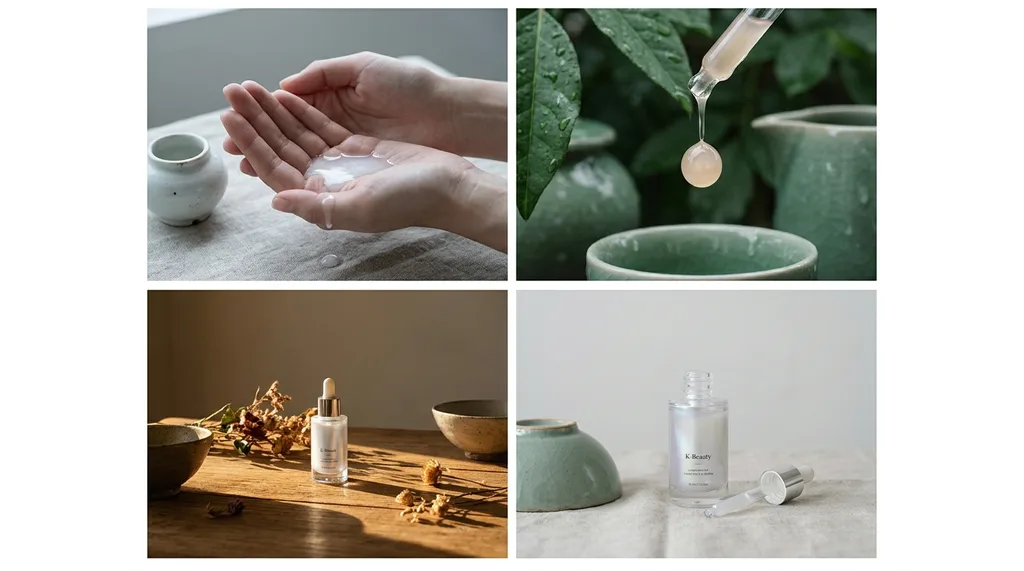
Every K-beauty influencer gave you the same rule: apply your products thinnest to thickest, because small molecules penetrate first and larger ones seal the deal. It sounds airtight. It gets repeated everywhere. And the science behind it is far shakier than anyone admits.
The Korean women who actually have glass skin didn't get there by mastering molecular weight theory. They got there by solving a problem most Western skincare consumers don't even know they have — a problem that doesn't have a clean English translation, because Western skincare philosophy never really needed to name it.
Before we get to what you should be buying at Olive Young, we need to talk about why everything you've already bought isn't working.
The Myth That's Quietly Wrecking Your Skin
Walk into any Korean dermatology waiting room and you'll hear a word that doesn't fully translate: sok-geonjo. Skin that reads as oily on the surface but is silently parched in its deeper layers. The sebum is there. The shine is there. But the moisture reservoir in the lower epidermis is depleted, and the skin's defense mechanism — its barrier — is working overtime producing more oil to compensate for the water it can't hold.
[K-Beauty 101] 속건조 (Sok-geonjo) — Inner-skin dryness: a condition where the skin appears oily or normal on the surface while the deeper epidermal layers are severely dehydrated. It's not a type — it's a symptom of a damaged barrier that Western skincare language doesn't cleanly address.
This is the condition that dermatologists in Seoul treat constantly. And here's the brutal irony: the aggressive routines most people use to achieve glass skin — strong AHAs, high-frequency retinol, multiple exfoliating toners layered back to back — are precisely what drives healthy skin into sok-geonjo territory. You strip the surface. The barrier cracks. Oil production spikes. The glow disappears behind a dull, reactive film.
Glass skin is not a reward for doing more. It is the evidence of doing less, more precisely.
[K-Beauty 101] 유리알 피부 (Yuri-al Pibu) — Literally "glass bead skin." Not the greasy shine of oily skin, but the deep, light-refracting translucency that only comes from a moisture reservoir that is genuinely full. It cannot be faked with highlighter. It only appears when the barrier is intact.
The Real Physics Behind Layering
Here is the actual reason for the thin-to-thick rule — and it has nothing to do with molecules lining up politely by size.
When you apply an oil-based product to your skin first, it creates a hydrophobic film across the stratum corneum. Water-soluble ingredients — your hydrating toners, your niacinamide serums, your hyaluronic acid — cannot pass through that film easily. Research suggests this occlusive effect can impair penetration of water-soluble actives meaningfully. The issue is not that big molecules "can't get through" after small ones. The issue is that oil blocks water, full stop. The sequencing rule exists to keep the water-soluble ingredients in contact with the skin before any barrier-sealing step closes the door.
The 500-Dalton molecular weight rule — the idea that only molecules under a certain size penetrate the skin — is a useful general guideline, not a physical law. It was developed to understand drug delivery, not cosmetic layering. When Korean formulation scientists want to deliver a large molecule like PDRN (polynucleotides, used in premium barrier-repair products), they don't just apply it before a smaller molecule and hope for the best. They nano-encapsulate it. The delivery vehicle matters more than the queue order.
What does matter in your daily routine: texture. Water first, oil last. Humectants before occlusives. That's the whole rule, stripped of mythology.
🎵 K-Mono Lofi — Seoul Study Beats
Read deeper with Seoul lo-fi in the background — curated by K-Mono Lofi
The AM Blueprint: Loading the Barrier
The morning routine has one job: hydrate, protect, do not destabilize. Do not let the pursuit of glass skin turn your AM routine into an active treatment session. Retinol before work is a barrier crime. AHAs at 8 AM are another.
Step 1 — Cleanse (Purpose: Remove overnight sebum without stripping) Use a mildly acidic (pH 5.5) water-based cleanser. That "squeaky clean" feeling Korean dermatologists talk about warily? It means your acid mantle just got dissolved. The correct post-cleanse sensation is slightly slick, never tight. Work the cleanser between your palms first to emulsify it with body heat. Press gently. Rinse with lukewarm water — never hot.
Step 2 — Toner, the Dak-to pass (Purpose: Refinement + initial hydration) This is what locals call dak-to (닦토, wiping toner) — not to be confused with the moisturizing toner that follows. Saturate a cotton pad completely. Glide it across the face following skin texture — forehead, cheeks, nose, chin — with minimal pressure. You are refining surface texture and removing mineral residue from water, not exfoliating. If the pad runs dry, add more toner. Friction is the enemy.
Step 3 — Toner again, the Chap-to pass (Purpose: Deep-layer hydration loading) Now press. This is the chap-to (찹토) layer — the same toner, or an essence-weight second toner, applied with cupped palms warmed against each other. Press both palms flat against your cheekbones and hold for five seconds. The heat accelerates absorption. Repeat across the forehead, chin, and neck. Wait 60 seconds before the next step. The skin should feel faintly tacky, not wet.
Step 4 — Serum (Purpose: Targeted active delivery) Morning serums should be antioxidant-forward, not exfoliating. Vitamin C derivatives, Centella Asiatica (cica), niacinamide at moderate concentration. A few drops warmed between the palms, pressed rather than rubbed. The pressing technique isn't ceremonial — rubbing a serum creates unnecessary friction and can cause pilling when the next layer follows.
Step 5 — Moisturizer (Purpose: Occlusive seal) This is where the Se-Col-Ji matrix does its work: ceramides lock in everything you've layered, cholesterol reinforces the lipid barrier, fatty acids fill the microscopic gaps between skin cells that allow transepidermal water loss. Look for these three on the ingredient list together. One without the others is like sealing an envelope with one strip of tape.
Step 6 — SPF (Purpose: Prevent the damage that makes glass skin impossible) UV damage is the single largest contributor to barrier degradation over time. Every morning. Without exception.
The PM Blueprint: The Night the Real Work Happens
Evening is when Korean skincare philosophy earns its reputation. This is the restorative window — and it starts with the most underestimated step in the entire routine.
Step 1 — Oil Cleanse (Purpose: Dissolve the hydrolipid film of the day) Sunscreen, sebum, and environmental pollutants bond to the skin's surface in a way water alone cannot dissolve. A cleansing oil or balm applied to dry skin — massaged gently for sixty seconds, then emulsified with a small amount of water before rinsing — breaks this film completely. Do not skip this step on days you wore SPF. That is every day.
Step 2 — Water Cleanser (Purpose: Remove emulsified residue without altering pH) The second cleanse uses your pH-balanced foam or gel. This is the gentle sweep that removes what the oil cleanse left behind. Two-cleanse isn't indulgence — it is logical sequence. Neither step works optimally without the other.
Steps 3–5 — Toner, Serum, Barrier Cream Identical logic to AM, with one critical difference: PM is when you introduce your actives — retinol, AHAs, BHAs — if your barrier is healthy enough to tolerate them. This is the question most glass-skin aspirants skip. If your skin is reactive, flaky, sensitized, or prone to redness, your barrier is not ready for nightly retinol. Start there. Repair first.
What Olive Young's Best-Sellers Actually Tell You
The K-beauty market hit $15.4 billion in 2025. By 2035, projections put it at $42 billion. In the United States alone, growth accelerated 37% year-on-year as of 2025. Of all the product segments driving that number, moisture and barrier function commands the largest share — over 40% of the functional skincare segment.
That number tells you exactly what Koreans are actually buying. Not the elaborate actives. Not the trendy peptide serums. Barrier repair and hydration. At massive, sustained volume.
Walk the Olive Young aisles — either in Seoul or through the global shipping site — and you'll see the pattern immediately. Toners vastly outnumber any other category. They sit in multiple textures: watery, essence-weight, slightly viscous. Lightweight moisturizers with ceramide complexes occupy prime shelf space. Sheet masks marketed specifically for after active treatment — the recovery, not the attack — are a dedicated section.
The honest Olive Young glass skin haul is not glamorous. It is: one mildly acidic cleanser, two toners with different viscosities for the dak-to and chap-to passes, one antioxidant serum, one ceramide-forward moisturizer, and SPF. That is it. Everything else — the ten-step complexity, the exotic actives, the nightly retinol — comes later, once the foundation is solid.
The Global Access Reality
Olive Young's global shipping site now covers most major markets. For readers outside Asia, the essential categories ship reliably — toners, lightweight moisturizers, SPF formulas. Shipping costs become economical when you're building a full foundational routine in a single order rather than buying one product at a time.
For readers where Korean shipping adds friction, the ingredients themselves are what matter. The Se-Col-Ji trio — ceramides, cholesterol, and fatty acids — is available in well-formulated Western and iHerb products. When comparing, look for all three components listed in the same formula. A ceramide-only moisturizer is doing a fraction of the barrier work. The combination is the mechanism.
High-quality hyaluronic acid toners are widely available globally. The differentiator in Korean formulations is often molecular weight variety — a mix of high-weight HA on the surface and lower-weight HA attempting deeper penetration. This is worth seeking out in ingredient lists, and iHerb carries several well-reviewed formulations. Using code QAK3042 gets you a discount on your first order.
The Upgrade Path (And When Not to Take It)
Once your barrier is stable — skin doesn't react to new products, no tightness after cleansing, the texture is smooth rather than rough — you can start introducing actives. Not before. The upgrade path looks like this:
First, low-dose retinol (0.025–0.05%), three evenings per week maximum, always followed the next morning by your barrier repair steps. Then, a gentle exfoliating toner with low-concentration AHA/BHA used once weekly on skin that is clearly not in repair mode. Then, gradually, the more advanced treatments.
The Korean skincare philosophy that produces the results you see — on the skin of women who've been doing this since their teens — is incremental, patient, and deeply suspicious of dramatic interventions. The famous 1il 1-pack (one sheet mask a day) habit that Korean women swear by? They're using light, calming hydration masks. Not intense treatment masks. Not exfoliating masks. Gentle loading of the moisture reservoir, every single day.
That patience is the 80% nobody writes about. The products are the final 20%.
Glass skin is not the goal. It is the evidence — the evidence that your skin no longer needs to defend itself.
Read next → Glass Skin Masterclass: The Full Science — if you want to go deeper into how barrier philosophy and ingredient science connect, this is where we built the full foundation.
Medical & Financial Disclaimer: The skincare layering guidance in this article is educational and does not constitute dermatological advice. Individual skin responses vary significantly. If you have a diagnosed skin condition (eczema, rosacea, perioral dermatitis, fungal acne), consult a board-certified dermatologist before altering your routine based on general guidance. Patch-test any new product on a small area before full-face application. Ingredient concentrations listed are general category references, not claims about specific products. Prices and availability of products mentioned are subject to change. iHerb affiliate code noted above helps support this publication at no additional cost to you.
This article may contain affiliate links — if you buy through them, we may earn a small commission at no extra cost to you.
✓ Researched and compiled using verified data as of the publication date.
 Written by Jun Mi Jung for Quiet Korea | Contact: rsl.2001.1975@gmail.com
Comments
Post a Comment