[Haul & Commerce Review] 17 Diy Traditional
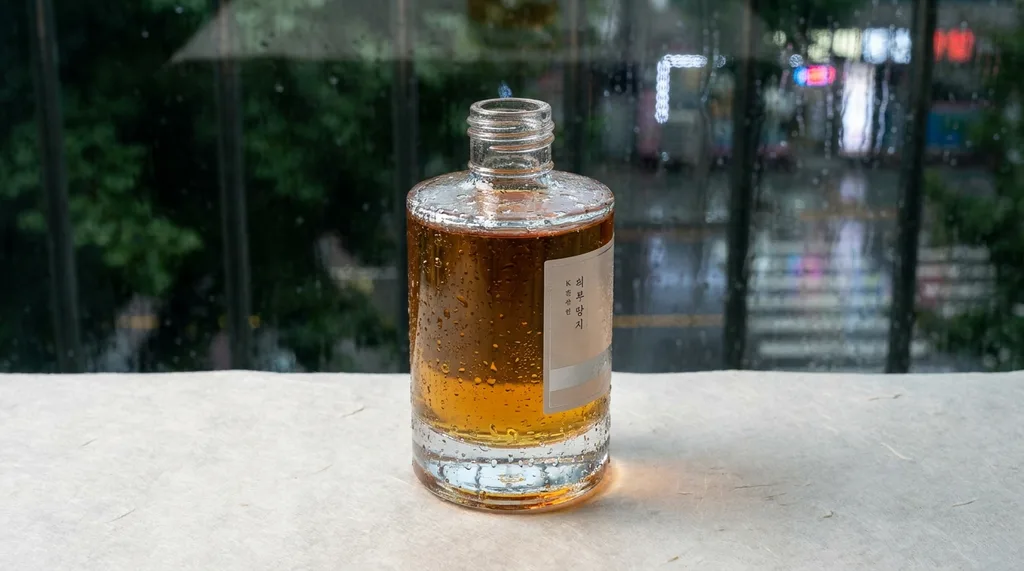
Walk into any Olive Young in Myeongdong on a Saturday night, and you will see a demographic shift that defines modern K-beauty. While tourists crowd the shelves for viral sheet masks and colorful eye shadow palettes, the locals—the women who have navigated the "glass skin" standard for decades—are often huddled around the lower, quieter shelves. They aren't looking for the next flash-in-the-pan TikTok sensation. They are looking for the botanical extracts, the fermented toners, and the simple, single-ingredient powders that mirror the remedies they grew up with at home.

These products are not "folk remedies" in the sense of being unproven; they are the modern, shelf-stable descendants of rituals codified in the Donguibogam. When you pick up a mugwort essence or a mung bean cleanser at a drugstore today, you are essentially buying a data-mined legacy. But here is the friction: the marketing on the bottle often promises "miracle results," while the reality is far more measured.
The Local Intelligence
In Korean skincare communities, there is a clear distinction between "maintenance" and "treatment." Locals know that traditional ingredients like ssal-tteut-mul (rice-rinsing water) or nokdu (mung bean) aren't meant to replace a dermatologist’s laser treatment or a prescription-strength retinol. Instead, they are the foundation of the "slow-aging" philosophy.
The current obsession in Seoul isn't just about the ingredients themselves, but about the jakyoung (function). Consumers are using platforms like Hwahae to cross-reference every ingredient list, demanding to know if the mugwort in their essence is concentrated enough to actually provide anti-inflammatory effects, or if it is just a fragrant drop in a vat of water. This shift toward "evidence-based tradition" is the true engine of the K-beauty market’s sustained growth.
The Honest Breakdown
When evaluating these traditional-style products found in drugstores, we have to look past the elegant packaging.
The risk with "traditional" recipes is often the lack of standardization. A grandmother’s rice water is fresh, but a shelf-stable bottle requires preservatives, emulsifiers, and pH balancers. If you have a compromised barrier—yocheol (texture irregularities) exacerbated by inflammation—the addition of botanical extracts can sometimes do more harm than good if they aren't formulated with precision. Always patch-test, especially with highly concentrated fermented extracts.
The Global Access Guide
If you aren't in Korea, the "Olive Young haul" experience is harder to replicate, but not impossible. Many of the ingredients fueling these products are available globally through platforms like iHerb.
The hero ingredient in most of these soothing formulas is Artemisia princeps (Mugwort). While a drugstore essence is convenient, you can often find pure botanical extracts or more transparently formulated versions on iHerb for a fraction of the cost. If you are looking to replicate the results of a high-end "traditional" Korean essence, search for clinical-grade Centella Asiatica or Mugwort serums that list the concentration percentage on the label.
The Upgrade Path
Start with a simple, singular ingredient to see how your skin reacts to the botanical profile. If your skin loves the soothing action, you can then graduate to the more complex fermented formulas that layer multiple actives for "slow-aging" benefits. But remember: the most "traditional" Korean advice is to keep it simple. If you are layering four different toners and three essences, you are likely working against your own skin barrier.
Read next: → The Science of Ancient Rituals (Learn exactly how these traditional herbal compounds interact with your skin's mRNA at a molecular level.)
⚠️ Disclaimer: Traditional Korean ingredients are powerful, but they are not medical treatments. If you have persistent skin conditions, dermatitis, or severe acne, these botanical products should be used only as a supplement to, never a replacement for, the advice of a board-certified dermatologist. Always patch-test new products on your inner arm for 48 hours to check for allergic reactions, particularly with fermented or botanical extracts.
This article may contain affiliate links — if you buy through them, we may earn a small commission at no extra cost to you.
✓ Researched and compiled using verified data as of the publication date.
 Written by Jun Mi Jung for Quiet Korea | Contact: rsl.2001.1975@gmail.com
Comments
Post a Comment