Glass Skin Masterclass
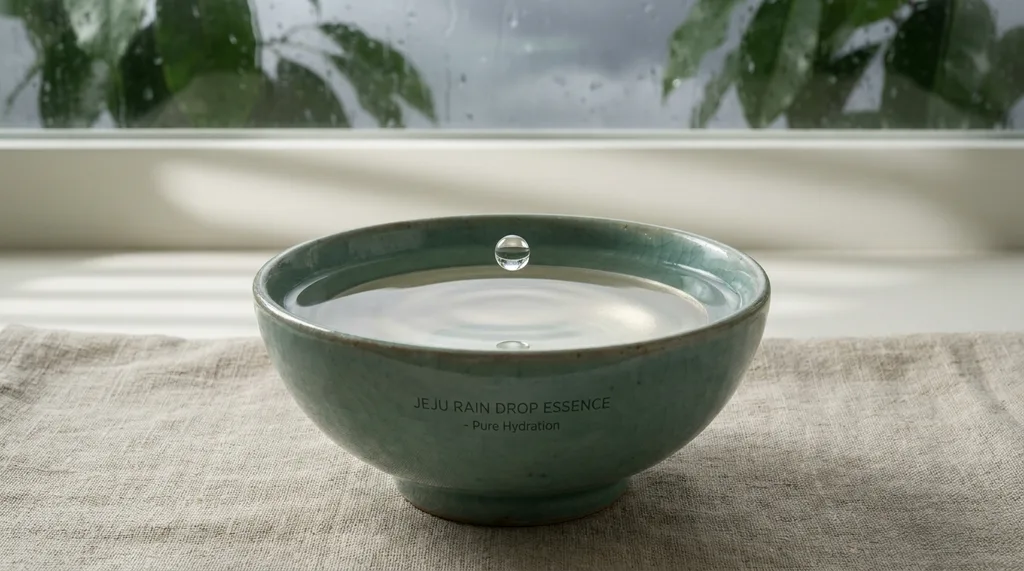
You followed the routine. You bought the products — the toner, the essence, the serum, the sheet mask on Tuesdays. You applied them thinnest-to-thickest, lightest-to-heaviest, exactly as every K-beauty guide on the internet instructed. And your skin looked… fine. Healthy, even. Just not glass.
- The Rule You Were Taught Is Half True
- Glass Skin Is Not a Product State. It Is a Barrier State.
- The AM Blueprint: Building the Foundation Before the World Touches It
- The PM Blueprint: Where the Real Glass Skin Work Happens
- The Part Nobody Tells You: Ambition Is the Enemy of Glass Skin
- The Thing That Carries
- 💊 Find This on iHerb (Use Code QAK3042 for a discount!)
Not that luminous, slightly unreal translucency you see on Korean women in their early thirties who haven't touched a filter. The kind that doesn't come from highlighter. The kind that comes from somewhere underneath.
Here's the thing nobody writes in the product guides: the rule you've been following — thin to thick, small molecules first — is right for the wrong reason. The molecular size explanation is largely skincare folklore dressed up as science. And because you were told the wrong why, you've been applying the right steps without understanding what they're actually doing. That gap, between mechanics and meaning, is where glass skin lives and never arrives.
The real mechanism is simpler and more radical. And it has almost nothing to do with the products you're using.
[K-Beauty 101] Yuri-al Pibu (유리알 피부) — Glass Skin. Not shimmer, not gloss, not a dewy finish from an oil. The term describes a complexion so hydrated and structurally intact that it refracts light from within, like a surface of polished glass. It is a biological state, not a cosmetic application.
The Rule You Were Taught Is Half True
The 500 Dalton rule — the idea that molecules below a certain molecular weight penetrate the skin while larger ones sit on the surface — sounds authoritative. It gets cited constantly. It's the scientific scaffolding behind "apply small molecules before large ones." The problem is that it functions as a rough guideline for pharmaceutical transdermal delivery, not a precise law governing every cosmetic you own. Applying it like physics to your skincare routine is like using aircraft engineering to explain why a paper plane flies. The direction is correct. The mechanism is completely different.
What actually governs layering is viscosity combined with one fundamental chemistry rule: water-soluble actives cannot travel through an oil-based film.
When you apply a heavy cream or facial oil before your hydrating toner and serum, you deposit a hydrophobic layer on the skin surface. Water molecules — the carrier for most active ingredients like niacinamide, vitamin C, and humectants — cannot pass through it cleanly. Research into this mechanism suggests penetration of water-soluble actives can drop measurably when an occlusive oil barrier precedes them. The ingredients sit on the surface, technically "absorbing," but never reaching the deeper epidermal layers where the work actually happens.
Thinnest-to-thickest is the right practice. "Small molecules first" is the wrong explanation for why. And this distinction matters because when you understand the real mechanism, you stop making the mistake that no product guide will warn you about: using any oil-based product — including some SPFs, some balm cleansers not fully rinsed, some emollients — before your water-soluble actives.
Now here's the layer that every listicle article skips entirely.
Glass Skin Is Not a Product State. It Is a Barrier State.
Korean women who actually have yuri-al pibu — the real thing, not the Instagram version — share one characteristic that has nothing to do with which toner they use. Their skin barrier is intact. Not aggressively treated. Not exfoliated into submission. Not stacked with actives that fight each other. Intact.
The skin barrier is built from three types of lipids: ceramides, cholesterol, and fatty acids — abbreviated in Korean skincare culture as Se-Col-Ji (ceramide, collagen-adjacent lipids, jibang-san). These three form the mortar between skin cells, controlling what gets in and — more critically — what stays in. When this structure is healthy, the skin holds water in its deeper layers. When it's compromised, water escapes constantly, leaving skin that might feel oily on the surface but is chronically parched underneath.
[K-Beauty 101] Sok-geonjo (속건조) — Inner-skin dryness. The paradox of skin that registers as oily on the surface while the deeper epidermal layers are dehydrated and tight. This condition is what most people mistake for "just having oily skin" — and it's what K-beauty is actually designed to solve.
Sok-geonjo is the real enemy of glass skin. Not dull skin. Not uneven texture. Not inadequate products. A skin that cannot hold water cannot refract light from within. The sought-after sok-gwang — that inner glow, the luminosity that seems to come from somewhere beneath the surface — is not a product you add. It is what emerges when a healthy barrier finally stops leaking.
This is the 80% that the internet never writes about, because it cannot be packaged and sold.
The brilliant insight at the heart of Korean skincare philosophy — one that Korean teenagers absorb through cultural osmosis while the rest of the world is still buying new cleansers — is that the routine's purpose is not to deposit product onto skin. It is to progressively repair and maintain the barrier so that the skin's own intelligence can take over. Once that barrier is restored, a fraction of the products you currently use will do more than all of them combined ever did.
The AM Blueprint: Building the Foundation Before the World Touches It
Morning routine logic in Korean skincare follows a single governing principle: prepare the skin to defend itself. Not to glow yet. To hold.
☀️ AM Routine — Morning Protocol
Step 1 — Low-pH Rinse Cleanse
Overnight sebum and any residual product from PM creams form an uneven film by morning. Rinse with a mildly acidic (yak-san-seong, pH 5.5) foam or gel — never alkaline soap. Lather between palms, apply to damp skin, massage 30 seconds, rinse with lukewarm water. Pat — never rub — with a clean soft towel. Leave skin slightly damp before the next step.
Step 2 — Hydrating Toner (Chap-to Method)
Pour a generous amount onto both palms. Press your palms together to warm the toner to body temperature, then press both hands flat against cheeks and hold for five full seconds. The heat opens the skin momentarily. Work from the center outward. Pat — do not swipe. Repeat three times. This is chap-to, the patting technique, and it is not optional.
Step 3 — Targeted Serum
Wait a full 60 seconds after toner. This is not impatience — it is chemistry. The toner needs to complete its absorption before the next layer arrives. Dispense three to four drops of serum into your palm. Warm it. Press into skin rather than rubbing. For barrier-focused mornings: a niacinamide or centella serum. For brightening: vitamin C, applied to the T-zone first where it oxidizes fastest.
Step 4 — SPF (Final, Always Final)
This is your oil-adjacent or film-forming step, and it closes the system. It goes last because it is the hydrophobic layer — everything before it must be absorbed first. Wait 60 seconds after serum. Apply SPF 50+ PA++++ generously to the face and neck. Pat into skin — never rub, which disrupts the film's protective continuity. Skip moisturizer if your SPF has sufficient emollient content.
🎵 K-Mono Lofi — Seoul Study Beats
Read deeper with Seoul lo-fi in the background — curated by K-Mono Lofi
The PM Blueprint: Where the Real Glass Skin Work Happens
If AM is defense, PM is construction. The skin's repair cycle peaks in the hours between 10 PM and 2 AM — a biological fact that Korean skincare philosophy built an entire ritual around long before circadian science named it. The PM routine is designed to feed that window.
🌙 PM Routine — Night Protocol
Step 1 — Oil Cleanse (First Cleanse)
This is the i-jung se-an (double cleanse) first stage. Massage a cleansing oil or balm into dry skin with dry hands — the oil bonds to SPF, sebum, and pollution. Work in slow circular motions for 60 seconds. Then emulsify with a few drops of water and watch it turn milky. Rinse thoroughly. Any residual oil cleanse on the skin surface will compromise the water-based steps that follow.
Step 2 — Low-pH Foam Cleanse (Second Cleanse)
The second cleanse removes the water-soluble residue the oil stage cannot reach. Use a pH 5.5 cleanser. Skin should feel clean but never squeaky-tight — that squeaky sensation is your barrier signaling distress. Rinse with cool-to-lukewarm water only.
Step 3 — The 7-Skin Method (Chil-skin-beop)
Apply a lightweight hydrating toner in five to seven thin layers, patting each in with your palms before adding the next. Not seven times the product — seven thin, intentional pressings. By the fourth layer, you will feel the skin begin to hold rather than absorb immediately. That's the shift. That resistance means the outer layers are saturating. Keep going. This is the closest thing to a clinical intervention that a non-prescription routine contains.
Step 4 — Treatment Serum
PM is when your actives go to work: retinoids if your barrier is stable, peptides if you're building, centella if you're recovering. Apply with light pressing motions. Never more than one strong active per night — the barrier is a living structure, not a test tube. Choose one ingredient and let it work.
Step 5 — Barrier Cream (The Seal)
A ceramide-rich cream containing Se-Col-Ji lipids closes the system. The cream's job is occlusion — reducing transepidermal water loss (TEWL) overnight so the hydration you just built doesn't evaporate by 3 AM. Warm a pearl-sized amount between palms. Press — flat-handed, not swipe — from the center of the face outward. Include the neck. Always the neck.
The Part Nobody Tells You: Ambition Is the Enemy of Glass Skin
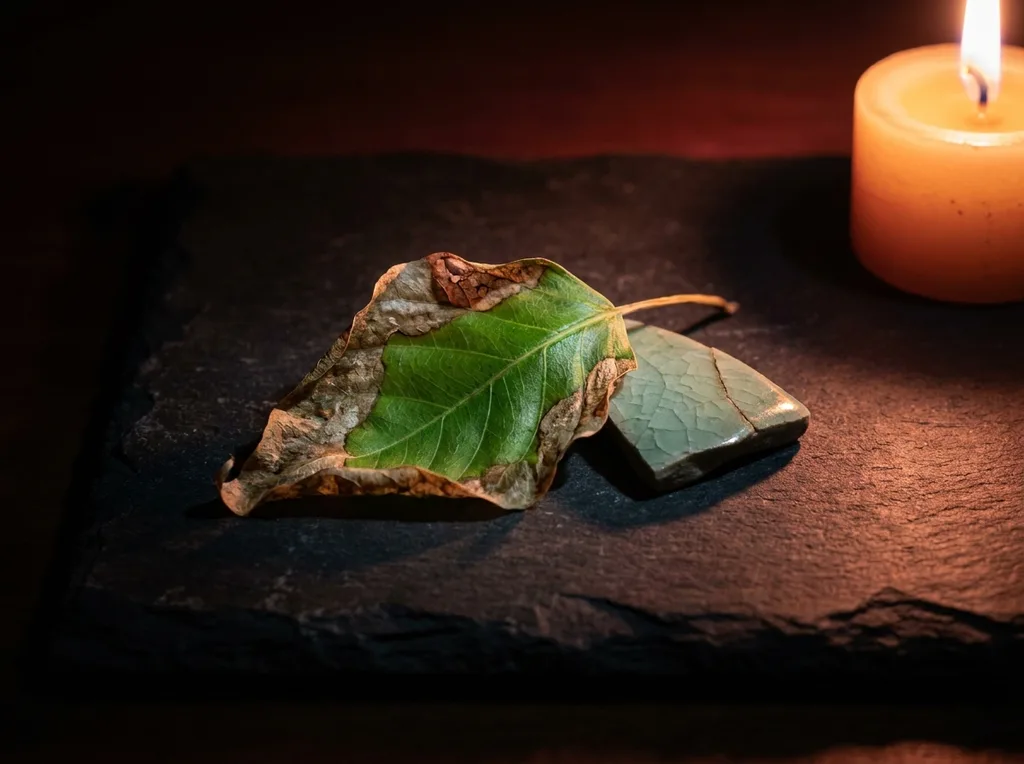
Here is where the honesty that no sponsored guide will ever give you becomes critical.
The fastest way to destroy a glass skin routine is doing too much. Korean dermatology clinics in Seoul see a predictable influx of foreign patients — and increasingly, domestic ones — whose skin barriers have been systematically demolished by enthusiasm. The pattern is always the same: chemical exfoliant in the morning, retinol at night, niacinamide serum, vitamin C, AHA toner, sheet mask. All in the same week. Sometimes the same routine.
The barrier cannot rebuild under that kind of chemical load. Every aggressive exfoliant strips lipids. Every strong active at full concentration, introduced too quickly, triggers inflammation. And an inflamed, lipid-depleted barrier produces exactly the opposite of glass skin: sensitivity, redness, dehydration tightness, and that painful shiny rawness that looks like glow but is actually the skin crying for help.
[K-Beauty 101] Skincare Diet (스킨케어 다이어트) — Skincare minimalism. The practice of stripping the routine down to two or three steps when the barrier is overwhelmed. Not a trend — a recovery protocol. Korean women who have been doing this for decades instinctively pull back to toner and moisturizer when their skin signals distress. They call this giving the skin a rest. The skin's own intelligence, not the next product, does the healing.
The emergence of the skincare diet within K-beauty — the deliberate stripping back to essentials — isn't a reaction against K-beauty. It's the mature evolution of it. The ten-step routine was never meant to be permanent. It was designed for skin that needed intensive repair. Once the barrier is stable, most of those steps become unnecessary scaffolding around a building that can now stand on its own.
The same warning applies to the layering technique itself. Patting seven layers of toner sounds intensive — and done correctly, it is. But if any of those layers contain exfoliating acids, or if your serum is a high-concentration retinoid you introduced last week, the repetition amplifies irritation, not hydration. Seven layers of a gentle, humectant-rich toner. Not seven layers of actives.
Combination skin — what Koreans call suboji (suboji), oily on the surface and parched underneath — deserves a specific note: the water-soluble layering system described above is designed for exactly this skin type. Do not skip the hydrating toner because your T-zone looks oily. The oiliness is the barrier trying to compensate for moisture loss. Feed the deeper layer. The surface will regulate itself.
The Thing That Carries
Every glass skin article eventually arrives at the same place: a product recommendation, a before-and-after, an affiliate link. This one arrives somewhere different.
The reason Korean women in their forties have skin that looks a decade younger than their Western counterparts — the reason the glow persists past the product shelf life and past the trend cycle — is not a secret serum. It is a relationship with their own skin that began in their teens with an understanding that their skincare routine is not corrective. It is protective. The barrier is worth defending. Patience is not optional — it is the method.
Glass skin is not something you apply. It is something you stop damaging, long enough for the skin to remember what it already knows how to do.
Everything else is maintenance.
Fact references: K-beauty market data from Grand View Research and IndexBox (2025); penetration science context drawn from the 500 Dalton rule literature review at mdrnskin.com and the Lab Muffin Beauty Science analysis of skincare layering claims; ingredient mechanisms from the Auteur dermatologist protocol review.
⚠️ Medical & Skincare Disclaimer: The information in this article is educational and reflects general Korean skincare philosophy and publicly available ingredient science. It is not a substitute for professional dermatological advice. Individual skin types, conditions, and sensitivities vary significantly — what works for one person may cause irritation or harm for another. If you have a diagnosed skin condition (eczema, rosacea, acne vulgaris, perioral dermatitis, or compromised barrier disorders), consult a board-certified dermatologist before introducing any new actives, exfoliants, or multi-step routines. Always patch-test new products on the inner arm for 48 hours before full facial application. Discontinue any product that causes stinging, prolonged redness, or peeling beyond mild flaking, and seek professional guidance.
✓ Researched and compiled using verified data as of the publication date.
 Written by Jun Mi Jung for Quiet Korea | Contact: rsl.2001.1975@gmail.com
Comments
Post a Comment