[Dupe Finder] Glass Skin Masterclass
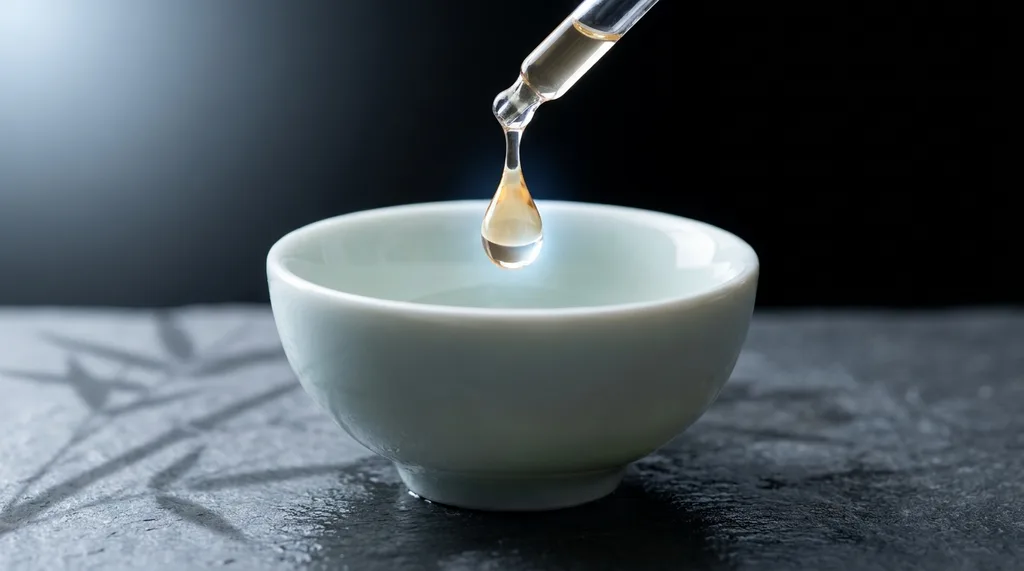
There is a word in Korean skincare that has no clean English translation, and it describes exactly why your glass skin routine is failing. The word is sok-geonjo — inner dryness. It names a condition where the skin feels tight and parched in its deepest layers while the surface looks perfectly normal, sometimes even oily. Korean dermatologists treat it as a clinical marker. Most Western skincare conversations don't know it exists.
- The Molecule They're Actually Selling You
- The Honest Comparison: Budget, Value, and When Premium Wins
- The Glass Skin Price-Performance Map
- The Routine That Actually Delivers It
- AM Routine — Protect What You Built
- PM Routine — The Repair Window
- The Verdict: What Your Skin Actually Needs
- 💊 Find This on iHerb (Use Code QAK3042 for a discount!)
And here is where the story gets strange: the more aggressively people pile on actives — the exfoliating acids, the high-concentration vitamin C, the retinol, the "brightening" peels — trying to chase that glassy translucency, the more severely their barrier enters this exact state. The skin compensates for internal dehydration by producing more sebum. The surface looks congested. The routine gets harsher. The barrier collapses further. Glass skin recedes.
The expensive Korean brands selling you glass skin know this. The budget alternatives can deliver exactly the same molecules for a fraction of the price — but only if you understand which molecules actually matter. That is the autopsy we're about to perform.
The Molecule They're Actually Selling You
Walk into any Olive Young and pull ten "glass skin" products off the shelf. Strip away the packaging, the English descriptions of "luminosity" and "translucency," the K-pop endorsements. What you find underneath, with remarkable consistency, is a short list of molecules doing essentially all the work.
Hyaluronic acid — in two or three molecular weights. The larger chains sit at the skin's surface and form a temporary moisture-binding film. The smaller chains penetrate further, drawing water into the upper epidermis. This is not exotic. This is not proprietary. HA is one of the most studied cosmetic ingredients in existence, and the core mechanism is the same whether the bottle costs $8 or $180.
Ceramides, cholesterol, and free fatty acids — what Korean ingredient-literate consumers call Se-Col-Ji. These three lipids are the literal mortar between skin cells. A healthy Se-Col-Ji ratio keeps transepidermal water loss (TEWL) low and stops environmental irritants from triggering inflammation. When this structure is intact, light scatters evenly off the skin's surface. That is, in its entirety, the optical physics of glass skin.
Humectants — glycerin, panthenol, sodium PCA. The invisible background cast that every expensive serum relies on to actually hold moisture in place once it's delivered.
[K-Beauty 101] Se-Col-Ji (Ceramide, Cholesterol, Fatty Acids) — The lipid triumvirate that constitutes the skin barrier's structural cement. These three components must be present in the correct ratio to maintain the barrier's integrity. Ceramide alone, without the other two, rebuilds unevenly — a fact that explains why some ceramide products underwhelm.
The premium brands earn their premium in two specific ways that budget products genuinely cannot replicate: advanced delivery technology (nano-encapsulation of large molecules like PDRN so they can traverse the stratum corneum, which they otherwise cannot) and the formulation stability that keeps active concentrations consistent over the product's shelf life. These matter. But they represent, honestly, a fraction of the ingredient work.
Everything else — the smell, the texture, the frosted glass bottle, the celebrity face — is experience design. Beautiful experience design, sometimes, but not barrier repair.
Here is the uncomfortable fact that most glass skin content never says: layering products in the wrong order reduces the efficacy of water-soluble actives by 30 to 40%. Apply your ceramide cream before your hyaluronic acid toner, and you've created a hydrophobic film that actively blocks the HA from reaching the cells it needs to hydrate. The sequence is not aesthetic preference. It is biochemistry.
The persistent myth — still repeated in skincare communities constantly — is that you must layer products from smallest molecular weight to largest to prevent "blocking." Lab Muffin Beauty Science and others have established that this logic doesn't hold at the skin surface level. The real principle is simpler and more practical: water-soluble products before oil-based products. An occlusive oil layer, once applied, physically impairs the absorption of anything water-based applied on top. Viscosity, not molecular weight, governs the sequence.
The Honest Comparison: Budget, Value, and When Premium Wins
This is where most dupe content goes wrong. It tells you "here's a cheap version" without telling you where the gap actually lives. The gap matters — because sometimes the budget version is genuinely equivalent, and sometimes it quietly isn't.
The core glass skin molecules — HA at multiple weights, ceramides, a light occlusive — are commodity ingredients. Spending significantly more for them in a prestigious bottle does not change how they function at the cellular level. Where premium products earn their cost is in formulations that go beyond this baseline: fermented biotransformed ingredients with demonstrably higher bioavailability, nano-encapsulated PDRN (polynucleotides that support skin regeneration at the cellular level), and the precisely engineered pH environments that keep actives stable over time.
💸 Budget Pick
HA + Glycerin Toner
Multi-weight Hyaluronic Acid · Glycerin · Panthenol
Best for: Barrier repair, initial hydration layer. Look for "low molecular weight HA" or "sodium hyaluronate" plus "hydrolyzed hyaluronic acid" on the INCI list.
⭐ Best Value
Mid-tier Korean Serum
HA · Centella Asiatica · Niacinamide · Ceramide NP
Best for: Most people, most skin types. The Se-Col-Ji building blocks plus the brightening and soothing support layer. This is genuinely where the value ceiling is highest.
✨ Premium
Nano-actives / PDRN Serum
Nano-encapsulated HA · PDRN · Fermented Filtrates
Best for: Post-procedure skin, 35+ with measurable barrier thinning, or anyone where delivery efficiency genuinely matters. This is the tier where spending more changes the molecular outcome.
The question isn't "which is best." The question is: what does your skin actually need right now?
If your barrier is healthy and you're maintaining glass skin, the budget and mid-tier tiers will sustain it completely. If you're actively rebuilding a damaged barrier or dealing with post-clinic recovery skin, the premium delivery systems begin to earn their price. The mistake is buying premium as an aspirational leap when the barrier isn't ready to receive it. A nano-encapsulated serum applied to an actively irritated, compromised barrier is not more effective — it can be more sensitizing.
The Glass Skin Price-Performance Map
Every "glass skin" ingredient product category falls somewhere on this landscape. The sweet spot — the green zone — isn't the most expensive quadrant. It's the one where barrier protection is high and the price reflects actual formulation complexity rather than marketing spend.
The red quadrant — high price, low barrier protection — is occupied by products built around proprietary-sounding but underdosed actives, elegant packaging, and marketing investment. They feel luxurious and perform at the level of their cheapest ingredients, which is often fine. But you are paying for something other than skin outcomes.
The green quadrant is your starting point. Once your barrier is stable and your routine is dialed in, then — and only then — does it make sense to explore the purple quadrant.
The Routine That Actually Delivers It

The chronology matters as much as the chemistry.
[K-Beauty 101] Yuri-al Pibu (Glass Skin) — Not a surface effect but an optical phenomenon. When the skin's moisture content is sufficient and the barrier is intact, light reflects uniformly off the outermost layer rather than scattering irregularly off dehydrated cells. The "glass" quality is what healthy, hydrated skin looks like under decent light. It is the endpoint of barrier repair, not a starting point for product application.
AM Routine — Protect What You Built
Step 1 — Low pH Cleanser. Not a cleanse to strip. A pH-balanced (ideally 5.0–5.5) cleanser that removes overnight sebum and the previous evening's occlusive products without disrupting the acid mantle. Work into skin for 30 seconds with fingertips, rinse with lukewarm water. No facial brush. No scrubbing motion. Pat — do not rub — dry with a clean cotton towel.
Step 2 — Toner (닦토 Dak-to, then 찹토 Chap-to). Dampen a cotton pad until it's fully saturated — not dabbed, fully soaked. Sweep it across the face following skin texture direction, from center outward. This is the dak-to stroke: removing any residual film and delivering the first hit of hydration. Wait 30 seconds. Then press a few drops of the same toner — or a lighter hydrating essence — directly from your palms. Cup your hands around your face and press. The body temperature from your palms drives penetration. This is chap-to. Wait another 60 seconds. This two-step toner application is where the 7-skin method (chil-skin-beop) originates — the principle that multiple thin layers of water-based hydration absorb more effectively than one thick one.
Step 3 — Serum. Apply 3–4 drops to your palms, press palms together gently (not rubbing — you're warming, not activating friction), and press onto forehead, cheeks, nose, chin. Never drag. The serum's job is targeted delivery: HA, niacinamide, centella, whatever your skin needs. Wait 60 seconds before the next layer. If you're using niacinamide: keep it at or below 5% concentration. Higher concentrations in disrupted barriers don't accelerate results — they accelerate irritation.
Step 4 — Moisturizer + SPF. A ceramide-containing moisturizer seals the hydration stack. Apply with upward pressing motions. Follow with SPF 30+ minimum, separate from moisturizer, fully set before exposure. Photoprotection is the single highest-leverage anti-aging intervention in existence, and UV damage is the fastest route to a destroyed glass skin barrier.
PM Routine — The Repair Window
The skin's barrier repair functions are upregulated at night. This is not marketing language — it reflects the circadian rhythm of epidermal cell turnover, which peaks between approximately 11pm and 3am. The PM routine should be maximally reparative, not maximally active.
Step 1 — Oil Cleanser. This is the ijeong se-an first step: an oil cleanser to dissolve SPF, makeup, and lipid-based sebum. The oil cleanser does not clean skin — it dissolves the hydrolipid film. Massage it into dry skin for 60 seconds, then emulsify with water and rinse.
Step 2 — Low pH Foam or Gel Cleanser. Now clean the skin. Same pH-balanced cleanser as AM. The double cleanse ensures that the products you apply next actually reach the skin, not a layer of emulsified sunscreen residue.
Step 3 — Treatment Toner. Same pressing technique as AM. If you're using any exfoliating acid (AHA/BHA), it goes here — but maximum two to three evenings per week, never on the same night as retinol, and never when the barrier feels compromised.
Step 4 — Serum or Ampoule. At night, this is where your barrier-focused actives live: ceramide-rich treatments, centella, peptides if you're using them. If using retinol: a single pea-sized amount, buffered between two layers of moisturizer for beginners. Wait 20–30 minutes after toner before applying retinol to reduce irritation potential.
Step 5 — Sleeping Mask or Rich Cream. This is your occlusive layer — the Se-Col-Ji repair step. Apply a ceramide-rich cream while your face is still very slightly damp from the previous step. The water content needs something to hold it in place overnight. Press firmly across the face with palms. Do not rub the occlusive into the skin — lay it over the layers beneath it.
🎵 K-Mono Lofi — Seoul Study Beats
Read deeper with Seoul lo-fi in the background — curated by K-Mono Lofi
The Verdict: What Your Skin Actually Needs
The dupe for glass skin is not a specific product — it's understanding where the real work happens and refusing to pay a premium for the parts that don't.
If your barrier is compromised (tight after washing, reactive, inconsistently oily): The budget tier wins entirely. A pH-balanced cleanser, a multi-weight HA toner pressed in twice, a ceramide cream. Nothing else for two weeks. The sol-geonjo problem — the inner dryness that has been mistaken for oiliness — resolves itself when the barrier stops losing water. This is the 80% of glass skin that never gets written about.
If your barrier is stable but glass skin still eludes you: Mid-tier Korean formulations combining HA, centella, niacinamide (under 5%), and ceramides deliver the complete biochemical toolkit. This is genuinely where most people's money goes furthest.
If you are post-procedure, 35+, or working on measurable structural thinning: The premium tier — specifically formulations with nano-encapsulated actives or PDRN — begins to justify the cost. Not because the baseline molecules are better, but because the delivery system gets them somewhere that the barrier alone cannot.
When to spend more without hesitation: The ritual. The sensory experience of a beautifully formulated Korean essence — the texture, the scent, the packaging — is real value if it makes you do the routine consistently. Consistency over years beats the perfect product applied twice. If a more expensive product is the one you actually reach for every morning and night, that is not a luxury tax. That is the cost of the habit.
Glass skin was never something you build in a day with a ten-step haul. It is what appears, gradually, when you stop dismantling your barrier and start building it the way Korean skincare philosophy has always understood: layer by patient layer, molecule by molecule, morning and night — until the light, finding nothing uneven left to scatter off of, passes through your skin like glass.
For a deeper understanding of how the glass skin layering sequence works at the barrier science level, read the full foundational guide: Glass Skin Masterclass
⚠️ Medical & Financial Disclaimer: The skincare information in this article is for educational purposes only and does not constitute medical advice. Ingredient reactions vary significantly by individual skin type, health history, and existing conditions. Always patch-test new products on a small area of skin for 24–48 hours before full application, particularly if your skin barrier is currently compromised. If you experience persistent redness, burning, stinging, or breakouts, discontinue use and consult a board-certified dermatologist. Mentions of specific product tiers or ingredient categories are based on general formulation science and should not be interpreted as clinical endorsements. Consult a dermatologist before beginning any prescription-strength active (retinoids, high-concentration acids) or if you have a diagnosed skin condition.
This article may contain affiliate links — if you buy through them, we may earn a small commission at no extra cost to you.
✓ Researched and compiled using verified data as of the publication date.
 Written by Jun Mi Jung for Quiet Korea | Contact: rsl.2001.1975@gmail.com
Comments
Post a Comment