The Gangnam Clinic Waiting Room: How Korean Women Over 60 Actually Restore Skin Elasticity
- The Myth of Aggressive Resurfacing: Why "Squeaky Clean" is the Enemy
- The Hanbang Infrastructure: Red Ginseng and the Science of Tallyeok
- Clinical Realism: What Can (and Cannot) Be Reversed at 60+
- The Danger of the "Miracle Actives" Trap
- The 60+ Daily Blueprint: A Restorative Protocol
- Phase 1: The Morning Shield
- Phase 2: The Evening Recovery
- Explore Restorative Korean Skincare
- Frequently Asked Questions
- Can I start a Korean skincare routine if I have never used skincare before at 60?
- How do I know if a Korean product is truly effective for wrinkles?
- Why does my skin feel dry even after applying a thick moisturizer?
- Is red ginseng safe for sensitive, mature skin?
Walk into a quiet tea house in Samcheong-dong or the sunlit waiting room of a premier dermatology clinic in Sinsa-dong at 11:00 AM, and you will witness a phenomenon that defies Western beauty standards. You will see Korean women in their sixties and seventies with skin that is not pulled tight, frozen, or aggressively resurfaced. Instead, their skin possesses a quiet, luminous cushion—a translucent resilience that seems to glow from beneath the surface.
This is not the result of the viral 10-step routines popularized by 22-year-old influencers on TikTok. The skin of a woman over 60 has lived through decades of environmental exposure, hormonal shifts, and structural changes. It cannot be bullied into submission with high-percentage acid peels or heavy-handed retinoids. In Seoul, the approach to mature skin is deeply scientific, quietly patient, and fundamentally protective. It is an entry point into a system built on biological harmony, not surface-level warfare.
Key Takeaways * The Goal is Resilience, Not Erasure: Korean anti-aging for mature skin focuses on restoring the lipid barrier and skin elasticity (tallyeok) rather than aggressively peeling the surface or freezing muscles. * Strict Regulatory Trust: South Korea’s Ministry of Food and Drug Safety (MFDS) rigorously certifies "Functional Cosmetics" (Gineungsung Hwajangpum), ensuring that anti-aging claims are backed by clinical human trials, not marketing hype. * Homeostasis Over Activity: High-strength clinical actives often backfire on thin, mature skin. The true Korean secret lies in bio-fermented traditional herbs (hanbang) and gentle, non-stripping daily protocols that maintain skin barrier health.
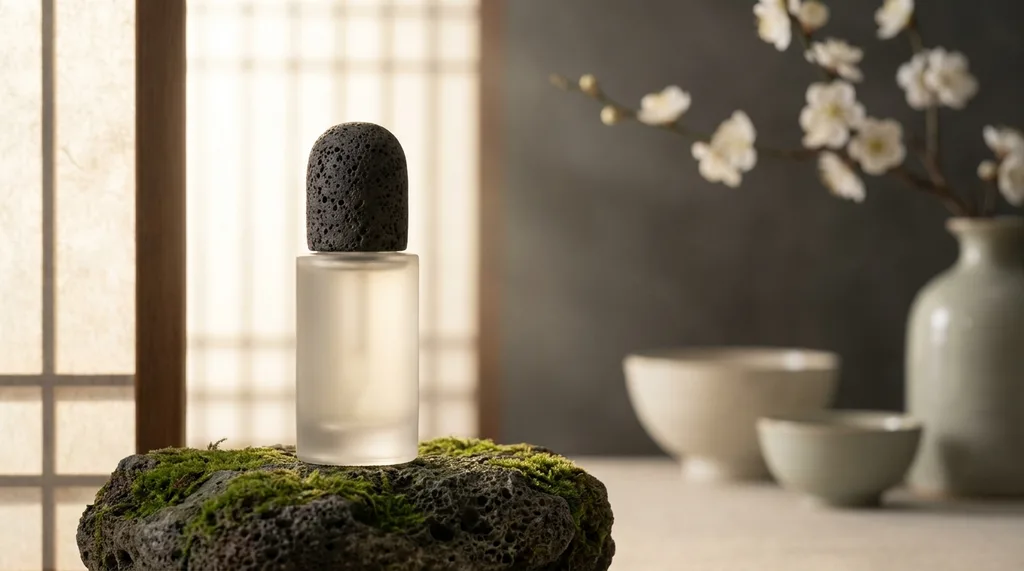
The Myth of Aggressive Resurfacing: Why "Squeaky Clean" is the Enemy
In many Western skincare philosophies, aging skin is treated like an old road that needs to be constantly repaved. The focus is heavily reactive: scrub away the dead cells with glycolic acids, force rapid turnover with high-percentage retinols, and strip away oils to reveal "new" skin.
For a woman over 60, whose epidermal layer has naturally thinned by up to twenty percent and whose lipid production has precipitously dropped, this aggressive approach is a fast track to chronic inflammation.
In Seoul, dermatologists teach that the absolute foundation of mature skin health is the avoidance of the "squeaky clean" sensation, known colloquially as 뽀드득 (ppo-deu-deuk).
That tight, squeaky feeling after washing your face is not cleanliness; it is the sound of your skin barrier crying out. It means the critical lipid bilayers—the cellular mortar holding your skin cells together—have been stripped away. When these lipids are depleted, transepidermal water loss (TEWL) skyrockets, making fine lines look like deep crevices and leaving the skin vulnerable to environmental pathogens.
Instead of stripping the skin, Korean women over 60 utilize a highly regulated class of products designed to rebuild the skin's natural infrastructure.
[K-Beauty 101] 기능성화장품 (Gineungsung Hwajangpum) — Functional Cosmetics. This is a strict legal classification managed by South Korea’s Ministry of Food and Drug Safety (MFDS). Unlike in the West, where brands can freely use words like "anti-aging" or "wrinkle-reducing" as marketing buzzwords, a product in Korea cannot claim these benefits unless it contains government-approved concentrations of active ingredients (such as 0.04% Adenosine for wrinkle improvement) or has undergone rigorous 인체적용시험 (Inche Jeogyong Siheom)—clinical human application tests.
When you purchase a Korean product certified as a functional cosmetic, you are not buying a marketing department's promise. You are buying a formulation that has met clinical, state-vetted safety and efficacy thresholds.
🎵 K-Mono Lofi — Seoul Study Beats
Read deeper with Seoul lo-fi in the background — curated by K-Mono Lofi
The Hanbang Infrastructure: Red Ginseng and the Science of Tallyeok
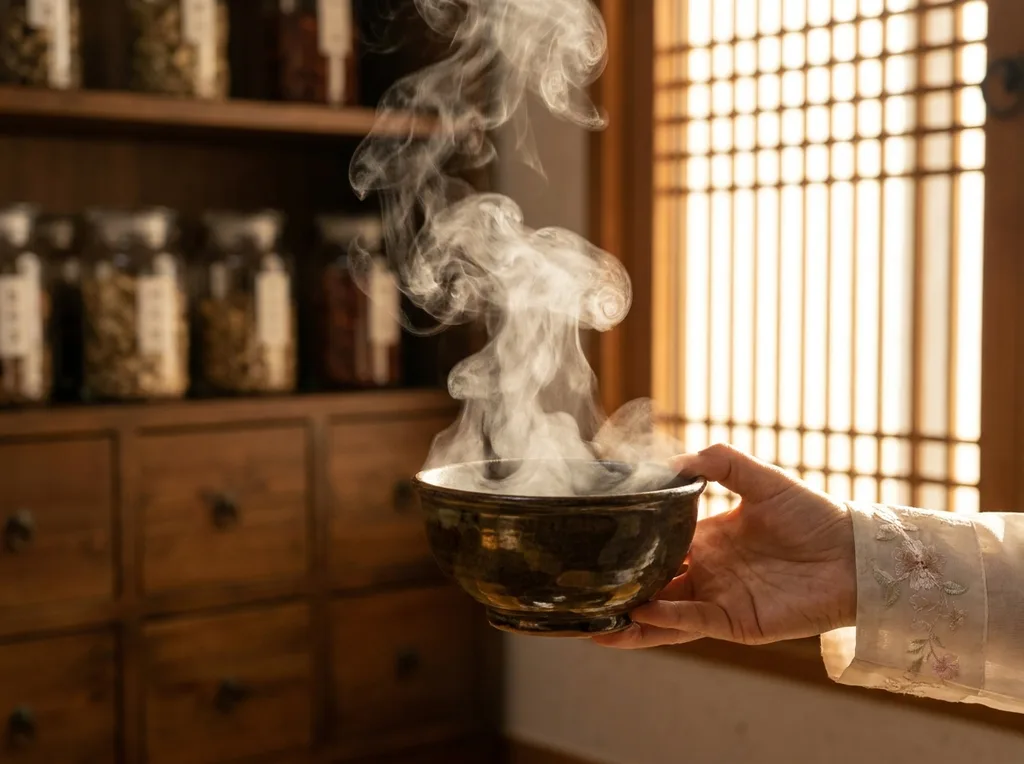
When Korean women discuss mature skin, they rarely focus on individual wrinkles. Instead, they talk about 탄력 (tallyeok).
[K-Beauty 101] 탄력 (tallyeok) — Skin elasticity and bounce. Rather than chasing the impossible standard of zero wrinkles, the Korean mature beauty philosophy prioritizes the skin's ability to snap back, hold its shape, and retain a cushion of deep hydration. It is the difference between a deflated balloon and one filled with water.
To achieve this cushion, K-beauty looks to 한방 (hanbang)—traditional Korean herbal medicine—reimagined through modern biotechnology. At the absolute apex of this ingredient hierarchy is 홍삼 (hongsam), or Red Ginseng.
This is not the raw root found in grocery stores. Red ginseng undergoes a meticulous process of steaming and drying, which alters its chemical structure and unlocks high concentrations of ginsenosides (saponins).

When applied topically, bio-fermented red ginseng acts as a powerful adaptogen. It stimulates microcirculation, delivering vital nutrients to the thinned dermal-epidermal junction, and directly upregulates collagen production.
Because the fermentation process breaks down these complex herbal compounds into smaller, bioavailable molecular weights, mature skin can absorb them without the irritation often triggered by synthetic alternatives.
Clinical Realism: What Can (and Cannot) Be Reversed at 60+
The Founder's Heart demands absolute honesty: no topical cream in the world, no matter how expensive or highly certified, will lift sagging jowls or erase deep nasolabial folds. Those changes are structural, involving the descent of deep fat pads and the laxity of the SMAS (Superficial Muscular Aponeurotic System) layer beneath the skin.
To address structural sagging, women in Seoul turn to clinical energy-based devices (like Ultherapy, Oligio, or Shurink) or injectable biostimulators like PDLLA collagen.
However, topicals are highly effective at repairing what clinical devices cannot: the skin quality. A cream cannot lift your face, but it can turn dry, crepey, dull skin into a smooth, radiant, and resilient envelope.
The table below outlines what is clinically achievable with targeted topical intervention versus what requires professional clinical procedures.
| Skin Concern (Ages 60+) | Topical Skincare Capability | Clinical Intervention Required |
|---|---|---|
| Loss of Surface Radiance | High (using fermented rice ferment, niacinamide 2-5%, and adenosine) | Minimal (basic hydration facials) |
| Crepey Texture & Fine Lines | High (via barrier repair creams, ceramides, and low-molecular peptides) | Medium (micro-needling, soft skin boosters) |
| Melasma & Age Spots | Medium (requires consistent use of arbutin, vitamin C, and daily SPF) | High (Q-switched or Picosecond lasers) |
| Deep Jowls & Sagging Jawline | Low (topicals only temporarily plump the epidermis) | High (HIFU lifting devices, thread lifts, or surgery) |
The Danger of the "Miracle Actives" Trap
The greatest risk for mature skin is the temptation of the "miracle active." In an attempt to speed up results, many women over 60 introduce high-potency (1% or higher) pure retinol or strong alpha-hydroxy acids (AHAs) into their routines.
On a compromised, thin skin barrier, these ingredients often trigger contact dermatitis, which manifests as redness, flaking, and itching.
In mature skin, this inflammation does not lead to rejuvenation; it leads to accelerated aging, a breakdown of existing collagen, and the trigger of post-inflammatory hyperpigmentation (age spots).
Furthermore, beware of unregulated viral DIY trends like applying raw beef tallow to the face. While rich in lipids, unrefined animal fats have a high comedogenic index, meaning they can easily clog the sluggish pores of mature skin, leading to deep, painful comedones that are incredibly difficult to treat without scarring.
The 60+ Daily Blueprint: A Restorative Protocol
For a skin barrier that has weathered decades, less is almost always more. The goal is to support the skin's natural healing cycle through gentle cleansing, deep hydration layering, and non-negotiable barrier defense.
Phase 1: The Morning Shield
- The Water-Only (or Ultra-Gentle) Cleanse: Wash your face with lukewarm water or a low-pH, non-foaming milk cleanser. You must preserve the sebum your skin produced overnight.
- The Essence Layer: Apply a fermented essence containing ginseng or rice extract. This provides immediate humectant hydration to plump the stratum corneum.
- The Barrier Support: Apply a cream rich in ceramides, cholesterol, and fatty acids (the natural lipids of the skin barrier). Look for formulas featuring 고시원료 (Go-shi Won-ryo)—pre-approved functional ingredients like adenosine at 0.04% to support cellular renewal.
- The Non-Negotiable SPF: UV radiation is the primary driver of collagen degradation. Use a lightweight, moisturizing organic or hybrid SPF 50+ that feels like a day cream, ensuring you apply it all the way down to your neck and décolletage.
Phase 2: The Evening Recovery
- The Oil-to-Milk Cleanse: Gently dissolve sunscreen and pollution with a lightweight cleansing oil, followed by a hydrating second cleanser. Never scrub.
- The Active Treatment (Gentle & Targeted): Instead of harsh retinols, opt for retinaldehyde (a gentler retinoid precursor), peptides, or bakuchiol paired with soothing centella asiatica.
- The Occlusive Seal: Apply a rich, nourishing cream. For very dry environments, pat a drop of botanical oil (like jojoba or camellia) over your moisturizer to lock in hydration through the night.
🌿 The Hanbang Approach (Restorative)
Focuses on cellular nourishment, barrier density, and gentle fermentation. It respects the skin's natural healing timeline to build long-term elasticity without irritation.
⚠️ The Aggressive Approach (Reactive)
Relies on high-percentage acids, intense physical scrubbing, and stripping cleansers. While it offers fast initial peeling, it often compromises the thin lipid barrier of mature skin.
This article may contain affiliate links — if you buy through them, we may earn a small commission at no extra cost to you.
Frequently Asked Questions
Can I start a Korean skincare routine if I have never used skincare before at 60?
Absolutely. In fact, mature skin that has not been subjected to years of harsh chemical peeling often responds remarkably well to the gentle, hydration-first K-beauty philosophy. Start simply with a hydrating cleanser, a barrier cream, and a daily sunscreen before introducing active treatments.
How do I know if a Korean product is truly effective for wrinkles?
Look for the designation 기능성화장품 (Functional Cosmetics) on the packaging or description. This means the formulation contains certified concentrations of active ingredients like Adenosine or Niacinamide that have been proven in human clinical trials to improve skin texture and elasticity.
Why does my skin feel dry even after applying a thick moisturizer?
Heavy creams often sit on top of the skin without truly hydrating the deeper layers. In K-beauty, the secret is layering: applying a lightweight, watery humectant essence or toner first to saturate the skin cells with water, followed by a lipid-rich cream to lock that moisture in.
Is red ginseng safe for sensitive, mature skin?
Yes. Unlike synthetic anti-aging molecules, bio-fermented red ginseng is highly biocompatible and acts as an anti-inflammatory agent. It helps calm redness while simultaneously promoting microcirculation and collagen synthesis, making it ideal for thin, reactive skin.
⚠️ Disclaimer: The information provided in this article is for educational and informational purposes only and should not be construed as medical advice. Mature skin can be highly reactive; always perform a patch test on a small area of your skin before introducing new products into your routine. If you suffer from chronic skin conditions such as rosacea, eczema, or severe dermatitis, consult a board-certified dermatologist before changing your skincare regimen.
✓ Researched and compiled using verified data as of the publication date.
 Written by Jun Mi Jung for Quiet Korea | Contact: rsl.2001.1975@gmail.com