Beyond the Price Tag: A Rational Map to K-Beauty Efficiency
Beyond the Price Tag: A Rational Map to K-Beauty Efficiency
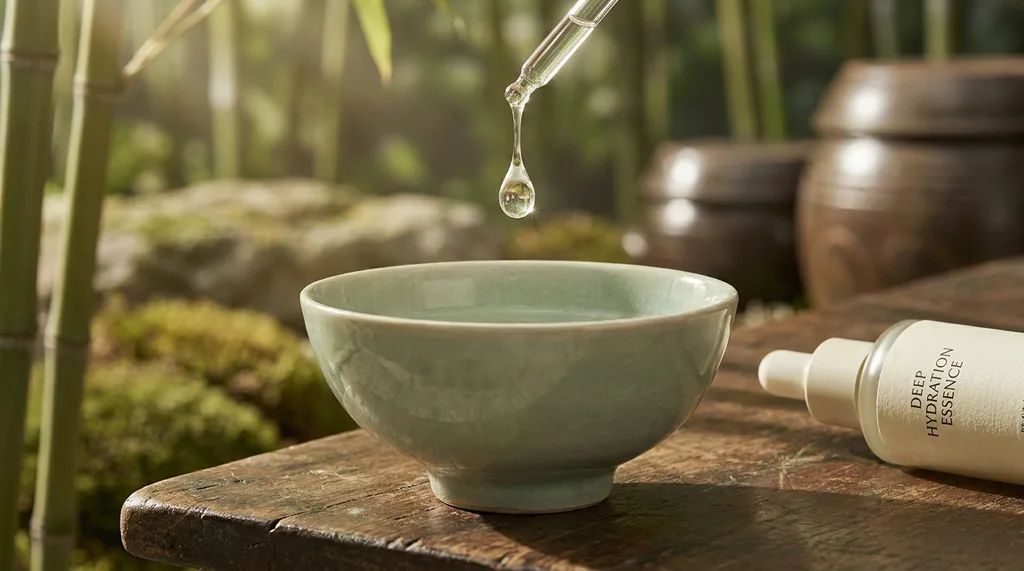
Most people believe that the "Glass Skin" standard seen on Seoul’s streets requires a limitless bank account and a ten-step routine filled with luxury gold-infused creams. They are wrong. If you walk into an Olive Young in Gangnam at 10 PM, you won't see shoppers grabbing the most expensive bottle on the shelf; you see them hunting for the gaseongbi (value for money) champion that performs precisely as it claims.
Key Takeaways * K-Beauty efficacy is governed by the Ministry of Food and Drug Safety, making "Functional Cosmetics" (Gineungseong Hwajangpum) a guarantee of clinical efficacy rather than marketing fluff. * Strategic layering of textures—from lowest to highest viscosity—is the only way to solve sok-geonjo (inner dryness) without heavy, pore-clogging creams. * You should prioritize your budget on essence and barrier-focused treatments while opting for high-value, standardized basics for cleansing and hydration.
The Regulatory Secret Behind the Price
The reason K-Beauty can deliver high-level results at lower costs than Western counterparts isn't magic—it’s the regulatory framework of the South Korean Ministry of Food and Drug Safety (MFDS). In many markets, brands hide behind proprietary "complexes" that are often just marketing placeholders. In Korea, if a brand wants to claim a product is "anti-aging" or "brightening," they must use "Notified Ingredients" (Gosi-hyeong Seongbun) at pre-approved concentrations.
Because the efficacy of these ingredients—like Niacinamide at 2%–5% or Adenosine at 0.04%—is already established, manufacturers don't have to waste millions on clinical trials to prove what is already common knowledge. That savings is passed directly to the consumer. When you buy a mid-priced Korean brightening serum, you are paying for the ingredient, not the brand's R&D ego.
The Anatomy of a Budget Routine
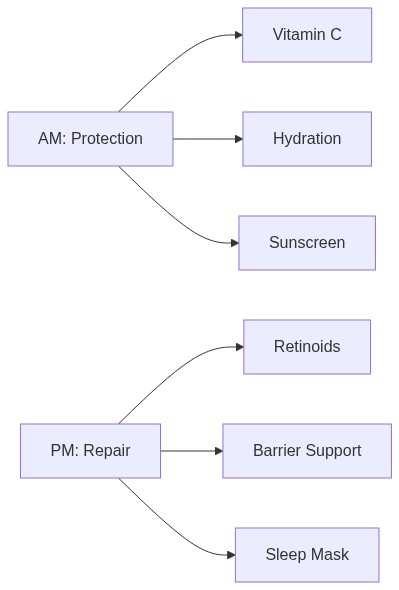
Efficiency in skincare is not about how many products you own, but how you partition them. The most common mistake is applying everything at once, which often leads to irritation and wasted product. Locals know that to achieve that translucent glow, you must separate your goals by time.
Understanding the Texture-First Rule
The "Glass Skin" aesthetic is essentially an exercise in light reflection. If your skin is dehydrated—what Koreans call sok-geonjo (inner dryness)—it will look dull no matter how much highlighter you apply. You must use a "Texture-First" application method: start with the most watery, essence-like products to deliver moisture deep into the stratum corneum, and finish with a yak-san-seong (pH-balanced) cream to seal it all in.
[K-Beauty 101] 속건조 (Sok-geonjo) — Inner dryness. A state where the skin feels tight or parched beneath an oily surface. This is the primary target of the multi-toner/essence method, which saturates the skin barrier before heavier oils can block the way.
🎵 K-Mono Lofi — Seoul Study Beats
Read deeper with Seoul lo-fi in the background — curated by K-Mono Lofi
Where to Spend and Where to Save
If you are building a routine on a budget, you must be surgical. Do not waste money on cleansers—their only job is to be gentle and effective. Spend your money where the formulation complexity is highest: the essence and the active serums.
| Category | Investment Priority | Why? |
|---|---|---|
| Cleanser | Save | Must be pH-balanced; expensive formulas rarely add value. |
| Moisturizer | Save | Look for simple, barrier-repairing ingredients. |
| Essence/Serum | Invest | This is where the Gosi-hyeong Seongbun (notified ingredients) live. |
| Sunscreen | Invest | The most advanced K-Beauty technology is here; don't gamble. |
If you have ever felt overwhelmed by the endless aisles of skincare, remember that the most effective routine is a hwajangpum daieo-teu (cosmetics diet). Strip back the noise, focus on the functional, and stop paying for the marketing tax. Your skin doesn't care about the price on the bottle; it only cares about the molecular weight of what you put on it.
This article may contain affiliate links — if you buy through them, we may earn a small commission at no extra cost to you.
⚠️ Disclaimer: This guide is for educational purposes only and does not constitute medical advice. Always perform a patch test when introducing new active ingredients into your routine, especially if you have sensitive skin or a history of dermatological issues. If you have active acne, rosacea, or other concerns, consult a board-certified dermatologist before beginning any new regimen.
✓ Researched and compiled using verified data as of the publication date.
 Written by Jun Mi Jung for Quiet Korea | Contact: rsl.2001.1975@gmail.com