Beyond the Pomade: The Architectural Truth of the Korean Down-Perm
Beyond the Pomade: The Architectural Truth of the Korean Down-Perm
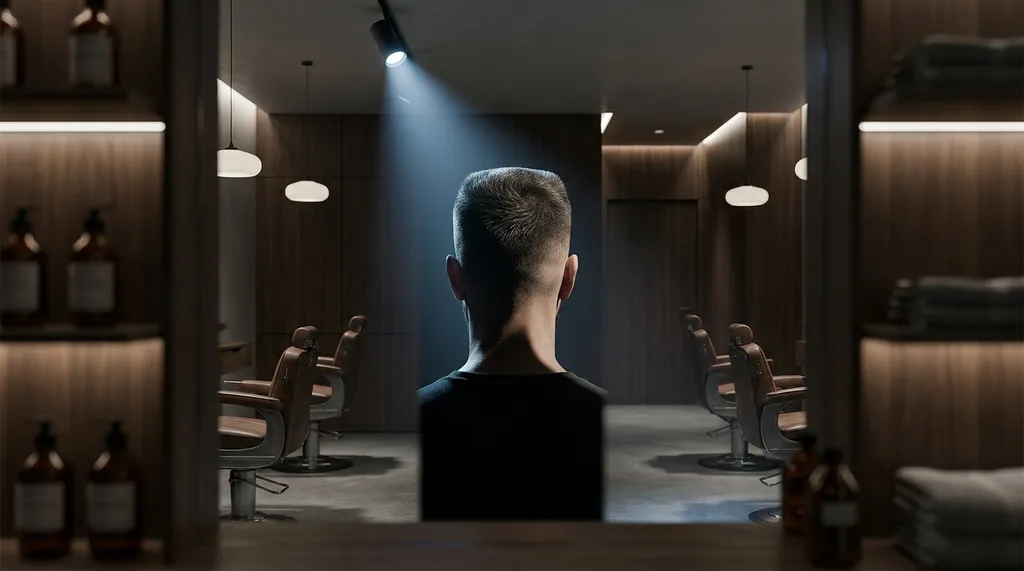
If you are a guy who thinks a "routine" starts and ends with a bottle of supermarket 3-in-1, you’re missing the structural engineering that makes Seoul’s streets look like a continuous, high-definition fashion campaign. You see the clean, tight silhouettes on the men walking through Gangnam and you assume it’s genetics or a magical barber. It isn't. It’s chemistry. And for the Korean man, the 다운펌 (Down-perm) is the foundation of it all.
🎵 K-Mono Lofi — Seoul Study Beats
Read deeper with Seoul lo-fi in the background — curated by K-Mono Lofi
Key Takeaways * The down-perm is a chemical structural reset, not just a haircut, that reshapes hair follicles using high-alkaline agents. * Longevity is governed by a 4–6 week cycle, dictated by the hair’s growth rate and the scalp's natural regeneration. * Without a rigorous post-perm pH-restoring routine, you aren't just styling your hair—you are actively compromising your scalp barrier.
The down-perm isn't about adding volume; it’s about subtraction. It is the tactical elimination of the "poofy" side-profile that happens when coarse, thick hair grows at a right angle to the skull. In Seoul, this is the precursor to the 댄디컷 (Dandy-cut)—the gold standard of a clean, sophisticated look. But here is the part the brochures leave out: to get that look, you are essentially forcing your hair to surrender its natural shape through a chemical process that shifts your scalp’s pH from a healthy 4.7 to a harsh 10.0–12.0.
The Structural Cost of the Silhouette
When you sit in that barber’s chair, you are witnessing an exercise in precision, but the chemistry occurring on your head is aggressive. The process relies on reducing agents—typically thioglycolic acid—to break the disulfide bonds that define your hair’s natural trajectory.
Think of your hair like a bundle of steel cables. The perm solution dissolves the ties that keep those cables rigid, allowing the barber to flatten them into a new, aerodynamic shape before "re-locking" them. If you treat this as a casual trip to the shop, you’re ignoring the fact that you’ve just structurally altered your own biology.
Managing the Four-Week Window
You want to know how long it lasts? The physics are simple: as soon as your new hair grows in at the root, the "lock" on the flattened hair starts to lose its tension. For most, this cycle is strictly 4 to 6 weeks.
To extend this, locals know the secret isn't in the chemical—it's in the daily mechanical maintenance. After a down-perm, the first 48 hours are a "no-go" zone for moisture. After that, your hairdryer becomes your most important tool. You must train the hair to stay down by using the heat to direct the follicle, not just dry it. If you aren't manually compressing the sides while you dry them, you are letting the perm fail weeks ahead of schedule.
Frequently Asked Questions
How long until I can wash my hair after a down-perm? Ideally, wait at least 48 hours. The chemical bonds are still in a fragile, "setting" phase, and introducing water or heavy shampooing can cause the hair to spring back to its original shape, ruining the silhouette you just paid for.
Does a down-perm cause permanent hair loss? There is no clinical evidence that a properly performed down-perm causes permanent hair loss. However, chemical burns from leaving the solution on too long or applying it directly to broken skin can cause temporary damage to the hair follicle or scalp barrier. Always ensure your barber uses a protective scalp guard.
Can I do this at home with a kit? Technically, yes, but it is high-risk. A professional barber understands the precise timing needed for your hair density and texture. In a home environment, the risk of over-processing—where the hair becomes brittle and breaks—is extremely high.
⚠️ Disclaimer: The information provided here is for educational purposes regarding grooming culture and should not replace professional medical or dermatological advice. Chemical hair treatments involve sensitive skin and potential allergic reactions; always perform a patch test or consult with a board-certified dermatologist if you have a history of scalp sensitivity or hair thinning.
⚠️ Disclaimer: This article is for informational and educational purposes only and does not constitute medical, dermatological, or financial advice. Individual results vary — consult a board-certified dermatologist or physician before starting any new skincare routine, supplement, or procedure, especially if pregnant, nursing, or taking other medications. This article may contain affiliate links — if you buy through them, we may earn a small commission at no extra cost to you.
✓ Researched and compiled using verified data as of the publication date.
 Written by Jun Mi Jung for Quiet Korea | Contact: rsl.2001.1975@gmail.com