The Korean Down-Perm: Why Your Side Hair Won't Lay Flat (And How to Fix It)
The Korean Down-Perm: Why Your Side Hair Won't Lay Flat (And How to Fix It)

If you have spent your life fighting your side hair—trying to tame it with heavy pomades, aggressive gels, or simply giving up and buzzing it all off—you have likely missed the single most effective tool in the K-grooming arsenal: the Down-perm.
🎵 K-Mono Lofi — Seoul Study Beats
Read deeper with Seoul lo-fi in the background — curated by K-Mono Lofi
Walking down the streets of Gangnam or through any professional barber shop in Seoul, you rarely see the "puffy side" phenomenon common in Western grooming. It is not because Korean men have genetically compliant hair; it is because they have adopted a chemical solution to a structural problem. The Down-perm is not about changing your style; it is about changing the geometry of your silhouette.
Key Takeaways * The Down-perm chemically alters your hair's internal disulfide bonds to permanently flatten side hair for 3-4 weeks. * It is a high-maintenance commitment requiring professional application to avoid chemical scalp burns. * Scalp recovery is non-negotiable; using soothing agents like Eoseongcho and Centella Asiatica post-procedure is what separates a clean look from a damaged scalp.
The Chemistry of Control: How It Actually Works
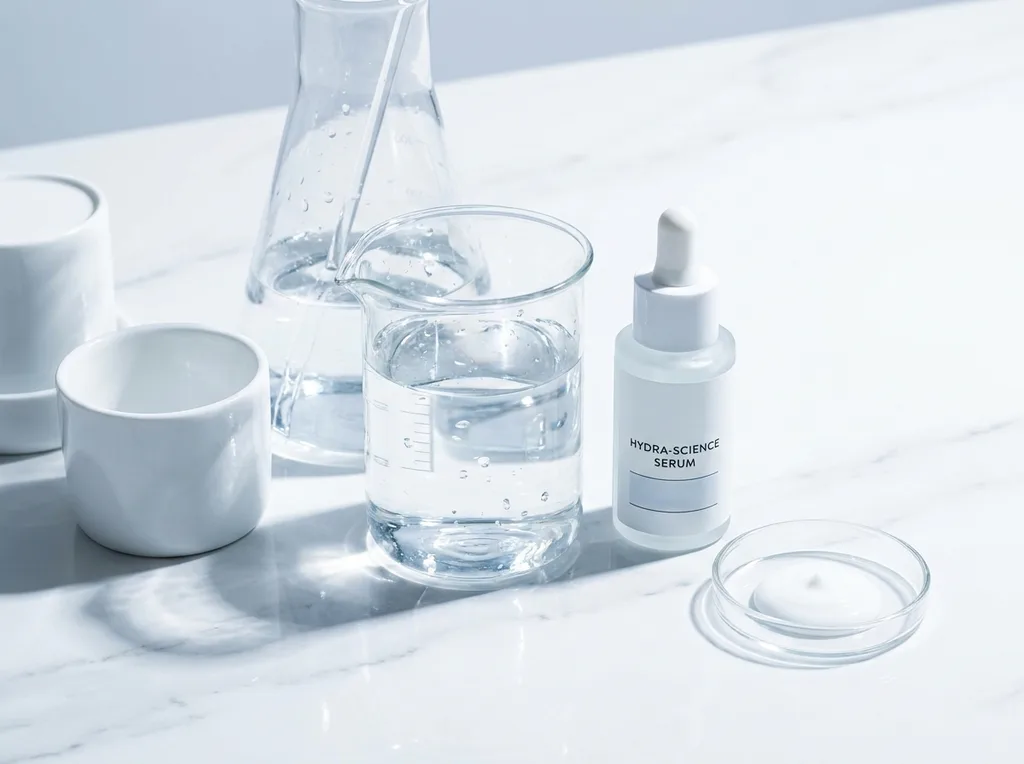
Most Western men treat hair as a surface-level styling issue, using resins or waxes to force hair down. This is a losing battle. The Down-perm works by using Thioglycolic Acid (TGA) to fundamentally break the disulfide bonds that give your hair its rigid, perpendicular growth pattern.
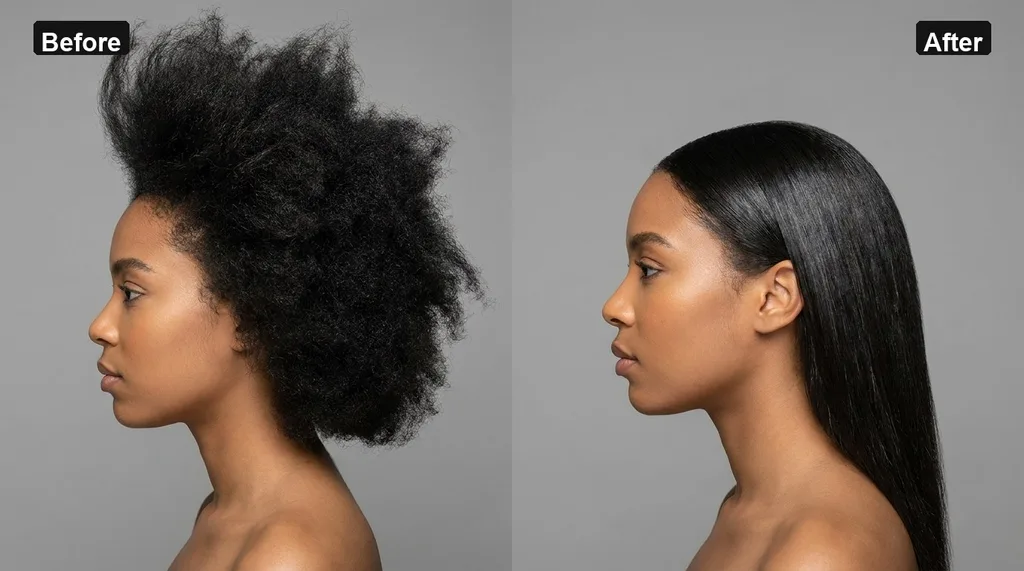
In a professional setting, this process—known as Yeonhwa—is a delicate dance. If the stylist leaves the chemical on too long, your hair becomes brittle; too little, and your side hair will spring back to life within days. Once the bonds are cleaved, the stylist physically presses the hair against the scalp, essentially "re-training" the growth direction, before applying a neutralizer to lock it in place.
The Hidden Cost: Scalp Health and Maintenance

Because hair grows at a rate of roughly 1cm per month, the "sleek silhouette" created by a Down-perm is temporary. You are looking at a salon visit every 3 to 4 weeks. But the real cost isn't just financial—it is biological.
Every time you perform this chemical restructure, you are compromising your lipid barrier. This is why you will see Korean men shifting their routine immediately after a salon visit. They don't just "wash their hair"—they switch to weakly acidic, pH-balanced cleansers and prioritize Eoseongcho (Houttuynia cordata) to dampen the inevitable inflammatory response. If you are going to commit to the look, you must also commit to the recovery.

Frequently Asked Questions

Can I use styling products immediately after a Down-perm? No. You must avoid shampoos and styling products for at least 48 hours. The chemical bonds are still settling, and premature washing or product buildup can cause the hair to lift, ruining the effect.
Is the Down-perm damaging to the scalp? If applied correctly by a professional, the risk is minimal. However, frequent chemical exposure can lead to dryness and sensitivity. Using a Centella Asiatica based scalp treatment or a mild, calming tonic helps maintain barrier integrity.
How do I know if I’m a good candidate for this? If you have "thick" or "coarse" side hair that grows at a 90-degree angle from your head, you are the ideal candidate. If you have thin, sparse hair, a Down-perm may make your hair look even thinner; in those cases, a classic fade is usually a better aesthetic choice.
⚠️ Disclaimer: The Down-perm involves potent chemical agents (Thioglycolic Acid). Always consult with a licensed professional and perform a patch test if you have a history of contact dermatitis or scalp sensitivity. Results vary based on hair porosity and density; this guide is for informational purposes and does not replace professional dermatological advice.
⚠️ Disclaimer: This article is for informational and educational purposes only and does not constitute medical, dermatological, or financial advice. Individual results vary — consult a board-certified dermatologist or physician before starting any new skincare routine, supplement, or procedure, especially if pregnant, nursing, or taking other medications. This article may contain affiliate links — if you buy through them, we may earn a small commission at no extra cost to you.
✓ Researched and compiled using verified data as of the publication date.
 Written by Jun Mi Jung for Quiet Korea | Contact: rsl.2001.1975@gmail.com