Beyond the Kitchen: Why Your DIY Fermented Rice Mask is a Microbiome Risk
Beyond the Kitchen: Why Your DIY Fermented Rice Mask is a Microbiome Risk
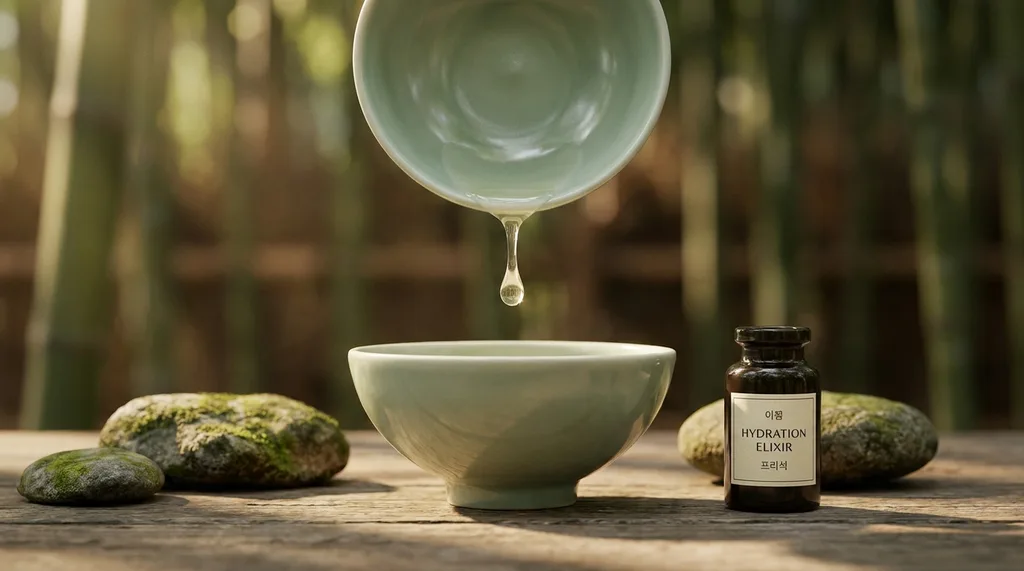
Walk into any high-end clinic in Gangnam, and you will notice a distinct absence: you will not find bowls of rice water or crude fermentation starters sitting on the lab benches. The aesthetic of "Glass Skin" (glass skin) is a clinical pursuit, not a culinary one. Yet, on social media, the narrative persists that the secret to a luminous complexion is as simple as straining your dinner rice or letting a bottle of makgeolli sit on your counter.
There is a profound disconnect between the "clean" image of traditional fermentation and the reality of dermatological safety. While rice bran and fermented liquids are the bedrock of some of the most effective K-Beauty formulations, the leap from a controlled, sterile laboratory environment to your kitchen counter is not just a change in setting—it is a dangerous shift in biology.
Key Takeaways * Standardization vs. Chaos: Laboratory-grade fermented ingredients are standardized to ensure consistent potency and safety; DIY rice liquids are chemically unstable and unpredictable. * The Microbiome Trap: Applying non-sterile, nutrient-rich liquids to the skin can encourage the growth of pathogenic bacteria, leading to dysbiosis and chronic inflammation. * The 1% Threshold: Effective ingredients like kojic acid are strictly regulated at 1% for safety; home-fermented liquids have no such control, risking severe irritation and compromised UV defense.
The Mirage of "Natural" Efficacy
The allure of DIY fermented skincare lies in the romanticization of koji (Aspergillus oryzae), the fungus responsible for the transformation of rice into the potent ingredients found in premium fermented skincare. In a laboratory, scientists isolate the beneficial metabolites—peptides, amino acids, and lactic acid—and stabilize them within a preserved, pH-balanced formula.
When you DIY this process, you are not creating a serum; you are cultivating an uncontrolled microbial environment. Rice water and rice wine are essentially "broths" for any bacteria that happen to be present in your kitchen. By applying these to your skin, you are not just applying antioxidants; you are potentially seeding your face with environmental pathogens.
How Hyaluronic Acid Actually Works
The danger here is a fundamental misunderstanding of what skin health requires. We often think of "potency" as a synonym for "freshness," but in the context of the skin barrier, stability is the true measure of efficacy.
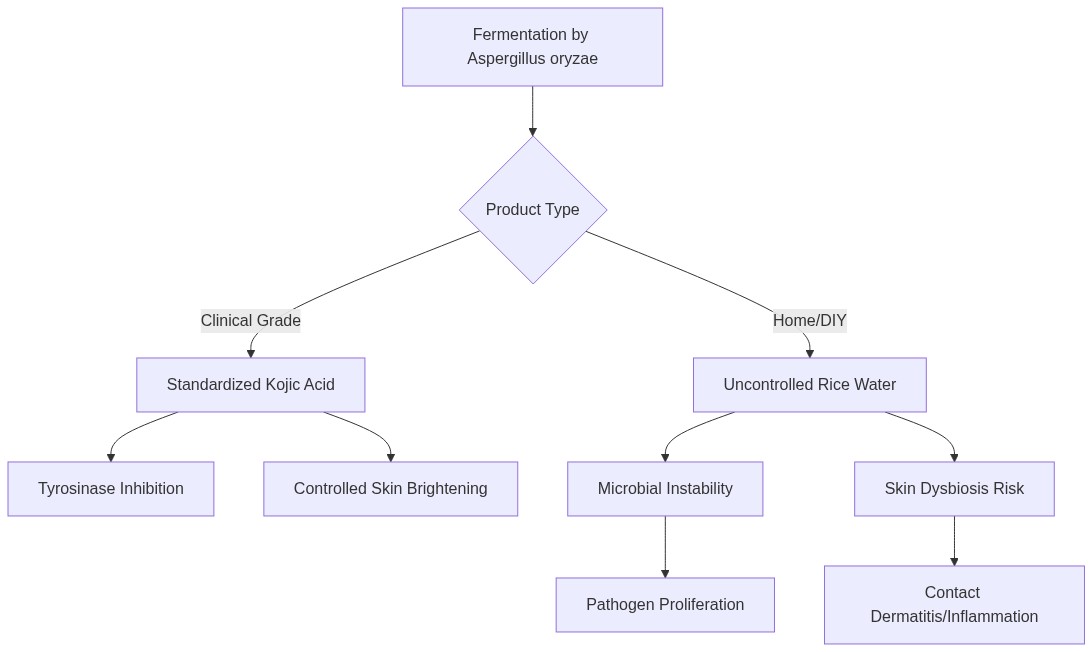
When a substance is not standardized, your skin is subjected to wildly varying concentrations of active compounds. Take kojic acid, for instance. It is a brilliant tyrosinase inhibitor that stops melanin production in its tracks. However, regulatory bodies like the European Commission and the CIR mandate a 1% concentration cap precisely because higher levels trigger contact dermatitis and, ironically, strip away your skin's natural ability to defend itself against UV radiation. In a DIY mix, there is no regulator. You might be applying 0.1% one day and 3% the next, unknowingly inviting inflammation.
🎵 K-Mono Lofi — Seoul Study Beats
Read deeper with Seoul lo-fi in the background — curated by K-Mono Lofi
The Microbiome: A Delicate Balance
The modern understanding of acne and irritation has moved away from "killing bad bacteria" and toward "fostering a diverse community." Your skin relies on commensal bacteria like Staphylococcus epidermidis to maintain the acid mantle.
When you introduce an unpreserved, nutrient-dense liquid, you disrupt this ecosystem. This is the definition of dysbiosis. You might start with the goal of achieving a "dewy" glow, but you may end up with a compromised barrier that is suddenly prone to redness, breakouts, and sensitivity that no amount of calming toner can fix.
[K-Beauty 101] 코지 (Koji) — The Japanese term for Aspergillus oryzae fungus. In cosmetics, it represents the biological engine of fermentation. While the mold itself provides the chemical magic, it requires laboratory precision to extract the benefits without the risks.
The Cost of the "Heritage" Shortcut
The market for fermented rice extracts is projected to grow significantly, reaching an estimated $3.41 billion by 2035. This isn't because people are buying more rice to wash their faces at home; it’s because cosmetic chemists have figured out how to make these traditional ingredients safe.
If you want the benefits of rice bran (komenuka) or fermented filtrates, the solution is not to bypass the industry, but to rely on the engineering that makes these ingredients actually usable. When you buy a formulated product, you are paying for the safety testing, the standardized concentration of kojic acid, and the preservatives that prevent your serum from becoming a petri dish.
This article may contain affiliate links — if you buy through them, we may earn a small commission at no extra cost to you.
⚠️ Disclaimer: The information provided here is for educational purposes only and does not constitute medical advice. DIY skincare practices, particularly those involving fermentation, carry a high risk of bacterial contamination and skin irritation. Always perform a patch test on a small area of skin before use, and consult with a board-certified dermatologist before incorporating new active ingredients or unconventional methods into your routine, especially if you have a history of sensitive skin or compromised barriers.
✓ Researched and compiled using verified data as of the publication date.
 Written by Jun Mi Jung for Quiet Korea | Contact: rsl.2001.1975@gmail.com