The Ultimate Seoul Beauty Intelligence: authentic K-Beauty skincare routines, ingredient science, and glass skin secrets — verified by real Korean sources.
The Spatial Illusion: Why Your K-Beauty Makeup Looks "Off" (And the 3-Millimeter Lash Secret That Fixes It)
on July 25, 2026
You have the dewy cushion foundation down to a science. Your gradient lip is perfectly blurred, and your under-eye area is highlighted to soft, youthful perfection. Yet, when you look in the mirror, something still feels completely off. Instead of looking like a K-pop idol stepping onto a stage in Seoul, the reflection looks like a Western-style makeup application desperately trying to mimic a Korean aesthetic.
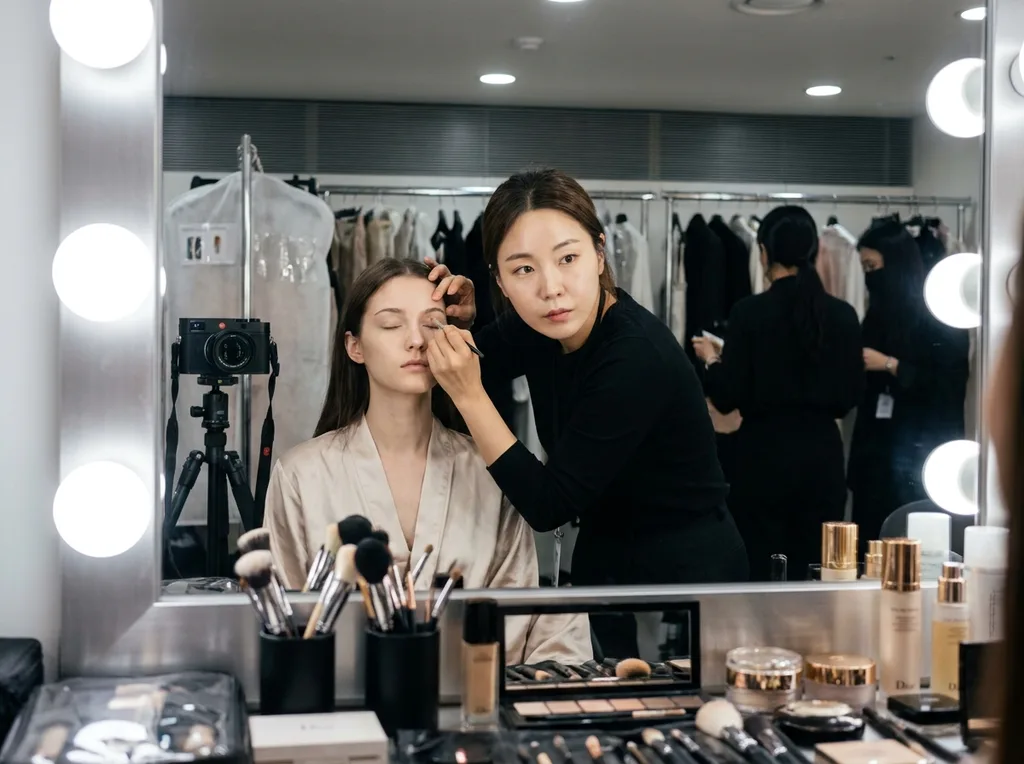
The invisible under-lash technique allows ambient light to pass through intentional gaps, creating a luminous, wide-awake gaze.
The disconnect isn't your base, and it isn't your color palette. It is sitting right on your eyelids.
For decades, Western eye makeup has relied on the philosophy of density and structure—using thick, uniform full strip lashes to frame, sculpt, and sometimes entirely conceal the natural shape of the eye. But walk into any elite salon in Seoul's Gangnam district, and you will find that the philosophy is completely inverted. K-Beauty does not seek to cover the eye; it seeks to open it. It is an aesthetic of negative space, where what is left out is just as important as what is put in. By replacing heavy, light-blocking strip bands with microscopic, strategically placed individual clusters, elite Korean makeup artists create a doll-like, luminous gaze that looks completely weightless. This is not just a trend; it is an architectural reimagining of the eye.
> **Key Takeaways**
> * **The Power of Gaps:** Unlike Western strip lashes that block light, K-Idol lashes use intentional spaces between individual clusters to let light pass through, making the eyes look larger, brighter, and entirely natural.
> * **Anatomical Placement:** The secret to the K-pop look relies on placing varied lash lengths (typically 9mm to 12mm) exactly at key anatomical focal points—specifically the center of the pupil and the outer iris edge.
> * **The Invisible Band:** By applying lash clusters *underneath* the natural lash line rather than on top of the eyelid skin, the lash band disappears completely, eliminating the heavy, "stuffy" look of traditional falsies.
---
## The Gravity of Empty Space: Why Strip Lashes Suffocate the Eye
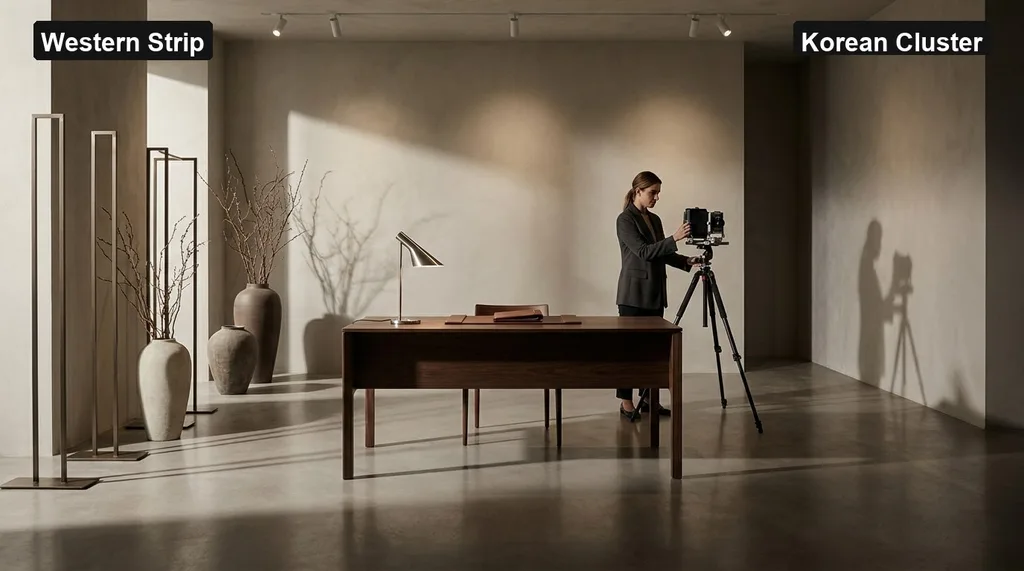
Traditional Western strip lashes cast a heavy awning shadow, whereas Korean individual clusters create a weightless, transparent silhouette.
To understand why traditional strip lashes fail to deliver the K-Idol look, we have to look at how light interacts with the human face. A full strip lash behaves like an awning over a window. It casts a shadow downward, darkening the iris and making the periorbital area look deeply recessed. This works beautifully for smoky, sultry Western contouring, where the goal is dramatic depth.
However, K-Beauty lives and dies by transparency. The goal is a bright, clear, "popped" eye that looks wide awake even under harsh stage lights. When you apply a solid black band across your eyelid, you immediately suffocate that brightness.
> **[K-Beauty 101]** *Gadak-soknun-sseop (가닥속눈썹)* — Individual cluster lashes designed for a spiky, defined look. This term captures the essence of the K-Idol aesthetic, which rejects the uniform volume of strip lashes. It emphasizes an intentional, 'separated' lash look that mimics the doll-like, high-definition eyes seen in K-pop performances.
The magic of the individual cluster lies in its ability to create a "spiky" silhouette with clear skin visible between each spike. This empty space allows ambient light to enter the eye from all angles, reflecting off the cornea and creating that signature sparkling, watery look. Instead of a heavy wall of black fibers, you get a delicate dance of shadow and light.
🎵 K-Mono Lofi — Seoul Study Beats
Read deeper with Seoul lo-fi in the background — curated by K-Mono Lofi
To see the stark differences in construction and philosophy between these two worlds, consider this structural breakdown:
| Aesthetic Dimension | Traditional Western Strip Lashes | Korean Individual Clusters (*Gadak-soknun-sseop*) |
| :--- | :--- | :--- |
| **Placement Line** | Directly on top of the eyelid skin, above natural lashes | Tucked underneath the natural lash line, directly onto lash roots |
| **Band Visibility** | Highly visible; requires thick eyeliner or dark shadow to conceal | Zero visibility; completely hidden by the natural lash curtain |
| **Light Interaction** | Casts a downward shadow; darkens the iris for a dramatic gaze | Allows light to pass through gaps; brightens and enlarges the iris |
| **Weight Distribution** | Heavy, uniform weight across the entire delicate eyelid | Featherlight, localized placement only where structurally needed |
| **Visual Result** | Dense, sultry, mature, and structurally uniform | Spiky, youthful, doll-like, and highly customized |
---
## The Invisible Under-Lash: A Masterclass in Anatomical Precision
Achieving this look is not a matter of randomly sticking clusters across your eye. It requires a deep understanding of your eye's unique anatomy. Professional Korean artists focus on two critical landmarks: the center of your pupil (when looking straight ahead) and the outer edge of your iris.
Instead of gluing the lashes to the skin of the eyelid—which leaves a visible gap and can pull uncomfortably as you blink—the clusters are applied using the "under-lash" technique. This means the base of each cluster is dipped in a tiny amount of adhesive and pressed directly against the underside of your natural lashes, about 1 millimeter away from the wet water line.
By placing the longest clusters (usually 11mm or 12mm) directly under the center of the pupil, you visually pull the eye upward, creating a rounder, more innocent shape. Medium lengths (10mm) are then placed on the outer iris edges to gently stretch the eye horizontally without drooping it. The remaining gaps are either left empty or filled with tiny 9mm clusters to create a seamless, believable transition.
Because the adhesive is applied to the underside of the lash hair rather than the sensitive skin of the eyelid, the band remains completely invisible. Even when you look down or blink, there is no shiny glue line or thick black strip to give away the illusion. The lashes look as though they are growing directly out of your hair follicles.
---
## The Mechanics of Safety and the "Clumsy Hand" Boundary
As this technique transitions from a backstage secret to a global phenomenon, the market surrounding it is exploding. According to current industry research, the global lash market was valued between $1.3B and $1.8B in 2024, and is projected to reach an estimated $2.7B to $4.5B by 2030 to 2035, growing at a steady compound annual growth rate (CAGR) of 3.9% to 8.7%. Remarkably, in-salon lash services see a 3-week return rate of nearly 80%, demonstrating how deeply hooked consumers become once they experience high-definition eye styling.
But this shift in beauty habits brings critical safety considerations to the forefront. Because the under-lash technique places adhesive closer to the ocular surface than traditional strip lashes, understanding ingredient safety is paramount.
This article may contain affiliate links — if you buy through them, we may earn a small commission at no extra cost to you.
### The Chemical Reality of Adhesives
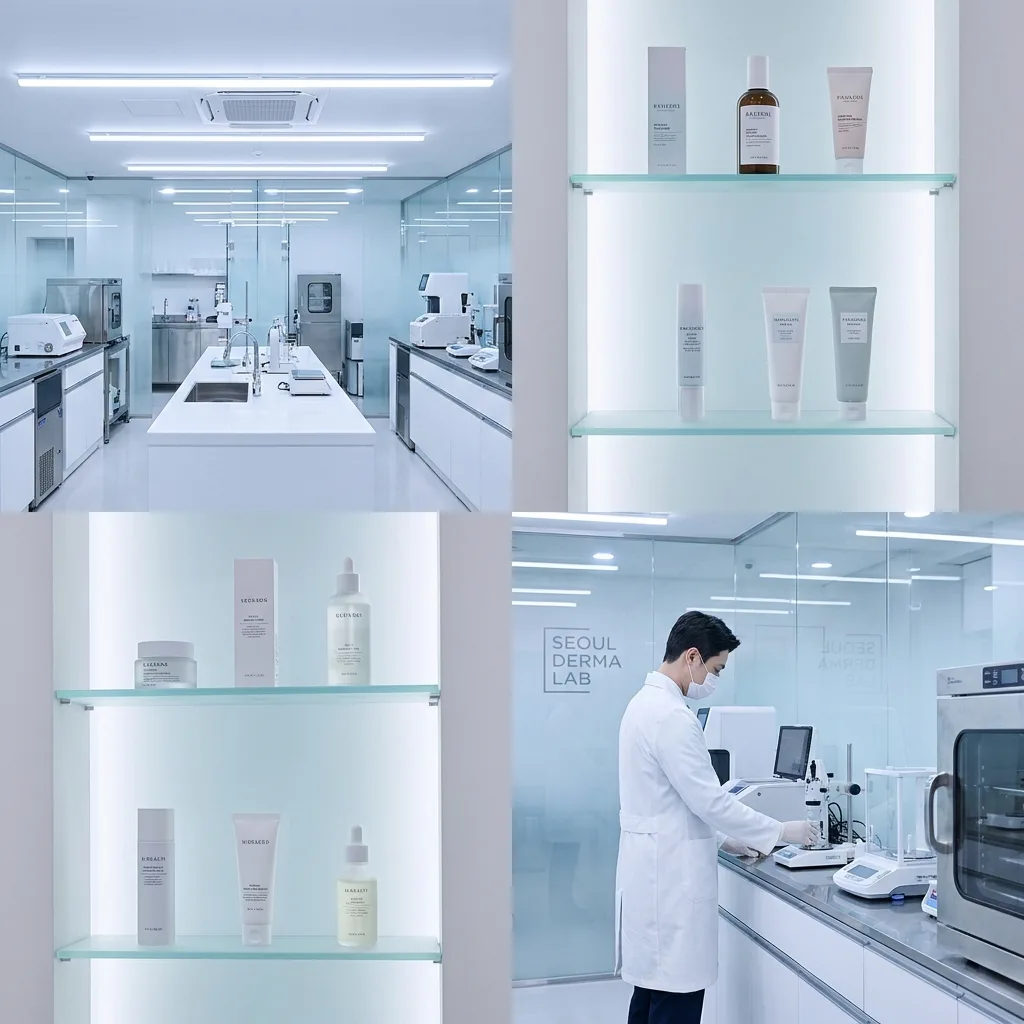
Many cheap, industrial-grade lash glues contain high levels of formaldehyde or harsh cyanoacrylates that can cause severe contact dermatitis, swelling, or even corneal chemical burns. When choosing adhesives for this delicate area, look for formulations that adhere to international medical device standards, such as ISO 10993-5 (which tests for cytotoxicity to ensure cells are not killed or damaged) and ISO 10993-10 (which tests for sensitization and delayed allergic reactions).
Many modern, self-use Korean lash glues are shifting away from these aggressive chemical bases, opting instead for low-fume formulas infused with soothing botanicals like Witch Hazel and Cactus Extract to minimize periorbital irritation.
> **[K-Beauty 101]** *Ttong-son (똥손)* — Unskilled or clumsy hands in the beauty application context. A self-deprecating term used in Korean beauty communities to describe the struggle of mastering complex, highly precise makeup techniques.
> **[K-Beauty 101]** *Kkul-tip (꿀팁)* — A highly effective, insider beauty hack or shortcut. Derived from 'honey' and 'tip,' it implies advice that is incredibly valuable and sweet, simplifying intricate professional techniques for everyday users.
For those who identify as a *Ttong-son*, the physical application can feel like an impossible chore. If you have ever glued your eyes shut or ended up with lashes pointing in five different directions, you are not alone. Fortunately, the community has developed several invaluable *Kkul-tip* strategies to bypass the learning curve:
* **The Degreasing Step:** Eyelids naturally produce sebum, which breaks down lash adhesive almost instantly. Before applying a single lash, press a cotton swab dipped in micellar water along your lash roots, then dust the area with a translucent mineral powder to create a completely matte, dry canvas. This simple step can increase your lash retention by up to three days.
* **The Tweezer Angle:** Avoid standard curved tweezers, which block your line of sight. Instead, use high-precision, matte-steel straight tweezers. Hold the lash cluster from the very tip of the fibers—not the base—so you can clearly see exactly where the root meets your natural lash line.
The difference between frustration and a flawless application comes down to slowing down, using medical-grade safety precautions, and honoring the natural architecture of your eyes.
✦ Partner Recommendation
Explore Korean-Style Lash Clusters
Achieving the seamless, zero-band look requires the right lightweight fibers and gentle adhesives. Browse highly-rated individual lash clusters and accessories to start practicing your under-lash technique.
---
## Frequently Asked Questions
### Can I wear individual lash clusters if I wear contact lenses?
Yes, but you must take extra precautions. Always insert your contact lenses *before* starting your lash application to avoid trapping any residual adhesive fumes behind the lens. Additionally, use a strictly latex-free, low-fume adhesive designed for sensitive eyes to prevent watering and irritation.
### How long do individual under-lash clusters typically stay on?
When applied with daily-wear cosmetic glue, they are meant to be removed at the end of the day along with your makeup. However, if you use a semi-permanent cluster bond-and-seal system, they can last anywhere from 3 to 7 days, provided you avoid oil-based cleansers and do not sleep directly on your face.
### Will applying clusters underneath my lashes damage my natural lashes?
Not if applied and removed correctly. Damage occurs when clusters are glued to multiple natural lashes at once, preventing natural shedding, or when they are pulled off dry. Always use a dedicated oil-based makeup remover or lash adhesive solvent to completely dissolve the bond before gently sliding the clusters off.
---
> **⚠️ Disclaimer:** The information provided in this article is for educational and aesthetic purposes only. Because individual lash application involves working close to the ocular surface, always perform a patch test of any adhesive on your inner arm or behind your ear 24 hours prior to use. If you experience burning, redness, or swelling, discontinue use immediately and consult a board-certified dermatologist or eye care specialist.


 Written by Jun Mi Jung for Quiet Korea | Contact: rsl.2001.1975@gmail.com