The Molecular Reality of the Down-Perm: Why Your Hair is Snapping and How K-Grooming Rebuilds It

Minimalist concrete textures mixed with warm amber lighting, reflecting high-end Seoul grooming culture
If your morning hair routine consists of grabbing a bottle labeled "Hair, Body, Face, and Engine Degreaser" and scrubbing your scalp like you are sanding down an old wooden deck, we need to have a serious talk.
Clinical laboratory aesthetic with moody blue tones and stark contrast highlighting structural failure
You wanted that sharp, clean silhouette. You saw how ordinary men on the streets of Seoul walk around with perfectly flat, sleek sides and an effortless, fluid drape to their hair. So, you went out and got a chemical straightening treatment or a side-hair flattening service. But instead of looking like a sharp, modern gentleman, your head now feels like a dried-out broom. The hair is stiff, it is snapping at the crown, and every time you step outside into the humidity, it poofs up into a dry cloud of frizz. Here is the hard truth: you cannot treat chemically altered hair with the same casual indifference you use to wash your gym socks. Chemical straightening is not a simple styling trick; it is a molecular-level structural reconstruction. When you do it without changing how you wash, condition, and protect your hair, you are actively inviting structural collapse. > **Key Takeaways** > - **Molecular Restructuring:** Chemical straightening is a molecular-level surgery that permanently strips the hair's protective F-layer, making it highly vulnerable to environmental damage and moisture. > - **The Protein Deficit:** Chemical treatments cause severe protein loss—up to 3.5 micrograms per gram of hair fiber—requiring targeted reconstructive polymers rather than basic cleansing. > - **The K-Grooming Protocol:** Restoring a fluid, healthy drape requires a disciplined routine: respecting a 48-hour chemical stabilization window, utilizing pH-balanced formulas, and shielding the hair barrier during thermal styling. --- ## The Chemistry of the Crunch: Alkali vs. Glyoxylic Straightening
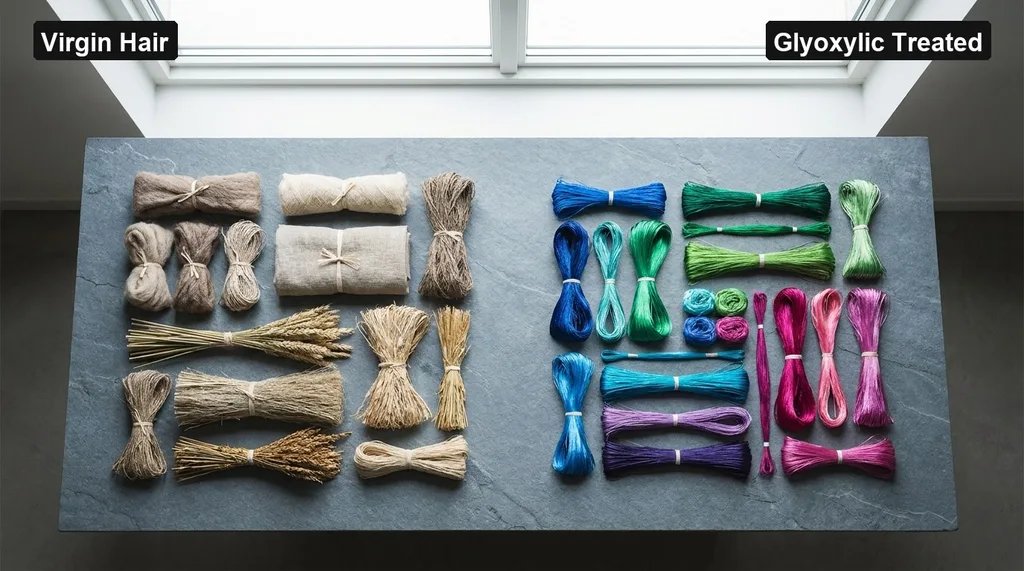
Clean architectural flat lay on a slate grey table, contrasting untreated strands with chemically processed fibers
The structural toll of molecular surgery: measuring protein loss across different straightening agents.
To understand why your hair is breaking, you have to understand what happens inside the hair shaft during a chemical service. Your hair is made of keratin proteins held together by tough covalent bonds called disulfide bonds. These bonds dictate whether your hair grows out curly, wavy, or completely straight. To change that shape, a stylist must perform molecular surgery. Reducing agents, like ammonium thioglycolate, are applied to break those disulfide bonds apart, making the hair completely malleable. The hair is then ironed flat and a neutralizer is applied to lock the bonds into their new, straight shape. But this process is never perfectly efficient. It leaves the hair fiber permanently weakened. To make matters worse, different straightening methods take a different toll on your hair's protein matrix. Let's look at the actual physical toll of these chemical treatments: | Hair Condition / Treatment | Protein Loss (micrograms per gram) | Structural Integrity Status | | :--- | :--- | :--- | | **Virgin Hair (Unprocessed)** | ~1.12 | Optimal structural strength; intact cuticle F-layer | | **Alkali Straightening** | ~2.50 | Moderately compromised; high cuticle swelling | | **Glyoxylic Acid Straightening** | ~3.50 | Severely depleted; high internal protein voiding | Every time you undergo an acid-based or glyoxylic treatment, your hair loses nearly three times more protein than untreated hair. Additionally, the glass transition temperature (Tg) of human hair—the temperature range where the keratin structure transitions from a rigid, glassy state to a highly vulnerable, rubbery state—lies between 150°C and 230°C. When you apply a flat iron to chemically sensitized hair within this temperature range, you are not just styling it; you are boiling the remaining moisture inside the cortex, leading to microscopic bubbles that blow out the hair cuticle from the inside. > **[K-Grooming 101]** *Down-perm (Down-perm)* — A specialized Korean side-hair flattening treatment designed to lay down stubborn, jutting side hair for a highly structured, slim profile. Unlike traditional Western styling which relies on heavy grease or pomades, this chemical treatment reshapes the hair shaft itself to control volume permanently. --- ## The F-Layer Funeral: Why Standard Shampoos Turn Your Hair to Straw The biggest mistake men make after getting a chemical treatment is continuing to use cheap, high-sulfate supermarket shampoos. Healthy hair is naturally hydrophobic—meaning it repels water. This water-resistance is maintained by a microscopically thin, oily membrane known as the "F-layer" (a layer of 18-methyleicosanoic acid) that coats the cuticle. This natural barrier keeps external humidity out and essential moisture locked inside. Chemical straightening completely strips away this protective F-layer. The moment this layer is gone, your hair becomes highly hydrophilic. It actively sucks in moisture from the air, causing the hair shaft to swell unevenly. This is why chemically straightened hair suddenly turns into a frizzy, unmanageable mess the second you step into a humid room.
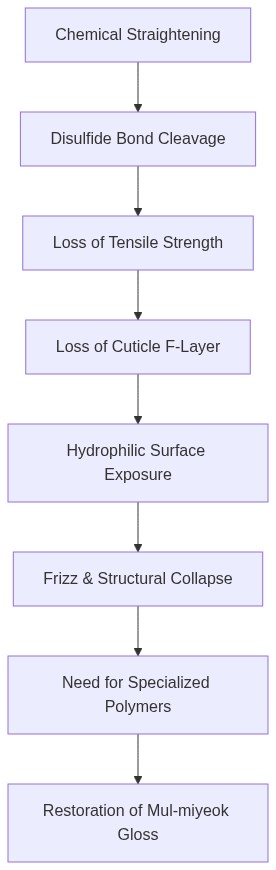
Mermaid Diagram
When you wash this compromised, hydrophilic hair with harsh, stripping surfactants (like Sodium Lauryl Sulfate), you strip away the last remaining lipids. Because the hair is now negatively charged and chemically damaged, standard oil-based conditioners cannot bond to the surface. They simply slide off, leaving your hair feeling heavy, greasy at the scalp, and bone-dry at the tips. To bypass this, K-grooming focuses on rebuilding the hair's surface using specialized, positively charged polymers like amodimethicone or quaternary ammonium compounds. These smart molecules are magnetically attracted to the damaged, negatively charged areas of your hair, wrapping the broken shafts in a synthetic, breathable shield that mimics the lost F-layer.

๐ŸŽต  K-Mono Lofi — Seoul Study Beats

Read deeper with Seoul lo-fi in the background — curated by K-Mono Lofi

--- ## The Restoration Blueprint: Engineering the Fluid 'Cha-reu-reu' Cascade Step into any high-end barbershop in Seoul, and you will quickly realize that great hair is treated like high-end architecture. It requires a solid foundation, precise materials, and protective barriers. To move away from dry, brittle straw and achieve the coveted look of deeply hydrated hair, you must implement a structured, post-procedure routine. > **[K-Grooming 101]** *Mul-miyeok (Mul-miyeok)* — Literally translating to "water-kelp," this term refers to the ultimate standard of healthy hair: lock-straight, intensely hydrated, and falling with a heavy, fluid drape that looks almost wet with moisture. To get your hair to fall with that effortless, frictionless glide—what Koreans call the *Cha-reu-reu* effect—you need to replace the lazy "strip-and-slick" approach with a dedicated reconstruction protocol.

⚠️ The Lazy Routine

• Washing hair immediately after a chemical service.
• Using harsh, high-pH 3-in-1 body washes on the scalp.
• Blow-drying on maximum heat without protection.
• Overloading dry tips with heavy, suffocating pomades.

✅ The K-Grooming Reconstruction Protocol

• Waiting 48 hours post-treatment for bonds to lock.
• Washing with low-pH, sulfate-free amino acid shampoos.
• Applying hydrolyzed keratin treatments to damp hair.
• Finishing with lightweight, polymer-rich hair essences.
### Phase 1: The 48-Hour Lockout The first 24 to 48 hours after a chemical straightening or side-hair treatment are critical. The newly formed disulfide bonds are still settling into their new configurations. If you wash your hair, sweat excessively, or wear a tight hat during this window, you will disrupt the neutralization process. Keep your hair dry, straight, and completely free of tension. ### Phase 2: Acidic Reconstruction Switch your standard shampoo for a low-pH (around 4.5 to 5.5) formula. Chemically processed hair is naturally alkaline, which keeps the cuticle flared open. An acidic wash gently lowers the pH, forcing the cuticle scales to lay flat and lock in moisture. Look for formulas infused with traditional *Hanbang* ingredients like ginseng root, ginger, or green tea extracts, which soothe the scalp skin that has been exposed to harsh straightening chemicals. ### Phase 3: Hydrolyzed Protein Layering Since your hair has lost substantial protein, you must feed it back into the cortex. Standard proteins are too large to penetrate the hair shaft, so you must look for "hydrolyzed" proteins (like hydrolyzed keratin, wheat protein, or silk amino acids). Apply these treatments to clean, damp hair, allowing the smaller peptide chains to slip into the gaps of the damaged cortex. ### Phase 4: Thermal Defense Never touch a hair dryer without a heat protectant. When blow-drying, keep the nozzle pointed downward along the hair shaft to encourage the cuticles to lay flat. Finish with a cold air blast to lock in the shape and maximize shine. --- This journey to restoring structural integrity requires the right tools. If you are ready to stop guessing and start treating your hair like the highly engineered fiber it actually is, we have mapped out the precise science of professional hair recovery. To help you find the exact formulas needed to patch up your hair's compromised protein barrier, use the explorer below to look for targeted reconstructive options. This article contains affiliate links — if you buy through them, we may earn a small commission at no extra cost to you.
✦ Partner Recommendation

Explore Restorative Hair Treatments

Rebuilding chemically altered hair requires structural proteins and targeted silicones. Explore these highly-rated restorative formulas to heal your hair barrier.

---
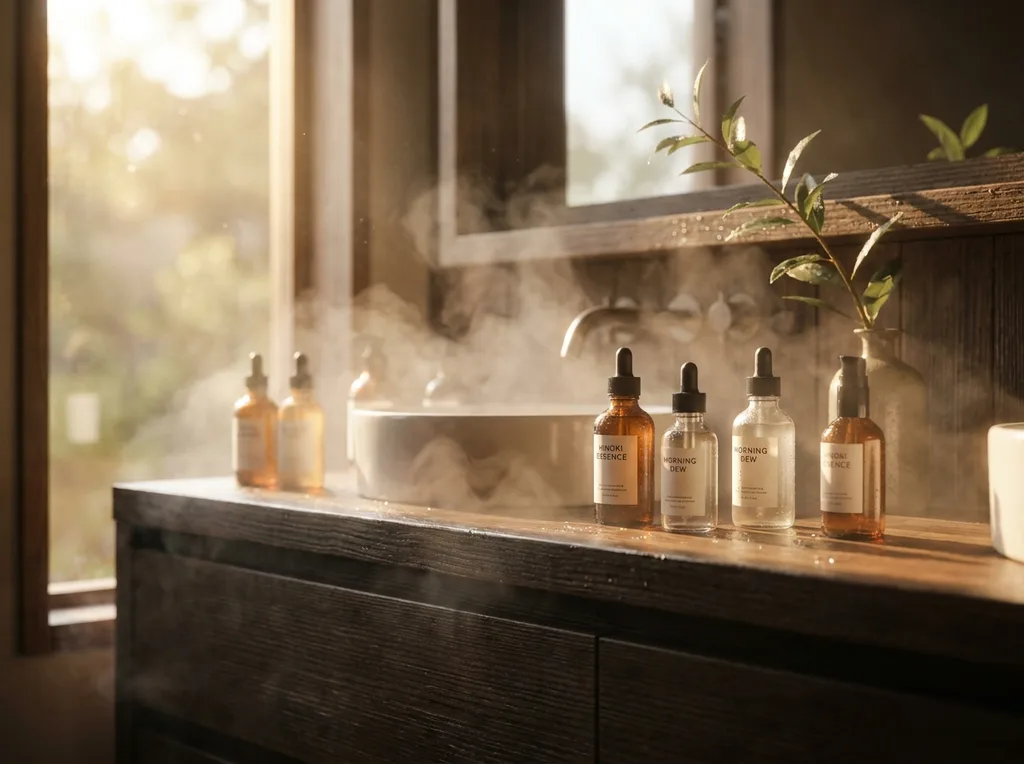
Serene bathroom vanity crafted from dark hinoki wood, surrounded by soft morning mist
## Frequently Asked Questions ### Can I get a down-perm and color my hair at the same time? No. Doing both chemical services on the same day is a recipe for severe hair breakage. You should space these treatments out by at least two to three weeks, prioritizing the straightening service first and allowing the hair's protein matrix to stabilize before applying color. ### How often should I use a protein treatment on straightened hair? For chemically straightened hair, use a hydrolyzed protein treatment once or twice a week. Overusing protein can lead to a condition known as "protein overload," which actually makes the hair stiff and brittle. Balance your protein treatments with deep-hydrating, moisture-focused conditioners. ### Why does my hair smell like sulfur when it gets wet after straightening? This is completely normal and is caused by residual sulfur compounds released during the breaking of the disulfide bonds. The smell typically fades after three to four washes with a pH-balanced, sulfate-free shampoo. ### Can I use styling wax or pomade after a straightening treatment? Yes, but avoid heavy, oil-based waxes or clays that require aggressive washing to remove. Opt for water-soluble styling creams or lightweight hair essences that can be easily washed out with a gentle, sulfate-free cleanser. --- > **⚠️ Disclaimer:** The information provided in this article is for educational and informational purposes only. Chemical hair treatments and hair structures vary widely; always conduct a patch test before applying new chemical formulas or active treatments to your hair and scalp. Consult a licensed professional stylist or dermatologist if you experience severe scalp irritation, chemical burns, or unusual hair shedding.

๐Ÿ’Ž Recommended Articles