The Physics of Freshness: Why Your Fruit-Juice Makeup Looks Painted On (And How Seoul's Elite Salons Fix It)
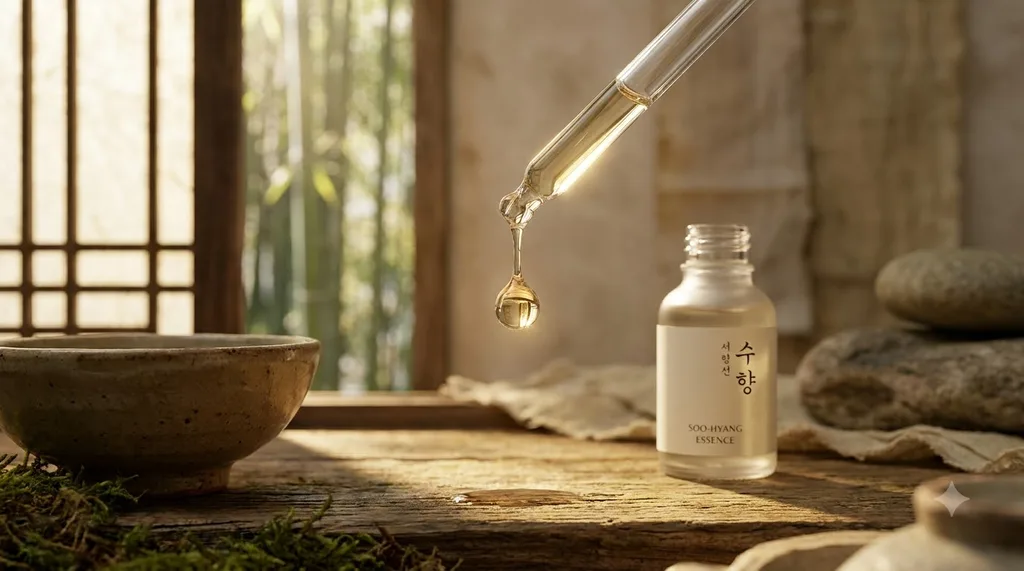
Walk into any high-end salon in Seoul’s elite beauty district, and you will quickly realize that the flawless, bouncy complexion of your favorite K-pop idol is not a product of luck. It is a carefully engineered illusion.
- The Chemistry of the "Chok-Chok" Canvas
- The Three-Zone Watercolor Blush
- The Holographic Lip and the Fire-Curled Lash
- The Global Phenomenon of Seoul's Beauty Labs
- Explore High-Refractive Index Tinted Balms & Blushes
- Frequently Asked Questions
- Can I do the fruit-juice makeup look if I have oily skin?
- What is the difference between a gradient lip and an ombre lip?
- How do I prevent my liquid blush from lifting my foundation?
Many global beauty lovers attempt to replicate this look by loading up their carts at Olive Young, buying every highly-rated cushion foundation, gradient tint, and liquid blush they can find. Yet, when they apply these products at home, the result often looks heavy, dry, or like a Western makeup routine wearing a thin K-Beauty mask. The skin lacks that coveted, translucent bounce. It looks painted on rather than alive.
The disconnect lies in a fundamental misunderstanding of skin mechanics. Western makeup is traditionally built on a philosophy of structural correction: it uses opaque pigments to conceal, and heavy contouring to carve out artificial shadows. In stark contrast, the signature K-pop aesthetic—known as Gwajeup-sang—is an exercise in light management. It treats the skin as a living, breathing prism. To achieve this look, you do not paint over the skin; you manage its transepidermal water loss (TEWL) and manipulate how light refracts off its surface.
Key Takeaways * The Physics of Glow: True Gwajeup-sang (fruit-juice) makeup relies on film-forming polymers that seal in moisture, creating a high-refractive index surface rather than relying on heavy, greasy oils. * The Micro-Layering Secret: Backstage artists avoid cakey finishes by using steel spatulas to apply foundation in micron-thin layers, allowing the skin's natural warmth to act as the primary light source. * Watercolor Blending: Perfecting the youthful cheek flush requires an intersection of three distinct color zones, utilizing ultra-fine pigments (3–5 µm) that melt into the skin's lipid barrier.
The Chemistry of the "Chok-Chok" Canvas
To understand why your base makeup is falling flat, we must look at the physical interface between your skincare and your foundation. In Seoul's top-tier studios, the preparatory phase is treated with the same seriousness as a medical procedure. The goal is to achieve Chok-chok—a state of deep, plumping hydration that feels bouncy to the touch and looks wet without being greasy.
[K-Beauty 101] 촉촉 (Chok-chok) — A sensory descriptor for skin that is intensely hydrated, plump, and dewy. It represents the gold standard of Korean skin health, where the face looks naturally saturated with moisture.
When amateurs try to force a dewy look, they often saturate their skin with heavy facial oils. Under the hot lights of a stage or a studio, these oils break down, causing the pigments in foundation to separate, pool in pores, and slide off the face.
Professional artists take a completely different approach. They rely on film-forming polymers. These lightweight, synthetic or bio-derived chains form a microscopic, flexible, and continuous shield over the skin. Rather than suffocating the skin with heavy lipids, this polymer matrix seals in water, drastically reducing transepidermal water loss (TEWL). It creates a ultra-smooth, high-refractive-index surface that acts like a microscopic sheet of glass.
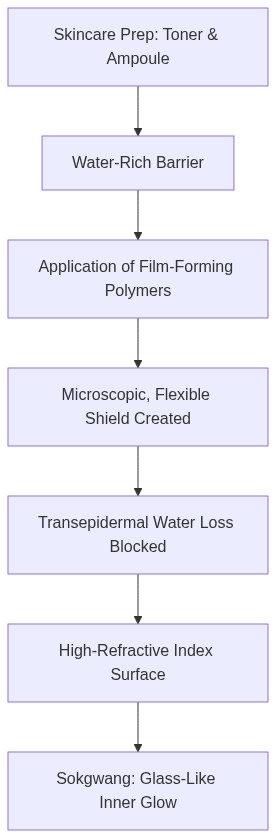
To achieve this base at home, skip the heavy creams. Instead, use a toner pad to gently sweep away dead skin cells, ensuring a completely flat surface. Follow with lightweight, water-binding ampoules containing panthenol or squalane.
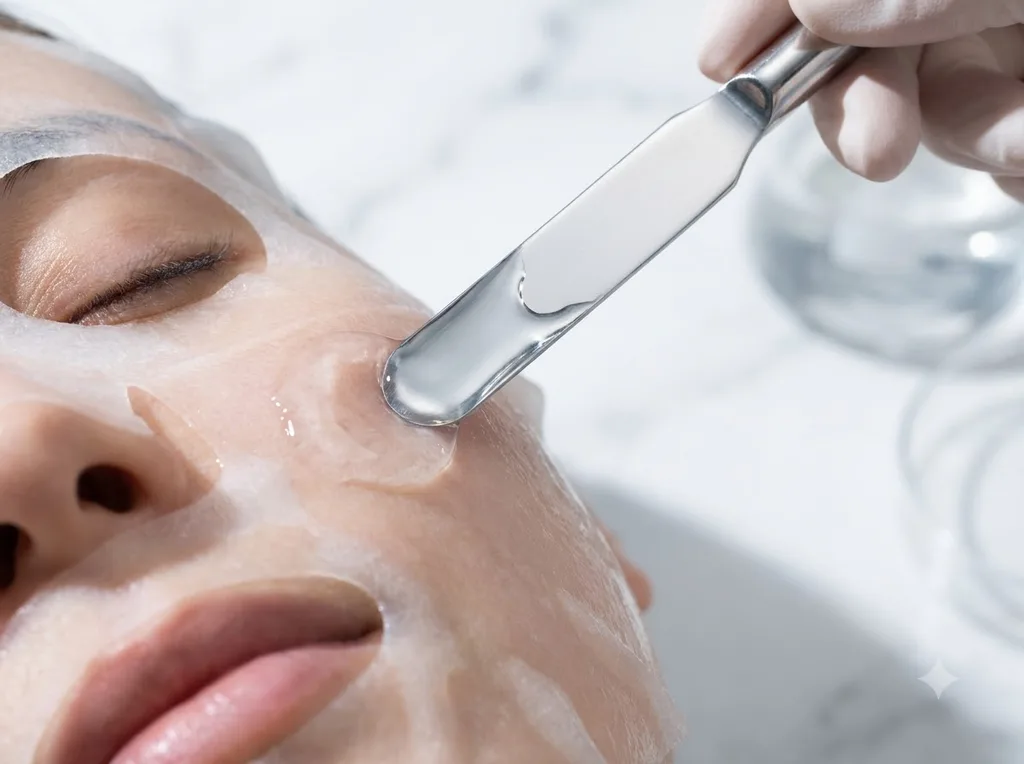
The real magic, however, happens during the application of the base. If you watch a professional artist work backstage, you will rarely see them dotting foundation directly onto the face with their fingers or a heavy brush. Instead, they use a flat, stainless-steel makeup spatula.
By pulling a tiny amount of foundation across the skin with the edge of the spatula, they deposit an impossibly thin layer—measured in microns. This sheer layer is then tapped into the skin with a damp sponge. This allows the natural warmth and texture of the skin to shine through, creating Sokgwang, or an inner-glow radiance that looks entirely three-dimensional.
[K-Beauty 101] 속광 (Sokgwang) — Inner-glow radiance. Unlike superficial highlighters that sit on top of the face, this is a luminous glow that appears to emanate from deep within the skin's lipid barrier.
🎵 K-Mono Lofi — Seoul Study Beats
Read deeper with Seoul lo-fi in the background — curated by K-Mono Lofi
The Three-Zone Watercolor Blush
Once the canvas is prepared, we must address the heart of the Gwajeup-sang aesthetic: the blush.
In many Western makeup tutorials, blush is applied to the high points of the cheekbones, pulled sharply upward toward the hairline to sculpt and lift the face. While this works beautifully for a high-contrast, structural look, it is the absolute enemy of the youthful, fresh-bitten fruit aesthetic. Heavy, dark contouring can easily look dry, dusty, and aging under natural light.
The K-pop approach is all about the watercolor technique. Instead of correcting your facial structure, the goal is to create a soft, seamless wash of color that mimics a rush of blood to the cheeks. This requires a precise understanding of pigment dispersion.
According to cosmetic formulation data, high-quality Korean liquid and cream blushes utilize an optimal pigment particle size of 3–5 micrometers (µm). This ultra-fine particle size allows the pigment to sit smoothly between the microscopic ridges of the skin's surface, rather than pooling on top of it, resulting in a sheer, milky finish that looks like it is blooming from within.
To prevent the color from looking like a harsh, isolated circle of pink, top artists use a Three-Zone Layering Technique.
🌸 1. The Shading Zone (The Anchor)
A muted, neutral beige-peach or soft lavender is swept lightly across the cheekbone. This does not contour; it creates a soft transition shade that anchors the brighter colors to your natural skin tone.
🍑 2. The Pop Zone (The Fruit)
The star of the show—a vibrant peach, strawberry pink, or bright coral. This is tapped directly onto the apple of the cheek, slightly higher than usual, keeping the focus high and centered to create an instant youthful lift.
✨ 3. The Highlight Zone (The Glaze)
A translucent, pearlescent liquid highlighter is tapped gently over the intersection of the first two zones. This melts the boundary lines away, leaving a seamless, glossy glaze that mimics the skin of a fresh peach.
When selecting your shades, it is vital to respect your Personal Color profile. Applying a highly saturated warm coral to cold, blue-undertoned skin will make the blush look like a separate, floating orange patch. Conversely, placing a cool lavender-pink on golden, warm-toned skin can make the complexion look grey and tired.
| Personal Color Category | Best "Fruit-Juice" Shades | Recommended Pigment Style |
|---|---|---|
| Warm-ton (Spring Light/Bright) | Fresh Peach, Sweet Apricot, Warm Coral | Soft, water-glossy cream formulas that melt instantly |
| Cool-ton (Summer Light) | Milky Lavender, Pale Strawberry, Cool Pink | Translucent liquid stains layered under a sheer powder |
| Warm-ton (Autumn Muted) | Soft Fig, Warm Persimmon, Terracotta Peach | Satin-finish cream blushes with a velvet-glow overlay |
| Cool-ton (Winter Bright) | Juicy Cherry, Bright Magenta, Deep Plum | High-pigment tints sheared out with a damp sponge |
The Holographic Lip and the Fire-Curled Lash
To complete the look, we must address the final details that define the K-pop aesthetic: the lips and the lashes.
In the West, lip liners are often used to overline and lock in a matte, opaque liquid lipstick. For the Gwajeup-sang look, this creates a heavy, dry frame that clashes with the fresh skin. The goal here is a Gradient Lip—a stained, juicy mouth that looks like you have just bitten into a ripe cherry.
To achieve this, apply a thin layer of concealer or cushion foundation over the outer borders of your lips to blur their natural edges. Next, apply a highly concentrated lip tint solely to the inner center of the lips.
Using a clean, fluffy eyeshadow brush or your fingertip, blend the color outward, stopping just short of the lip line. Finish with a high-shine, non-sticky lip oil or balm that features light-reflecting polymers. This creates a cushiony, three-dimensional plumpness that catches the light whenever you move.
[Blurred Outer Lip Edge (Neutral/Concealer)]
        └─── [Soft, Blended Mid-Tone Wash]
                  └─── [High-Intensity Stain (Center of Lip)]
Finally, the eyes must look wide, awake, and incredibly clean—an effect known as Soknunsseop yeonjang (eyelash extension) styling. Backstage artists do not use heavy, thick strip lashes. Instead, they apply individual, wispy lash clusters, placing them carefully underneath the natural lash line rather than on top.
But the ultimate backstage secret—the "makno-dong" (labor-intensive) technique that keeps an idol's lashes perfectly curled through hours of dancing under sweating stage lights—is Bulgodegi.
Instead of relying solely on mechanical eyelash curlers, artists take a thin wooden stick (often a cotton swab with the cotton removed), heat it gently with a lighter for a few seconds to warm the wood, and then press it against the base of the mascara-coated lashes, sweeping upward. This heat-sets the mascara polymers instantly, locking the curl into a gravity-defying, fan-like shape that no standard curler can match.
The Global Phenomenon of Seoul's Beauty Labs
The obsession with this fresh, skin-first philosophy has transformed South Korea into a global cosmetics powerhouse. Industry market research indicates that the global K-Beauty market valuation reached $16.26 Billion in 2025, and it is projected to grow to $38.29 Billion by 2033, expanding at a compound annual growth rate (CAGR) of 11.3%.
This growth is fueled by a relentless drive for innovation, with South Korean cosmetics exports growing by 20.6% year-on-year in 2024 alone.
At the center of this beauty revolution is Olive Young, the country's premier health and beauty store. In 2025, Olive Young reported sales of 5.8 Trillion KRW, with foreign consumer spending accounting for over 1 Trillion KRW of that total. Thousands of travelers descend upon Seoul daily, searching for the exact formulas that power the local beauty trends.
If you are ready to move past the heavy, matte layers of the past and step into the luminous, skin-first world of Gwajeup-sang, the key is to invest in lightweight, highly technical formulas that work in harmony with your biology.
This article may contain affiliate links — if you buy through them, we may earn a small commission at no extra cost to you.
Frequently Asked Questions
Can I do the fruit-juice makeup look if I have oily skin?
Yes, absolutely. The secret is to avoid heavy, lipid-rich oils in your skin prep and instead use water-binding humectants like hyaluronic acid and squalane. You can lock in your base with a translucent, silica-based setting powder, applying it only to the T-zone while leaving the cheeks glossy.
What is the difference between a gradient lip and an ombre lip?
While a Western ombre lip typically uses a dark lip liner on the outer edges transitioning to a lighter shade in the center, a Korean gradient lip is the exact opposite. It uses a blurred, neutralized outer lip border that blends into a highly concentrated, saturated stain at the very center, mimicking a fresh-bitten fruit.
How do I prevent my liquid blush from lifting my foundation?
To avoid lifting your base, never rub or drag liquid blush across your cheeks. Instead, dispense a small amount onto the back of your hand, warm it with your finger or a damp sponge, and tap it gently onto the skin in vertical, bouncing motions.
⚠️ Disclaimer: The beauty and styling techniques described in this article, including the heated lash curling technique (Bulgodegi), involve the application of heat near the eyes and the use of cosmetics on the skin. Always perform a patch test on a small area of skin before trying new cosmetics to check for allergic reactions or irritation. Exercise extreme caution when using heated tools near the face. If you have sensitive eyes, active skin conditions, or eye infections, consult a board-certified dermatologist or ophthalmologist before attempting these techniques.
✓ Researched and compiled using verified data as of the publication date.
 Written by Jun Mi Jung for Quiet Korea | Contact: rsl.2001.1975@gmail.com