The Kitchen in Gaeseong: How a Post-War Korean Family Built a Four-Trillion-Won Beauty Empire
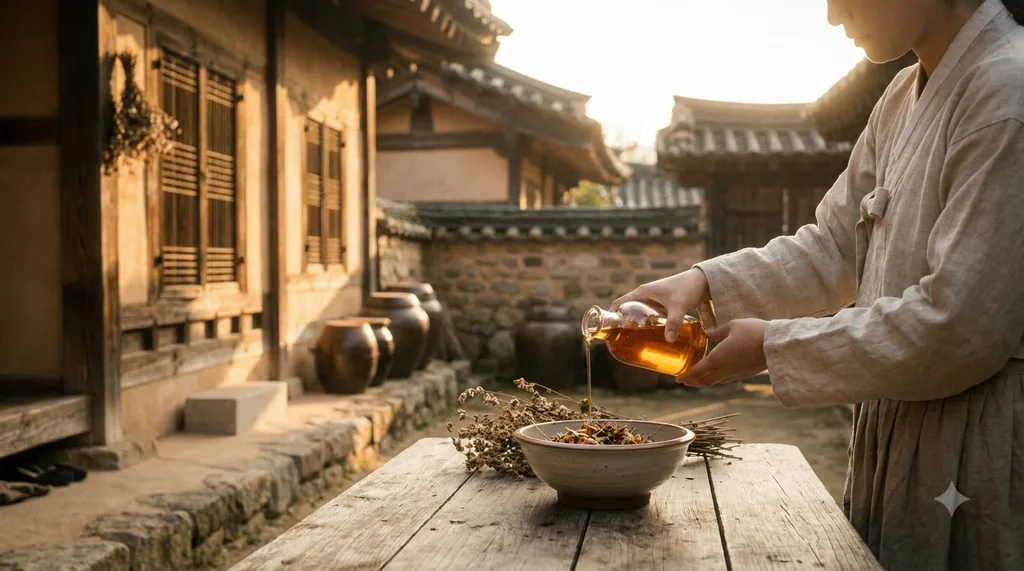
- The Gaeseong Kitchen and the Bicycle
- The Laboratory Built on War Ruins
- The Price of Survival: Decoupling from the Golden Goose
- The Honesty Check: What This Pivot Means for Your Skin
- Frequently Asked Questions
- What was Amorepacific's very first beauty product?
- Does Amorepacific own COSRX?
- Why did Amorepacific shift its focus to the Americas?
- Is Sulwhasoo owned by Amorepacific?
- Explore Amorepacific & COSRX Formulas
Walk into any luxury department store in Seoul’s affluent Apgujeong neighborhood, and you will see the crown jewel of Korean cosmetics: Sulwhasoo. The heavy glass bottles resemble smooth white porcelain, cool and substantial to the touch. Yet if you strip away the gold leaf, the minimalist branding, and the clinical promises, the fragrance that lingers is something far older, far earthier. It is the distinct, nutty scent of dongbaek—camellia oil.
Long before K-Beauty was a multi-billion-dollar global export machine, it was a daily kitchen chore in the historical northern city of Gaeseong. There, in the 1930s, a mother’s stubborn commitment to ingredient purity laid the foundation for Korea's largest beauty conglomerate, Amorepacific. This is not a story of overnight viral success or laboratory marketing myths. It is the story of how an uncompromising family philosophy survived war, economic collapse, and massive geopolitical shifts to rewrite the rules of global skincare.
Key Takeaways * Forged in Post-War Survival: Amorepacific began in the 1930s as a home-pressed camellia oil business in Gaeseong, formally incorporating in 1945 just as Korea emerged from colonial rule and faced devastating conflict. * The Science Obsession: Long before the modern skincare boom, the company built South Korea's very first cosmetics research lab in 1954, transforming traditional herbal remedies into clinically stabilized formulas. * The Great Western Shift: Facing intense geopolitical headwinds in Asia, Amorepacific executed a massive corporate pivot in 2024—acquiring indie darling COSRX for KRW 935.1 Billion and driving North American revenues up by 83%.
The Gaeseong Kitchen and the Bicycle
In the 1930s, Korea was a nation under colonial occupation, and daily life was a struggle for cultural and physical survival. In the city of Gaeseong, a woman named Yun Dok-jeong began harvesting camellia seeds. She pressed them by hand, filtering the heavy oil through traditional hemp cloths to sell to elite Korean women who used it to keep their hair glossy and healthy.
Her second son, Suh Sung-whan, was her first delivery boy. He rode a creaking bicycle across the unpaved roads of Gaeseong, carrying jars of his mother's oil. He did not merely deliver the product; he studied how she sourced the seeds, how she refused to cut corners even when raw materials were scarce, and how she treated every customer with absolute respect.
This was the practical education of the man who would become the Chang-eop-ju (founding chairman) of Korea's beauty industry. When he formally incorporated Pacific Chemical Industrial in September 1945, the country was fractured, impoverished, and on the brink of civil war. Yet, he carried his mother’s core principle with him: the quality of the raw ingredient is the absolute boundary of the product's efficacy.
[K-Beauty 101] Jangwon (장원) — The pen name and honorific title of founder Suh Sung-whan. In Korean corporate culture, referring to a founder by their pen name elevates their legacy, framing them not merely as a corporate executive, but as a pioneering philosopher of industry who merged traditional values with modern enterprise.
Suh Sung-whan, later honored by the pen name Jangwon, understood that a brand built on raw oils alone could not survive the modern era. To compete with smuggled Western cosmetics, he had to take his mother's kitchen-scale standards and industrialize them.
The Laboratory Built on War Ruins
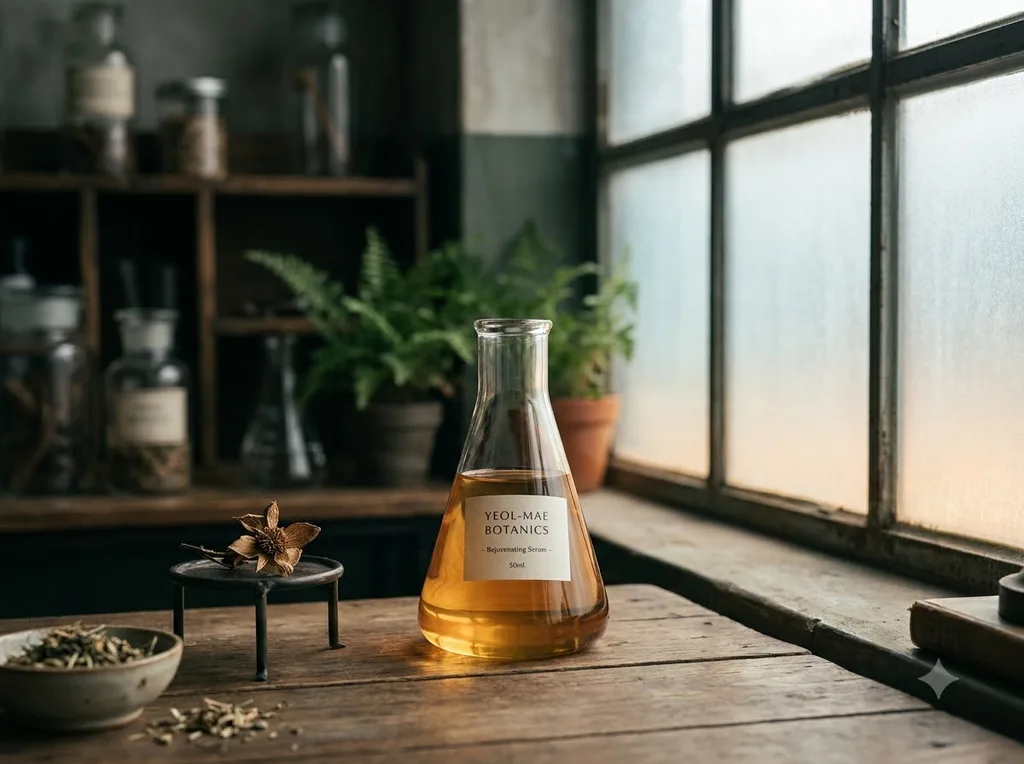
In 1954, just one year after the devastating Korean War ended in a tense armistice, Suh Sung-whan made a decision that his competitors viewed as corporate suicide. He poured his company's meager capital into building South Korea's first dedicated cosmetics research laboratory.
At a time when most citizens were struggling to find clean water and basic food rations, Amorepacific chemists were dissecting the molecular structure of Korean botanicals. This was the true genesis of commercialized Hanbang skincare.
[K-Beauty 101] Hanbang (한방) — Traditional Korean herbal medicine. This represents the integration of ancient, holistic wellness philosophies with contemporary dermatological science. In Korean beauty, it treats skin not as a surface to be corrected with harsh chemicals, but as an ecosystem requiring internal balance and long-term nourishment.
But translating ancient medical texts into stable topical creams was a brutal process. Early formulations of ginseng cream were plagued by instability; the active saponins would break down, causing the creams to separate, turn a muddy brown, or develop an unappealing, sour odor on store shelves. The lab spent decades refining extraction and bio-transformation technologies, eventually learning how to stabilize these volatile herbal compounds. This research culminated in the late 1960s with the launch of their first stabilized ginseng cosmetic, the direct ancestor of what we now know as Sulwhasoo.
🎵 K-Mono Lofi — Seoul Study Beats
Read deeper with Seoul lo-fi in the background — curated by K-Mono Lofi
The Price of Survival: Decoupling from the Golden Goose
For decades, Amorepacific practiced a strategy of deliberate patience, a corporate philosophy akin to the traditional concept of Dogwang Yanghoe—hiding one's light, building internal strength, and waiting for the optimal moment to strike. They entered the Chinese market with immense caution, slowly establishing their luxury brands in high-end department stores. By the mid-2010s, this patience had paid off spectacularly. Chinese tourists and massive duty-free networks became the company's ultimate golden goose, driving record-breaking revenues.
Then, the geopolitical reality shifted overnight.
Following diplomatic disputes in 2017, Korean brands faced a quiet but devastating consumer freeze in China. Simultaneously, domestic Chinese beauty brands (C-Beauty) surged, offering high-tech clinical formulas at prices local consumers preferred. Amorepacific’s traditional revenue channels collapsed.
Instead of retreating, the company entered a state of Jeolchi Busim—grinding one's teeth in deep determination, using the crisis as fuel to completely restructure the empire. They realized they had to break their dependency on a single dominant market and decouple from traditional duty-free channels.
The result was a radical, multi-trillion-won pivot to the West. In 2024, Amorepacific completed the landmark acquisition of the cult-classic indie brand COSRX for KRW 935.1 Billion. By merging COSRX’s hyper-efficient digital marketing and Gen Z appeal with Amorepacific’s massive R&D infrastructure, the conglomerate achieved a historic financial recovery.
According to consolidated financial reports, by the end of 2024, the company’s operating profit surged by 64% YoY, and for the first time in its eighty-year history, revenues from the Americas bypassed the Greater China market, driven by an astounding 83% YoY growth in the Western hemisphere.
🌿 The Classical Era (1945–2010s)
- Core Engine: Heritage Hanbang, raw botanical sourcing, and luxury brick-and-mortar boutique experiences.
- Primary Market: Domestic South Korea and high-margin Chinese duty-free channels.
- Signature Style: Heavy porcelain jars, complex multi-step ritual narratives, and traditional celebrity-led marketing.
🌐 The Modern Pivot (2024 & Beyond)
- Core Engine: Minimalist, high-efficacy clinical formulas (e.g., COSRX) powered by AI-driven R&D.
- Primary Market: Decentralized global expansion, with the Americas and EMEA leading growth.
- Signature Style: Lightweight, eco-conscious packaging, highly transparent ingredient lists, and direct-to-consumer digital channels.
The Honesty Check: What This Pivot Means for Your Skin
Every corporate transformation carries a quiet risk of losing the soul that made the brand legendary in the first place. For Amorepacific, the acquisition of minimalist indie giants like COSRX and the rush to appeal to Western skin minimalists means walking a precarious tightrope.
Can a conglomerate built on the slow, meticulous, herbal philosophy of Hanbang maintain its cultural integrity when its primary growth engine is now a fast-beauty brand famous for snail mucin and salicylic acid?
For you, the consumer, this corporate shift has direct consequences on the retail shelves:
- Formulation Simplification: To meet Western "clean beauty" retail compliance standards (which ban hundreds of ingredients allowed in Asia), some heritage brands are quietly reformulating. While this makes them safer for reactive skin types, it occasionally means the loss of rare, complex botanical extracts that gave the original formulas their unique, slow-acting therapeutic value.
- The Price of Convenience: Many of the newer, Western-marketed products focus heavily on instant gratification—such as rapid skin-barrier repair creams—rather than the cumulative, long-term cellular health prioritized by traditional Korean skincare.
- What to Look For: If you want the genuine, uncompromised legacy of Korean formulation science, look past the viral TikTok packaging. Search for products that still feature high concentrations of fermented botanicals (like Lactobacillus or Bifida ferment lysates) and traditional medicinal roots (like Panax Ginseng), rather than simple, cheap synthetic humectants dressed up in K-Beauty marketing.
Frequently Asked Questions
What was Amorepacific's very first beauty product?
Amorepacific’s very first product was pure, hand-pressed camellia hair oil (dongbaek-gireum). It was crafted in the 1930s by Yun Dok-jeong in her kitchen in Gaeseong and sold to local women to keep their hair healthy, glossy, and neat.
Does Amorepacific own COSRX?
Yes. In a major strategic move to diversify its global market presence and appeal to younger Western consumers, Amorepacific acquired COSRX in 2024 for a total investment of KRW 935.1 Billion.
Why did Amorepacific shift its focus to the Americas?
Following geopolitical tensions in 2017 and the rise of domestic "C-beauty" brands in China, Amorepacific experienced a sharp decline in Chinese sales. To survive, they pivoted to North America and Europe, where they achieved massive success, with US revenues growing by 83% in 2024.
Is Sulwhasoo owned by Amorepacific?
Yes. Sulwhasoo is Amorepacific's flagship luxury brand, representing the pinnacle of their Hanbang (traditional herbal) research, specifically focusing on stabilized ginseng formulations developed over several decades.
This article may contain affiliate links — if you buy through them, we may earn a small commission at no extra cost to you.
⚠️ Disclaimer: The historical, corporate, and scientific information presented in this article is for educational and informational purposes only. Skincare formulations, particularly those containing active botanicals or concentrated clinical ingredients, can cause skin reactions. Always perform a patch test before introducing new products to your routine, and consult a board-certified dermatologist for personalized skin concerns.
✓ Researched and compiled using verified data as of the publication date.
 Written by Jun Mi Jung for Quiet Korea | Contact: rsl.2001.1975@gmail.com