The Ancestral Lab: Why Korea's 500-Year-Old Beauty Rituals Actually Work
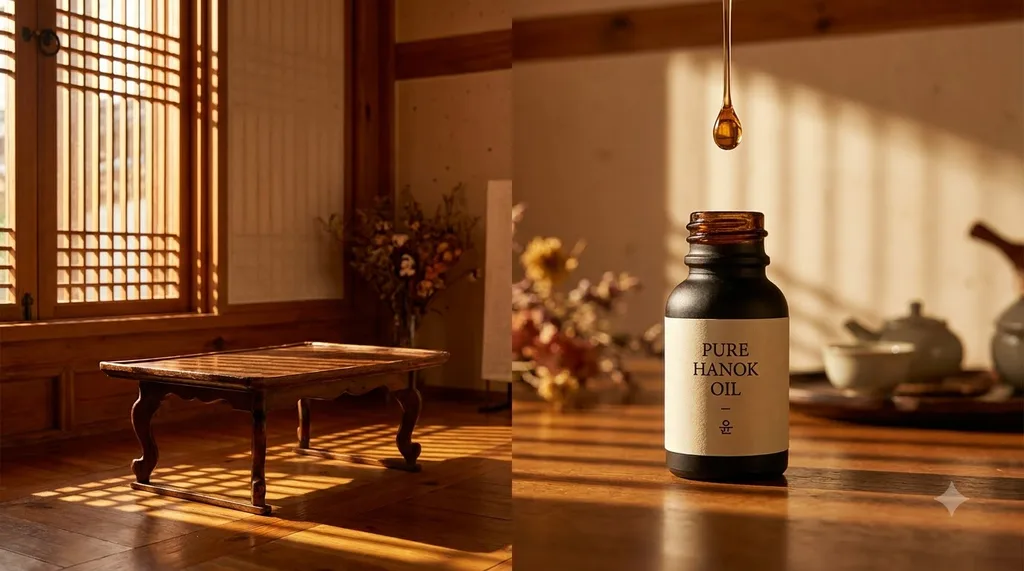
Walk into a traditional Korean home at dusk, and you might catch the subtle, earthy aroma of rice boiling. In many households, before the rice is cooked, the milky water from the first and second rinses is not poured down the drain. Instead, it is carefully saved in a ceramic bowl. This is ssaldteumul, a beauty secret so deeply woven into daily life that it is passed down from grandmothers to granddaughters without a single second thought.
- The Chemistry of the Rice Bowl
- Fermentation as Molecular Engineering
- The Traditional Exfoliator: Mung Bean and Mugwort
- The Jeju Secret: Camellia Oil
- Modern Science vs. DIY Kitchen Recipes
- Explore Fermented & Hanbang Skincare
- Frequently Asked Questions
- Can I use fermented skincare if I have fungal acne?
- How long does it take to see results from fermented traditional ingredients?
- Is rice water safe for sensitive skin?
Why did Joseon-era noblewomen have flawless, luminous skin without a single synthetic preservative, silicone, or double-cleanse oil in sight? The answer is not a lost magical herb; it is a structural biological secret that modern laboratories are only now fully unlocking. For centuries, these traditional methods, known collectively as mian-beop, were treated as domestic common sense. Today, molecular biology reveals that these grandmothers were not practicing folklore—they were conducting empirical science.
Key Takeaways * Biotransformation is Key: Traditional Korean fermentation acts as a molecular scissor, breaking down dense herbal ingredients into low-molecular-weight nutrients that easily penetrate the skin barrier. * Proven Bioactivity: Centuries-old ingredients like fermented red ginseng and camellia oil are clinically proven to boost antioxidant activity by up to 1.4 times and match the skin's natural lipid structure. * Lab-Grade Safety Over DIY: While DIY traditional recipes offer a romantic connection to heritage, modern formulated equivalents are far safer, preventing the bacterial contamination and phototoxicity common in home preparations.
The Chemistry of the Rice Bowl
To understand why traditional Korean skincare has survived for generations, one must look at the humble grain of rice. The milky water left behind after washing rice is rich in inositol, a carbohydrate that repairs damaged cells, alongside vitamins B and E, and ferulic acid.
[K-Beauty 101] Ssaldteumul (쌀뜨물) — The milky water harvested from rinsing or soaking rice. Highly prized in Korean households, it is rich in inositol, vitamins B and E, and ferulic acid, functioning as an ancestral skin-brightening wash.
When applied to the face, the starch in ssaldteumul acts as a gentle, soothing anti-inflammatory agent. More importantly, it contains phytic acid and ferulic acid, which regulate tyrosinase—the enzyme responsible for melanin production. This is how ancient courts achieved a bright, even complexion long before synthetic lighteners were synthesized.
However, raw rice water has a dark side. At room temperature, it becomes a breeding ground for pathogenic bacteria within hours. If left to sit, what was meant to be a soothing wash can turn into a cocktail of micro-organisms that compromise a delicate skin barrier.
Fermentation as Molecular Engineering
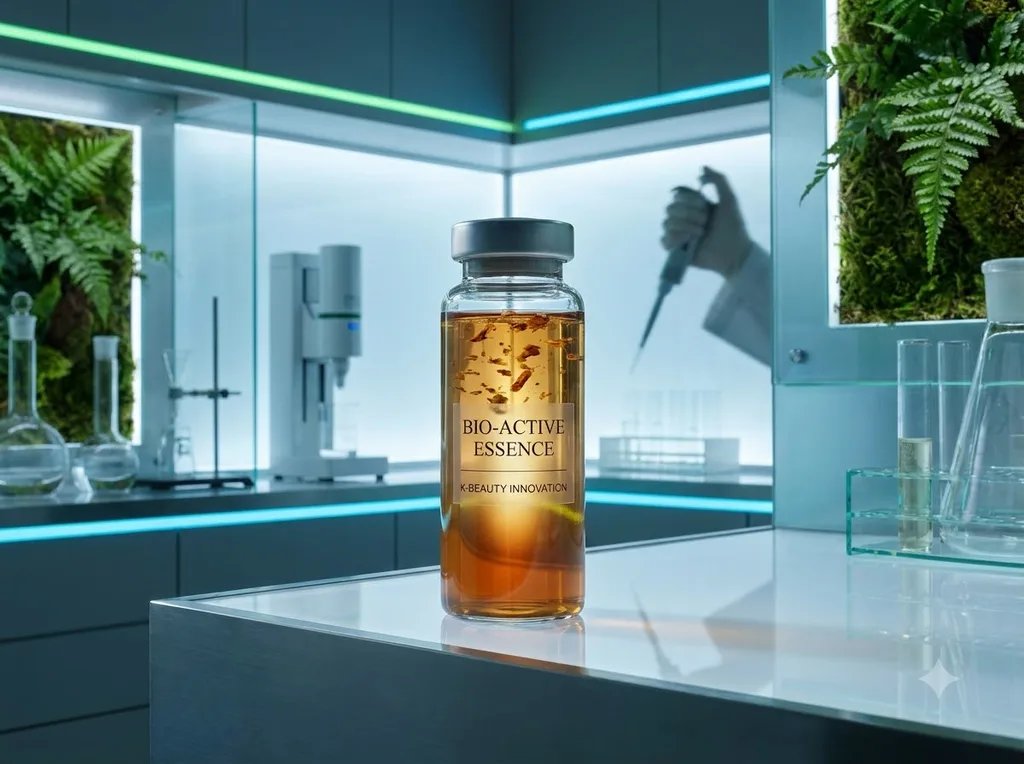
Modern K-Beauty is not a trend built on marketing; it is an industry built on fermentation. In Korea, this process is deeply tied to makgeolli, an unfiltered traditional rice wine. Long before modern cosmetic chemists existed, women working in makgeolli breweries noticed their hands remained exceptionally soft, smooth, and free of age spots.
[K-Beauty 101] Mian-beop (미안법) — Traditional Korean beauty methods using natural, raw ingredients. It represents a holistic skincare philosophy that aims to treat the root causes of skin imbalances rather than offering a superficial, temporary cosmetic fix.
The secret lies in the fermentation process itself, which is essentially a natural laboratory. Microorganisms like Lactobacillus and Aspergillus consume complex plant compounds and break them down into simpler, highly concentrated active ingredients. This process is known as biotransformation.

When botanical oils undergo fermentation, the changes are dramatic. Industry research indicates that fermented skincare oils can exhibit up to 50 times the concentration of beneficial omega-6 and omega-9 fatty acids compared to their unfermented counterparts.
Similarly, the root of red ginseng—the cornerstone of traditional Korean medicine, or hanbang—undergoes a massive functional upgrade when fermented. Studies show that fermenting red ginseng increases its radical scavenging (antioxidant) activity by 1.3 to 1.4 times. In clinical trials evaluating 50 women aged 30 to 50, a 2% formulation of fermented red ginseng was shown to significantly improve skin elasticity, reduce wrinkle depth, and enhance the skin barrier by suppressing the enzymes that degrade collagen.
🎵 K-Mono Lofi — Seoul Study Beats
Read deeper with Seoul lo-fi in the background — curated by K-Mono Lofi
The Traditional Exfoliator: Mung Bean and Mugwort
Long before foaming cleansers filled the shelves of Seoul's pharmacies, there was nokdu (mung bean). In historical texts, ground mung bean powder was mixed with water to create a paste called jo-du, used to wash the face.
Mung beans contain natural saponins—organic chemicals that produce a soapy lather when agitated in water. Saponins act as natural surfactants, gently lifting dirt, sebum, and dead skin cells without stripping the skin's protective lipid barrier.
Alongside mung bean, the ancient ritual of using ssuk (mugwort) has stood the test of time. Ssuk is packed with azulene and flavonoids, which act as powerful anti-inflammatory agents. In Korean bathhouses, mugwort steams are used to soothe irritated skin and deep-cleanse the pores.
| Traditional Ingredient | Key Active Compounds | Primary Dermatological Function | Modern Counterpart |
|---|---|---|---|
| Rice Bran (Ssaldteumul) | Ferulic Acid, Phytic Acid, Inositol | Tyrosinase inhibition, brightening, barrier repair | Rice ferment filtrates, niacinamide boosters |
| Mung Bean (Nokdu) | Saponins, Vitexin, Isovitexin | Gentle enzymatic exfoliation, deep cleansing | Clay masks, powder cleansers |
| Mugwort (Ssuk) | Azulene, Artemisin, Flavonoids | Rapid redness reduction, anti-inflammatory | Artemisia ampoules, soothing essences |
| Camellia Oil (Dongbaek) | Oleic Acid, Vitamin E, Polyphenols | Biomimetic moisturization, lipid replenishment | Cold-pressed barrier oils, hair serums |
The Jeju Secret: Camellia Oil
On the wind-swept shores of Jeju Island, the camellia flower (dongbaek) blooms in the dead of winter. For centuries, women on the island have cold-pressed the seeds of Camellia japonica to extract a rich, golden oil.
What makes dongbaek oil unique is its fatty acid profile. It consists of approximately 82% to 88% oleic acid. Because human sebum is naturally composed of a high percentage of oleic acid, camellia oil is highly biomimetic. It mimics the skin's natural oils so closely that it absorbs deep into the epidermis without leaving a heavy, suffocating film. It acts as an occlusive shield, preventing trans-epidermal water loss (TEWL) while delivering rich antioxidants directly to the cells.
This level of performance explains why so many beauty consumers in Korea continue to jaeng-i-da (stockpile) fermented camellia essences and traditional hanbang creams. Once a formula becomes a verified ae-jeong-tem (affection item or holy grail), it rarely leaves a Korean skincare routine, regardless of what new synthetic ingredients are trending on social media.
Modern Science vs. DIY Kitchen Recipes
There is an undeniable romance to mixing your own face masks using ingredients from the kitchen. However, modern dermatological consensus in Seoul warns against pure DIY treatments.
When you apply raw, unformulated ingredients to your face, you are introducing raw plant proteins, pesticide residues, and unstandardized concentrations of active molecules. A home-brewed mung bean mask can easily cause contact dermatitis, and unpasteurized rice water can trigger severe acne flare-ups due to bacterial contamination.
To illustrate this, consider the differences between home-brewed preparations and modern bio-fermented skincare formulations:
⚠️ DIY Kitchen Preparations
• High risk of bacterial and fungal contamination within hours.
• Unstandardized molecule sizes that struggle to penetrate the skin barrier.
• Raw, unstable compounds prone to rapid oxidation.
• Increased risk of contact dermatitis and phototoxic reactions.
✅ Lab-Formulated Bio-Fermentation
• Formulated in sterile environments with broad-spectrum preservation.
• Enzymatically broken down into low-molecular-weight actives for deep delivery.
• Standardized concentrations of proven actives (e.g., fermented ginseng).
• Rigorously patch-tested for safety on sensitive skin.
The global market for K-Beauty is projected to reach between 21.5 billion and 42.62 billion USD by 2033 to 2036, according to industry market reports. This rapid growth is not driven by simple DIY recipes, but by the sophisticated engineering of traditional ingredients.
To find the safest, most effective way to experience these ancient ingredients, look for products that utilize bio-fermented filtrates. Modern Korean consumers rely on platforms like Hwahae to audit ingredient lists, ensuring their products combine traditional wisdom with clean, non-irritating, lab-grade formulations.
This article contains affiliate links. If you choose to purchase through these links, we may earn a small commission at no extra cost to you.
Frequently Asked Questions
Can I use fermented skincare if I have fungal acne?
Generally, no. Fungal acne (malassezia folliculitis) is caused by an overgrowth of yeast on the skin. Because fermented skincare products utilize yeast and bacterial byproducts, they can feed the malassezia fungus and worsen breakouts. If you are prone to fungal acne, it is safer to stick to non-fermented, synthetic, or simple botanical formulas.
How long does it take to see results from fermented traditional ingredients?
Because ingredients like fermented red ginseng and rice ferment work by improving cellular turnover and reinforcing the skin barrier, visible changes in skin texture and elasticity typically require 4 to 6 weeks of consistent use. This timeline matches the natural 28-day skin cell regeneration cycle.
Is rice water safe for sensitive skin?
While raw, home-brewed rice water can carry bacteria that irritates sensitive skin, commercially formulated products containing rice ferment filtrate (Saccharomyces/Rice Ferment Filtrate) are highly stable, sterile, and exceptionally soothing for sensitive or compromised skin barriers.
⚠️ Disclaimer: The information provided in this article is for educational purposes only and should not replace professional medical advice. Always perform a patch test on your inner arm before introducing new active ingredients to your skincare routine, and consult a board-certified dermatologist if you experience persistent skin irritation or adverse reactions.
✓ Researched and compiled using verified data as of the publication date.
 Written by Jun Mi Jung for Quiet Korea | Contact: rsl.2001.1975@gmail.com