Inside Seoul's Midnight Aisles: What Olive Young Shelves Are Telling Us Right Now
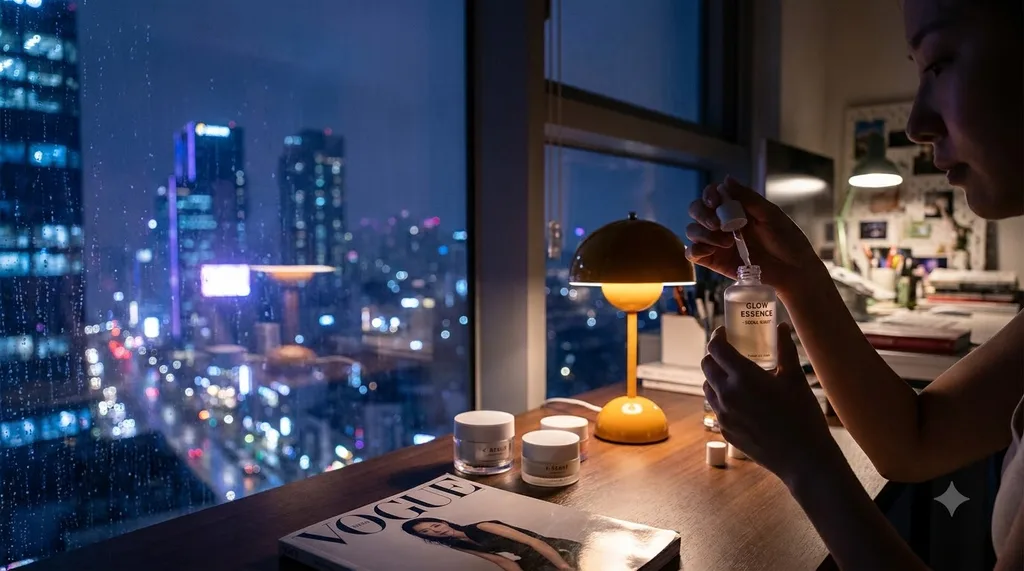
Right now, as of this week, the midnight aisle of a Gangnam Olive Young looks less like a retail floor and more like a quiet laboratory of ritual. A shopper is standing under the glare of fluorescent shelving, pressing a ceramide cream tube between her fingers with the absolute focus of someone defusing a bomb. She isn’t looking for the viral makeup trend that TikTok screamed about two months ago. She is looking for what the rest of the world hasn't noticed yet: the quiet restructuring of Korean skincare around a philosophy of deep, uncompromised barrier preservation.
- The Death of the Miracle Cure and the Rise of Barrier Fortification
- The Concept Ingredient Paradox: Marketing vs. Molecular Reality
- Navigating the Global Gateway: The Reality of Sourcing from Abroad
- Frequently Asked Questions
- Can I use high-concentration niacinamide with active vitamin C?
- How long does it actually take to repair a damaged skin barrier?
- Are Olive Young Global Mall products identical to what is sold in physical Seoul stores?
🎵 K-Mono Lofi — Seoul Study Beats
Read deeper with Seoul lo-fi in the background — curated by K-Mono Lofi
By the time Western beauty feeds catch a wave, Seoul has already moved on. The real leaderboard doesn't live on hashtags or algorithm-driven recommendation pages; it lives on real-time transaction data from Olive Young, where inventory shifts hourly based on the pickiest consumers on earth. And this month, the shelf radar points to a massive, quiet pivot away from aggressive overnight fixes and straight toward what locals call slow aging—a calculated, long-term defense against modern skin stress.
Key Takeaways - Korean retail shelves have officially pivoted from aggressive "anti-aging" to preventative "slow aging" and lipid barrier integrity. - Current transaction data reveals massive surges for ceramide-heavy, non-irritating essentials like Aestura and Illiyoon over flashy, concept-only serums. - International shoppers can safely navigate the gap between Seoul's real-time shelves and global shipping logistics by tracking ingredient transparency over brand hype.
The Death of the Miracle Cure and the Rise of Barrier Fortification
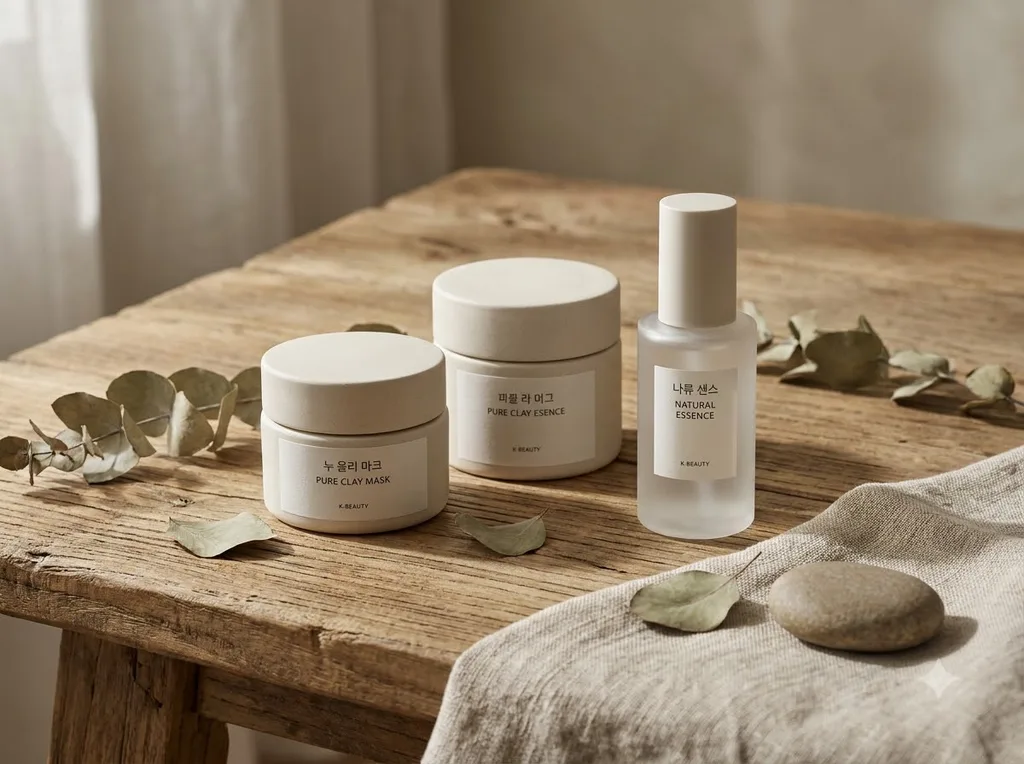
Walk past the front-of-store displays designed for tourists, and you will find the products that actually keep the lights on in Seoul's beauty empire. For years, the global conversation around K-beauty was trapped in a perpetual loop of 10-step routines and aggressive chemical exfoliation, all in pursuit of an instantaneous, glassy sheen. But local consumers have grown profoundly sophisticated—and profoundly tired of sensitized skin.
The shift is visible on the shelves right now. Products built on heavy clinical concentrations of ceramides, cholesterol, and fatty acids are dominating the top tiers. Take the Aestura Atobarrier 365 Cream, priced around 32,000 KRW (roughly $24 USD), or the ubiquitous Illiyoon Ceramide Ato Lotion sitting at a remarkably accessible 22,000 KRW (approximately $16 USD) for a massive tube. These aren't marketed with glossy promises of erasing decades overnight. They are engineered for deep, structural maintenance.
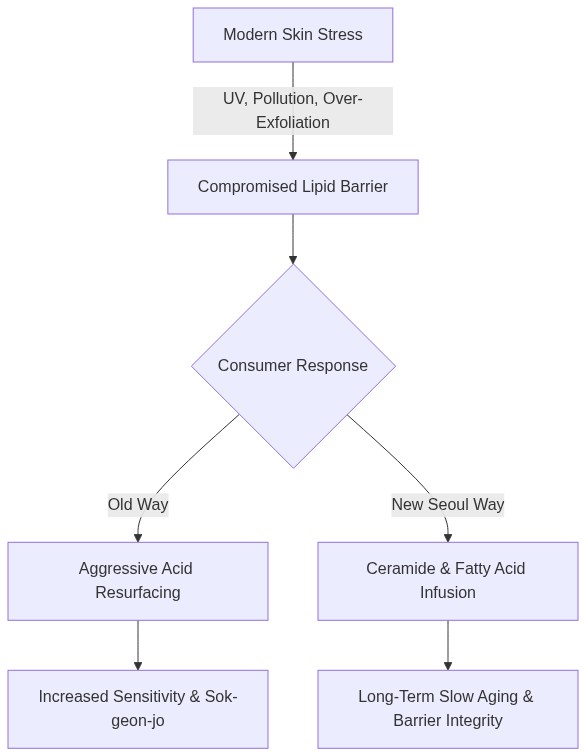
This is where the concept of sok-geon-jo (inner dryness) dictates the entire retail economy. Korean shoppers know that surface-level moisture is a temporary illusion if the underlying lipid matrix is fractured. When a product flies off the shelf in Seoul, it is because thousands of consumers have verified on review platforms like Hwahae that it actually dampens inflammation without triggering reactive breakouts.
The Concept Ingredient Paradox: Marketing vs. Molecular Reality
If you scan the shelves of any major downtown branch, you will encounter an endless parade of charming concept ingredients: green tangerine, wild birch juice, heartleaf, and Jeju volcanic ash. They dominate the packaging and draw the eye from three aisles away. But here is the secret that local buyers already understand: the concept is just the vehicle.
Consider the Goodal Green Tangerine Vita-C Dark Spot Care Serum, retailing at around 24,000 KRW ($18 USD). On the surface, it reads like a fruit-juice extraction meant to brighten your complexion with vitamin-packed botanicals. Look closer at the back label, and you find the real engine: stabilized niacinamide and arbutin working in precise tandem with that botanical base.
[!K-Beauty 101] 속건조 (Sok-geon-jo) — Inner dryness. This term describes a condition where the skin feels tight or dehydrated deep beneath the surface, even if the outer layer appears oily or normal. It is a critical concept in Korean skincare, distinguishing between surface-level moisture and the deep-seated lack of hydration.
This hybrid strategy separates serious Korean formulation from empty marketing fluff. Brands know that modern consumers—armed with ingredient-checking apps and clinical literacy—will ruthlessly penalize any formula that relies solely on a cute plant name without active proof. The botanical extract provides the sensory experience and the antioxidant baseline; the dermatological active does the heavy lifting.
Navigating the Global Gateway: The Reality of Sourcing from Abroad
For international enthusiasts watching these shelves from thousands of miles away, the gap between desire and acquisition is bridged primarily by the Olive Young Global Mall. But bridging that gap requires understanding the logistics of distance.
Unlike domestic shoppers who rely on the miraculous Oneul-dream (today delivery) service—which routinely drops orders on Seoul doorsteps within hours—international buyers face the sobering realities of customs thresholds, fluctuating exchange rates, and regional shipping windows.
| Shopping Channel | Delivery Speed | Pricing Reality | Primary Advantage |
|---|---|---|---|
| Seoul Domestic (Olive Young) | Under 45 minutes to same-day | KRW standard pricing | Immediate access, local promotional bundles |
| Olive Young Global Mall | 5 to 14 business days | USD-denominated baselines | Direct access to authentic domestic bestsellers |
| Third-Party Resellers | Variable (weeks) | Marked up 30% to 100% | Emergency restocks when global stock runs dry |
The smartest global shoppers treat USD pricing as a moving target, factoring in international transaction fees and currency shifts before building a cart. More importantly, they avoid falling into the trap of buying products that have already been abandoned by local consumers in favor of fresh innovations. When an item is sitting in a permanent "best-seller" slot in Seoul rather than a fleeting viral TikTok video, that is your green light.
Frequently Asked Questions
Can I use high-concentration niacinamide with active vitamin C?
Yes, but formulation matters more than ever. Modern Korean serums often pre-blend lower, highly stable percentages of niacinamide with antioxidant extracts to minimize the flushing and irritation associated with mixing high-potency standalone acids in a rigid routine.
How long does it actually take to repair a damaged skin barrier?
Clinical and consumer consensus in Seoul points to a minimum 28-day skin cell turnover cycle. While soothing relief from redness happens within days of switching to ceramide-heavy lotions, true lipid matrix restoration requires at least four weeks of consistent, non-irritating care.
Are Olive Young Global Mall products identical to what is sold in physical Seoul stores?
Generally, yes, but packaging updates and localized formulation tweaks occasionally occur to comply with international export regulations. Always cross-reference the ingredient list on the global product page if you have specific sensitivities.
⚠️ Disclaimer: The insights and trends reported here are for educational and observational purposes based on current retail data from South Korea. Skincare efficacy varies wildly by individual skin type, and formulations that thrive in Seoul's climate may require adjustment elsewhere. Always patch-test new active ingredients and consult a board-certified dermatologist before overhauling your routine, particularly if you are managing chronic skin conditions or recovering from clinical procedures.
⚠️ Disclaimer: This article is for informational and educational purposes only and does not constitute medical, dermatological, or financial advice. Individual results vary — consult a board-certified dermatologist or physician before starting any new skincare routine, supplement, or procedure, especially if pregnant, nursing, or taking other medications. This article may contain affiliate links — if you buy through them, we may earn a small commission at no extra cost to you.
✓ Researched and compiled using verified data as of the publication date.
 Written by Jun Mi Jung for Quiet Korea | Contact: rsl.2001.1975@gmail.com