Beyond the Swatch: The Data-Driven Science of Seoul's Personal Color Revolution
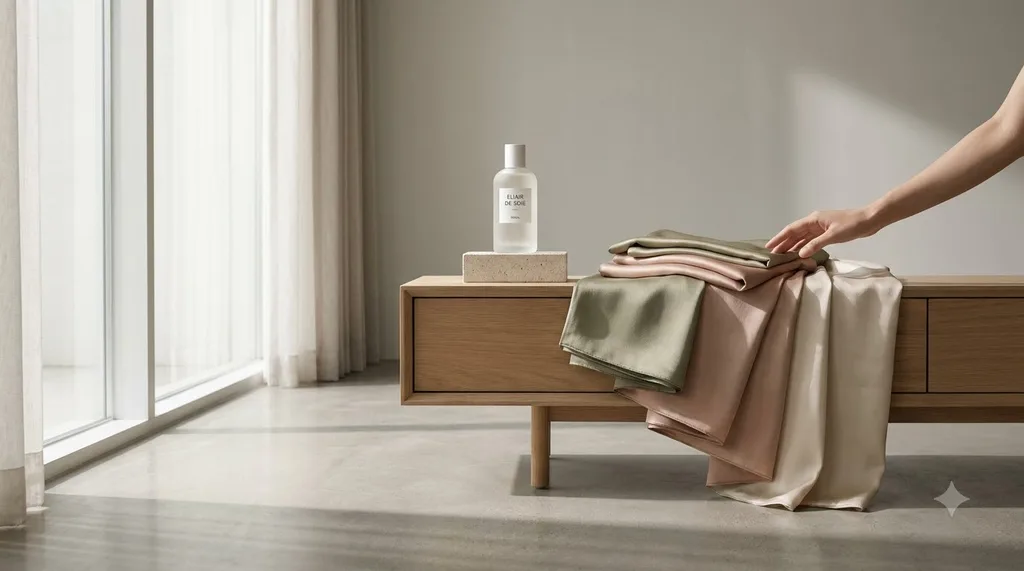
You have likely seen the videos dominating global feeds: a person sits under clean, neutral lighting while a trained consultant sweeps vibrant fabric drapes under their chin. In a fraction of a second, as a dusty mauve gives way to a vibrant tangerine, the shadows under their eyes seem to vanish, their jawline sharpens, and their skin takes on a luminous clarity.
- The Chemistry of Color: Why Seoul’s 12-Season System Defeats the Standard Four
- Inside the Diagnostic Studio: What Actually Happens Under the Daylight Lamps
- The Skeletal Pivot: Why Color is Only Half the Battle
- The Practical Blueprint: Navigating Reservations, Budgets, and English Barriers
- Managing the Logistics and "Open Run" Bookings
- What Does It Cost?
- The Truth About Digital Diagnostics vs. Professional Consultations
- The Strategic Stay: Where to Base Your Seoul Beauty Pilgrimage
- Explore Top Wellness Accommodations in Seoul
- Book English-Speaking Personal Color Sessions
- Frequently Asked Questions
- Can I do a personal color analysis if I have a tan or dyed hair?
- Should I bring my own makeup to the consultation?
- How far in advance do I need to book an English-speaking session in Seoul?
- Is the analysis result permanent, or can my personal color change as I age?
What looks like pure social media sorcery is actually a highly structured, multi-billion-dollar pillar of South Korea’s wellness tourism ecosystem. In Seoul, finding your seasonal palette is not treated as a playful afternoon distraction or a simple style quiz. It is approached as a scientific discipline—a rigorous, data-driven methodology designed to calibrate your personal aesthetic and build what locals call "beauty literacy."
If you are planning a trip to Seoul to experience this phenomenon firsthand, you must look past the viral trends to understand how the system actually works, how to navigate the intense booking landscape, and how to avoid the common tourist pitfalls.
Key Takeaways * A Scientific Calibration: True Korean personal color analysis relies on objective digital spectrophotometers and a nuanced 12-season system rather than subjective "vibes." * Crucial Booking Windows: Highly sought-after English-speaking studios in Seoul require booking 4 to 8 weeks in advance, utilizing competitive reservation windows. * Post-Analysis Execution: The true value of the session lies in the physical, localized takeaway report that acts as an exact purchasing roadmap at retailers like Olive Young.
The Chemistry of Color: Why Seoul’s 12-Season System Defeats the Standard Four
For decades, the Western concept of color analysis rested on a simple four-season grid: Spring, Summer, Autumn, and Winter. But walk into any modern consulting studio in districts like Hongdae or Gangnam, and you will quickly realize that the Korean methodology operates on a far more granular plane.
Korean color theory expands the classic matrix into a highly refined 12-season system. This evolution is essential for analyzing the subtle undertones, saturations, and brightness levels of diverse skin tones. Instead of forcing a complexion into a generic "Summer" category, the Korean system breaks it down into sub-categories like Summer Light, Summer Muted, or Summer Bright. This precision determines whether your skin harmonizes with soft, dusty lavender or requires a crisp, icy blue to prevent a washed-out appearance.
[K-Beauty 101] Peoseuneol keolleo jindan (퍼스널 컬러 진단) — Personal Color Diagnosis. Represents the formal, scientific process of identifying an individual's most flattering colors. It implies that aesthetic choices should be backed by objective data rather than mere intuition.
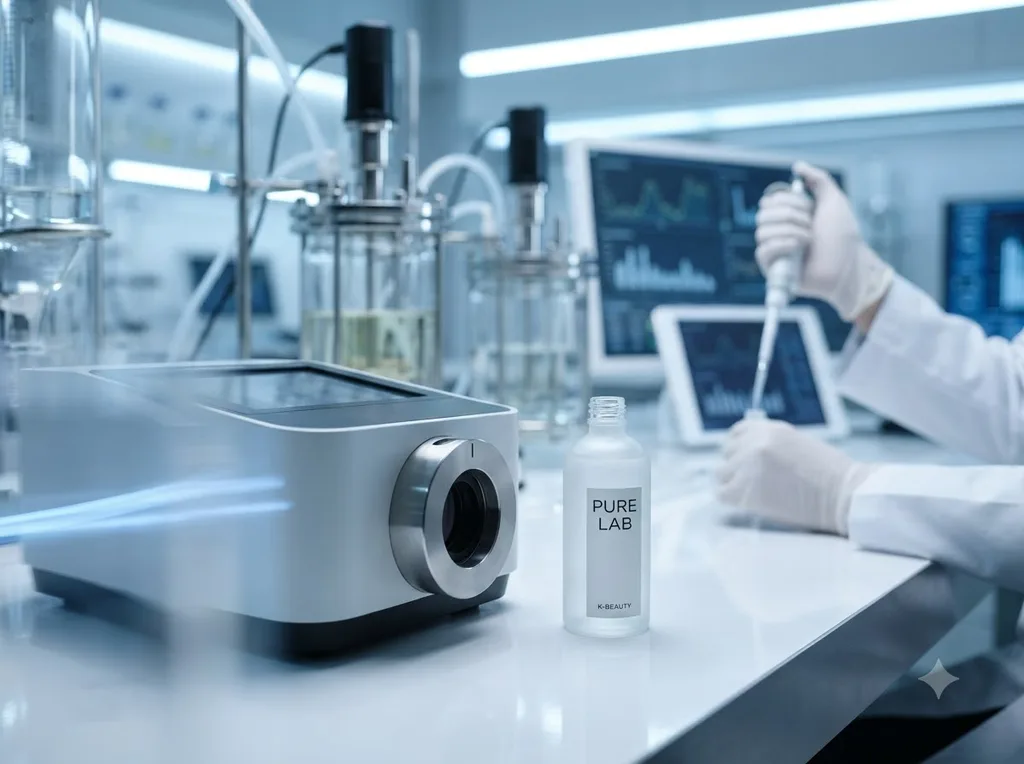
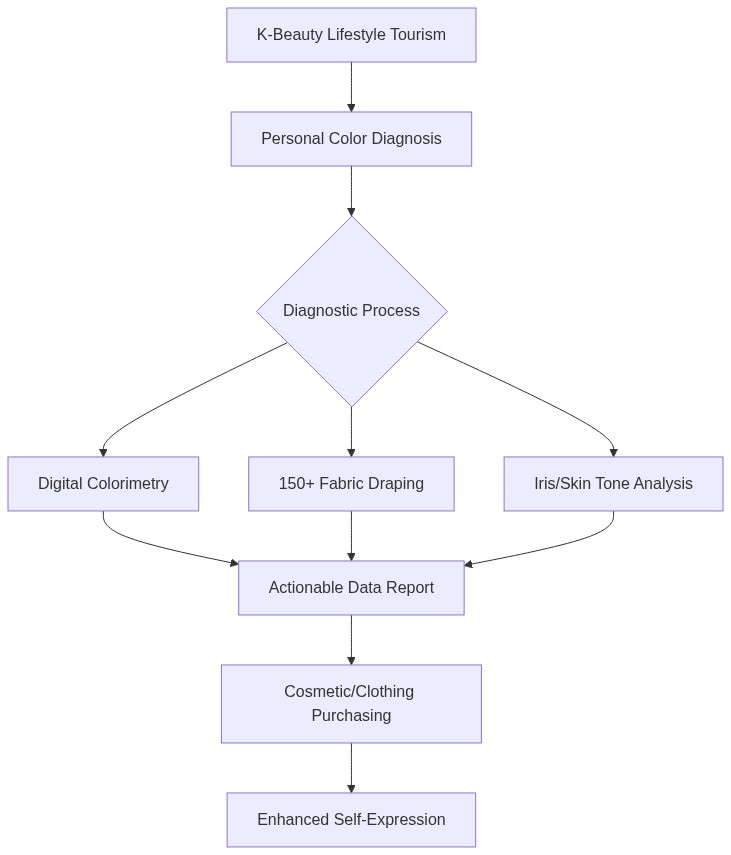
The process begins not with fabric, but with physics. Top-tier Seoul studios utilize a digital colorimeter—a spectrophotometer placed directly against your cheek. This device measures your skin’s exact pigment values across the CIE Lab color space, establishing a mathematical baseline for three core metrics: 1. L* (Luminance): The exact lightness or darkness of your skin. 2. a* (Red-Green balance): The level of pink or reddish undertones. 3. b* (Yellow-Blue balance): The level of yellow, olive, or warm undertones.
This quantitative step removes human bias from the equation. Only after your skin’s baseline metrics are logged does the visual draping process begin, testing anywhere from 150 to over 300 calibrated fabric swatches to observe how light reflects off your skin, shadows your jawline, or accentuates discoloration.
⚠️ Traditional Western Approach
Relies heavily on subjective visual assessments under varied lighting. Typically limited to a broad 4-season classification, which often fails to capture the subtle undertones of global complexions.
✅ Advanced Korean Methodology
Combines digital spectrophotometer readings with a highly nuanced 12-season matrix. Analyzes the physical interaction of light on the skin to find the precise sweet spot of saturation, brightness, and tone.
Inside the Diagnostic Studio: What Actually Happens Under the Daylight Lamps
A standard consultation is an intimate, eye-opening experience that lasts anywhere from 60 to 120 minutes. It requires you to sit before a large mirror illuminated by specialized daylight lamps (calibrated to approximately 5,000 to 6,500 Kelvin to mimic perfect noon sun).
To ensure complete objectivity, your hair is covered with a neutral white band, and a white drape is placed over your clothing. You must arrive entirely bare-faced—no makeup, no tinted sunscreen, and no colored contact lenses.
As the consultant systematically overlays the drapes, they will point out visual changes that you might never have noticed on your own. You will watch as the wrong shade of mustard yellow casts a sallow, fatigued shadow around your mouth, while a cool emerald green instantly diffuses redness and makes the whites of your eyes appear brighter.
🎵 K-Mono Lofi — Seoul Study Beats
Read deeper with Seoul lo-fi in the background — curated by K-Mono Lofi
During the draping, the consultant will identify your primary and secondary seasonal profiles. For instance, you might discover you are a Bom-wom-ton (Spring Warm Tone), requiring warm, clear, and light hues to look your most vibrant. Alternatively, you might fall into Yeoreum-kul-ton (Summer Cool Tone), a highly prevalent classification in East Asia characterized by cool, soft, and muted coloring that shines in delicate pastel shades.
The session does not end with color drapes. A comprehensive analysis also evaluates: * The Iris Pattern: Analyzing the warmth, depth, and contrast of your eyes to determine optimal hair dye colors. * Pouch Autopsy: You are encouraged to bring your current makeup collection. The consultant will physically sort your lipsticks, eyeshadows, and foundations, using a professional eye to tell you exactly which products match your palette and which ones are working against you.
The Skeletal Pivot: Why Color is Only Half the Battle
As the wellness and style market in Seoul has matured, the concept of personal optimization has expanded beyond color. Leading studios now offer a holistic, double-pronged approach that pairs color analysis with structural body mapping.
[K-Beauty 101] Golgyeok-jindan (골격진단) — Skeletal Diagnosis. A specialized analysis of body structure to determine flattering clothing silhouettes. It reflects the Korean beauty philosophy that style is a combination of color harmony and physical proportion.
This skeletal diagnosis categorizes the physical frame into three primary structural types: Straight, Wave, or Natural. By assessing bone density, muscle distribution, and joint prominence, the consultant can determine how garments drape over your frame.
When combined with color analysis, this skeletal framework ensures that your subsequent wardrobe updates are completely optimized. You walk away knowing not only that your best color is a muted sage green, but also that your silhouette requires structured shoulders, textured linen fabrics, and specific necklines to balance your natural proportions.
The Practical Blueprint: Navigating Reservations, Budgets, and English Barriers
Because of the massive global interest in these services, booking a session in Seoul requires strategic planning. This is not an experience you can simply walk into while wandering through Myeongdong.
Managing the Logistics and "Open Run" Bookings
Top-tier studios that employ fluent, English-speaking consultants operate on incredibly tight schedules. Their reservation calendars usually open on a specific day of the prior month (often the 1st or 15th) and fill up within minutes.
To secure a slot, you must adopt an 오픈런 (Open Run) mindset—monitoring the studio’s booking portal or social channels, translating timezone differences, and securing your appointment the second the window opens.
[K-Beauty 101] Open Run (오픈런) — Queuing before a store opens or booking the millisecond a portal launches. Captures the intense competitive spirit of the Seoul wellness and beauty landscape.
What Does It Cost?
The price of a personal color analysis varies based on the depth of the session and the qualifications of the consultant:
| Service Level | Price Range (KRW) | Price Range (USD Equivalent) | What Is Included |
|---|---|---|---|
| Basic Session | 60,000 - 120,000 | $45 - $90 | Basic skin measurement, 120-drape analysis, primary season determination. |
| Standard English Session | 130,000 - 180,000 | $100 - $140 | Dedicated English-fluent consultant, full 150+ drape analysis, makeup pouch review. |
| Premium / Holistic Package | 200,000 - 400,000 | $150 - $300 | Color analysis, Skeletal Diagnosis, custom makeup application by a professional stylist. |
The Truth About Digital Diagnostics vs. Professional Consultations
With the rise of personal color apps and AI filters, many travelers wonder if a physical session is truly worth the investment. It is critical to understand that digital diagnostics are highly unreliable.
Mobile phone cameras automatically apply white-balance corrections, shifting colors to compensate for ambient lighting. Furthermore, an app cannot replicate the physical reality of how light waves bounce off colored fabric and reflect back onto your skin’s unique topography. Investing in a professional, in-person consultation is the only way to obtain accurate, reproducible results.
If you want to dive deeper into the hidden nuances of Seoul's highly guarded beauty industry, we compile exclusive, unsponsored reports from local insiders who test these wellness spaces independently.
The Strategic Stay: Where to Base Your Seoul Beauty Pilgrimage
To make the most of your wellness trip, you should align your accommodations with the neighborhoods where these premier personal color and aesthetic studios are clustered. Seoul is vast, and traffic can easily eat up hours of your day. Strategically choosing your hotel base is the ultimate shortcut to a seamless trip.
- Hongdae (Mapo-gu): The absolute epicenter for youth culture, trend-forward fashion, and highly accessible personal color studios. Staying here gives you immediate access to trendy boutiques, local cafes, and pharmacies stocked with the latest skincare.
- Gangnam (Apgujeong/Cheongdam): The luxury capital. If your itinerary includes premium personal color consulting, high-end hair salons, professional makeup studios, or advanced dermatological clinics, Gangnam is your ideal home base.
- Seongsu-dong: Often dubbed the "Brooklyn of Seoul," this neighborhood is a hotbed for independent designer labels, curated lifestyle pop-ups, and modern wellness concepts.
This article may contain affiliate links—if you make a booking or purchase through them, we may earn a small commission at no extra cost to you.
Frequently Asked Questions
Can I do a personal color analysis if I have a tan or dyed hair?
Yes. Your skin's underlying pigment structure (the ratio of melanin, carotene, and hemoglobin) remains consistent even with a suntan. During the session, your hair will be completely covered with a neutral white cap to ensure your current hair color does not bias the drape testing.
Should I bring my own makeup to the consultation?
Absolutely. Bringing your current makeup "pouch" is one of the most valuable aspects of the session. The consultant will physically test your foundations, lip tints, and eyeshadow palettes against your newly discovered seasonal tone, classifying them into "keep," "use with caution," or "discard" categories.
How far in advance do I need to book an English-speaking session in Seoul?
For popular, highly rated studios with dedicated English-fluent translators, you should plan to book 4 to 8 weeks in advance. Most studios release their schedules on their official websites or booking channels on a set date each month.
Is the analysis result permanent, or can my personal color change as I age?
Your core genetic personal color does not change, as it is determined by your biological undertones. However, as you age, your skin's overall brightness (Luminance) or clarity may shift slightly. While your primary season will remain the same, your optimal "sub-palette" or depth preference might adapt over time.
⚠️ Disclaimer: The cost ranges and reservation timelines mentioned in this guide represent standard market averages in Seoul and are subject to change based on seasonal demand, individual studio policies, and currency fluctuations. Always verify current prices and translator availability directly with your selected provider prior to booking.
✓ Researched and compiled using verified data as of the publication date.
 Written by Jun Mi Jung for Quiet Korea | Contact: rsl.2001.1975@gmail.com