The Secret to K-Beauty: Why Affordable Skincare Outperforms Luxury
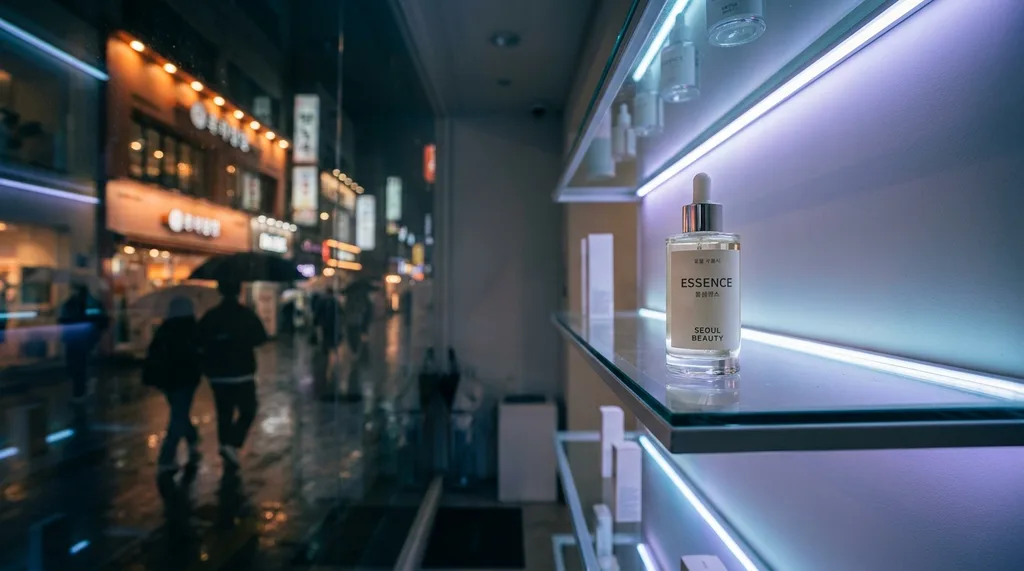
Walk into any Olive Young in Seoul at midnight, and you won’t just see teenagers browsing for fun. You will see professionals, students, and elders hovering over ingredient labels with the intensity of a forensic analyst. They aren't looking for the prettiest packaging or the most expensive bottle. They are hunting for the gong-byeong-tem—the "empty bottle item"—that has proven its efficacy through the rigorous, unforgiving scrutiny of the local market.
The global perception is that high-end skincare must carry a luxury price tag. In K-Beauty, the reality is almost the exact inverse. How is it that a $15 serum from a Seoul startup can often outperform a $150 bottle from a legacy Western house? The answer isn't a secret formula; it’s an industrial revolution that nobody mentions.
Key Takeaways * The "ODM Model" allows Korean brands to bypass massive R&D costs by using proven, pre-developed "base" formulas from massive manufacturing libraries. * Korean consumers use platforms like Hwahae to enforce extreme ingredient transparency, forcing brands to win on performance rather than marketing hype. * High turnover rates driven by cyclical sales like "O-teuk" (Today's Specials) maximize volume and keep prices suppressed, rewarding the savvy, observant shopper.
The Manufacturing Engine You Never See
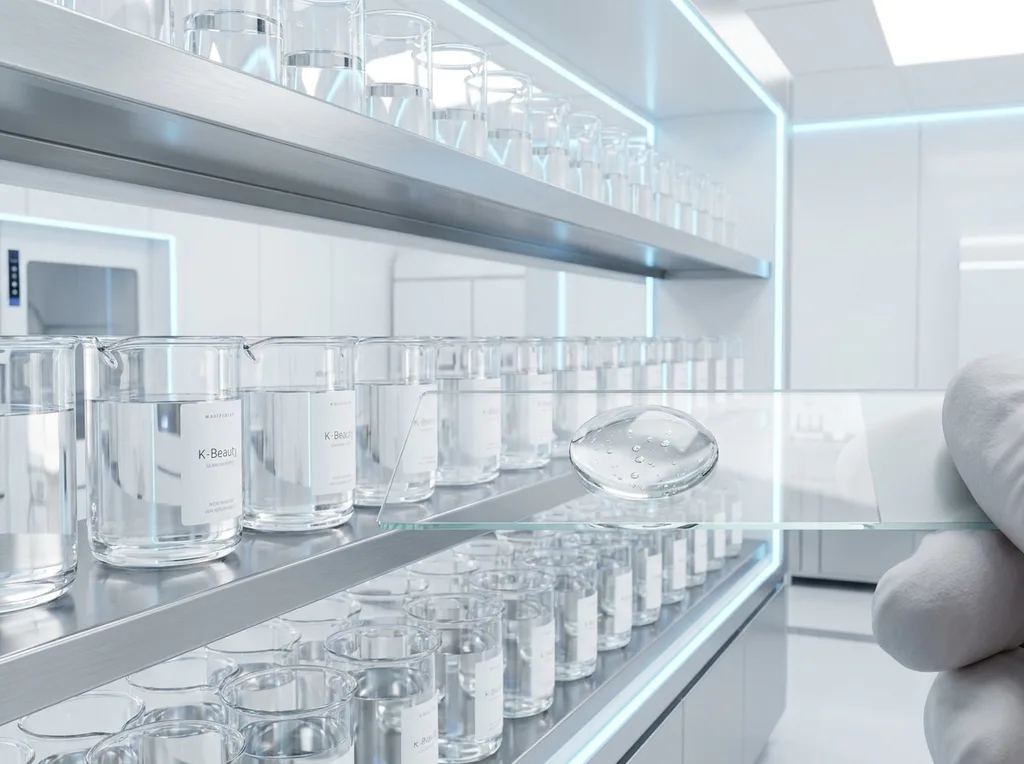
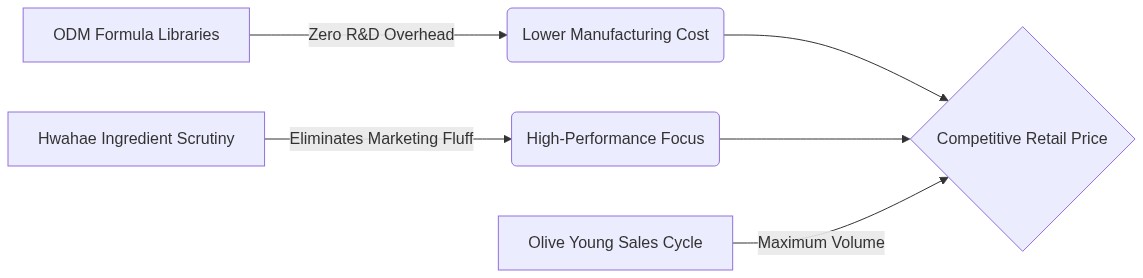
The secret to K-Beauty’s aggressive pricing is the "Trinity Model": an ecosystem of ODM (Original Design Manufacturing) giants like Cosmax and Kolmar. Western luxury brands often operate on slow, proprietary R&D cycles that last years, with the R&D costs baked into the final sticker price.
In Korea, the industry is built on a shared infrastructure. These manufacturers maintain vast "libraries" of stable, effective base formulas. A new brand doesn’t need a ten-million-dollar lab; they need a vision and a contract with an ODM who already has the science perfected. This drastically cuts the "time to market," allowing brands to innovate in months rather than years. By the time a product reaches your hand, you are paying for the formula and the marketing, not the decades of overhead for a private research facility.
Transparency as a Market Weapon
Why would a brand choose to keep prices low if they could charge more? Because the Korean market is a pressure cooker.
Before a product ever gains traction, it is vetted by the community on apps like Hwahae, where users scrutinize ingredient lists for potential irritants or unnecessary fillers. If a product doesn't deliver, it vanishes. This environment mandates gaseongbi—the relentless pursuit of value. Brands don't survive here by selling status; they survive by selling results that keep customers coming back for a second and third bottle. When the local audience is this educated, "cheap" is not a synonym for "low quality." It is a baseline requirement for market survival.
The "Olive Young" Effect: Retail as a Filter
The physical center of this universe is Olive Young. The store’s logistical prowess—specifically their "O-teuk" protocol—functions as a real-time price filter. By rotating daily specials and bundling "Planning Sets" (Gi-hoek-se-teu), they turn skincare into a high-turnover commodity.
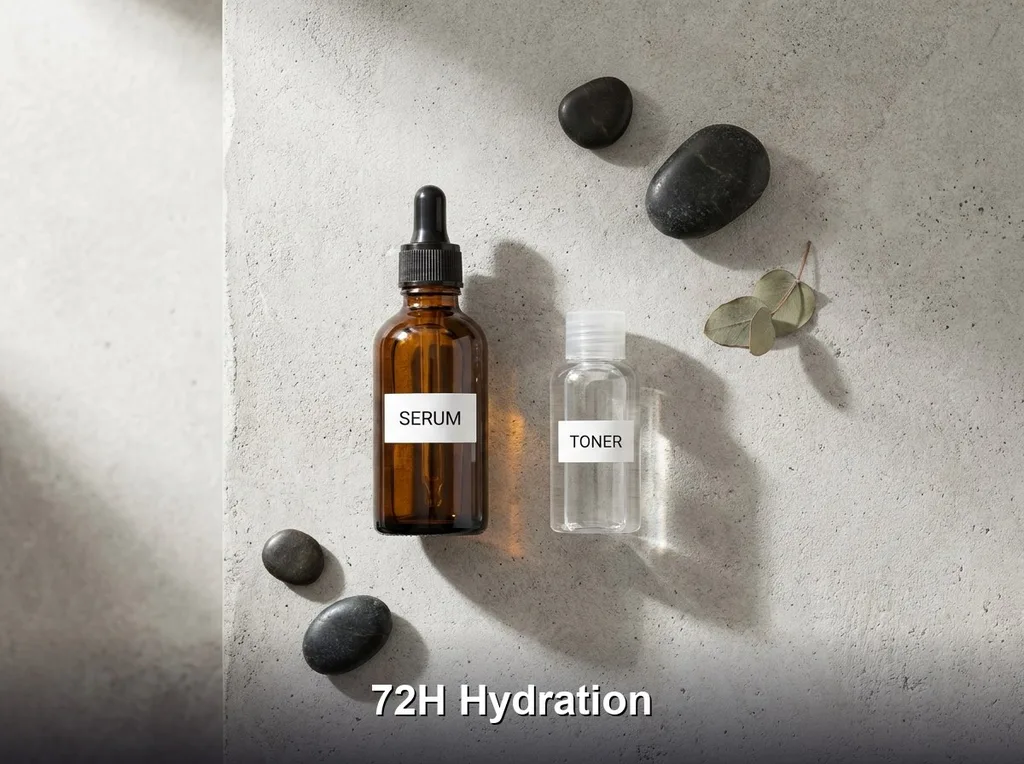
These bundles aren't just gifts; they are a psychological masterclass. By including a full-sized serum with a travel-sized toner, they lower the risk for the consumer to try a new line. For the brand, it’s an incredibly efficient way to gain market share without spending a fortune on traditional advertising.
🎵 K-Mono Lofi — Seoul Study Beats
Read deeper with Seoul lo-fi in the background — curated by K-Mono Lofi
Navigating the Budget Trap
Not every "cheap" product is a win, and not every expensive one is a waste. The gaseongbi logic suggests you should spend your money where the clinical threshold is hardest to meet.
| Category | Where to Save | Where to Invest |
|---|---|---|
| Cleansers | Basic, surfactant-based washes. | N/A (Keep it simple). |
| Hydration | Simple toners and essences. | Complex serums (peptides/retinoids). |
| Barrier | Ceramides and basic moisturizers. | High-tech SPF (stability is key). |
If you are just starting your routine, focus on these: 1. The Cleanser: Do not overspend. You are rinsing it off in 30 seconds. Look for a pH-balanced, non-stripping formula. 2. The Essence/Toner: This is the heart of the "glass skin" look. It’s where Korean tech excels. Look for fermented ingredients or Centella Asiatica. 3. The Active: This is where you might choose a slightly higher price point. If you want specialized ingredients like PDRN or stabilized exosomes, you are paying for the extraction and formulation stability.
The most effective routine isn't the one that costs the most—it’s the one you can sustain. If you find yourself buying a $100 bottle that you're afraid to use liberally, you've already lost the battle. Skin needs consistency, not a high entry price.
This article may contain affiliate links — if you buy through them, we may earn a small commission at no extra cost to you.
⚠️ Medical & Financial Disclaimer: While these insights reflect the competitive nature of the Korean beauty market, skincare is deeply personal. Always perform a patch test on your inner arm before introducing new products to your face, especially if you have sensitive skin or a compromised barrier. If you are dealing with persistent acne, eczema, or other clinical skin conditions, consult a board-certified dermatologist before following any new regimen.
✓ Researched and compiled using verified data as of the publication date.
 Written by Jun Mi Jung for Quiet Korea | Contact: quietkorea@gmail.com