The Ultimate Seoul Beauty Intelligence: authentic K-Beauty skincare routines, ingredient science, and glass skin secrets — verified by real Korean sources.
The Decoded Formula: Why Korea's $20 Serums Consistently Outperform Western $200 Creams
on July 26, 2026
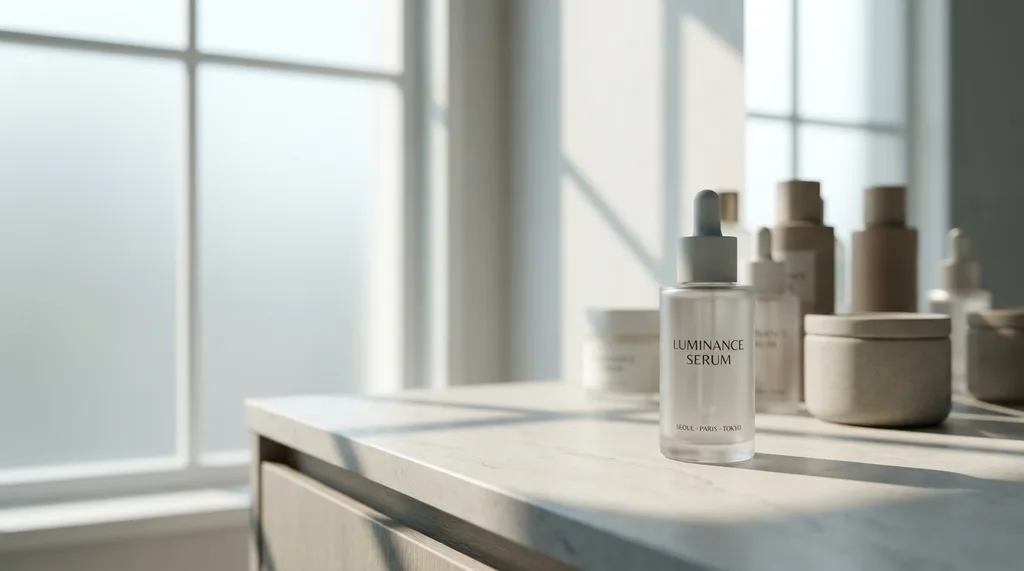
For decades, global beauty consumers have been conditioned to accept a simple, expensive equation: the higher the price tag, the more miraculous the transformation. We have been taught to equate heavy glass jars, gold-embossed lettering, and French-sounding names with dermal youth. Yet, in the hyper-competitive streets of Seoul, this narrative has not just been questioned—it has been completely dismantled.
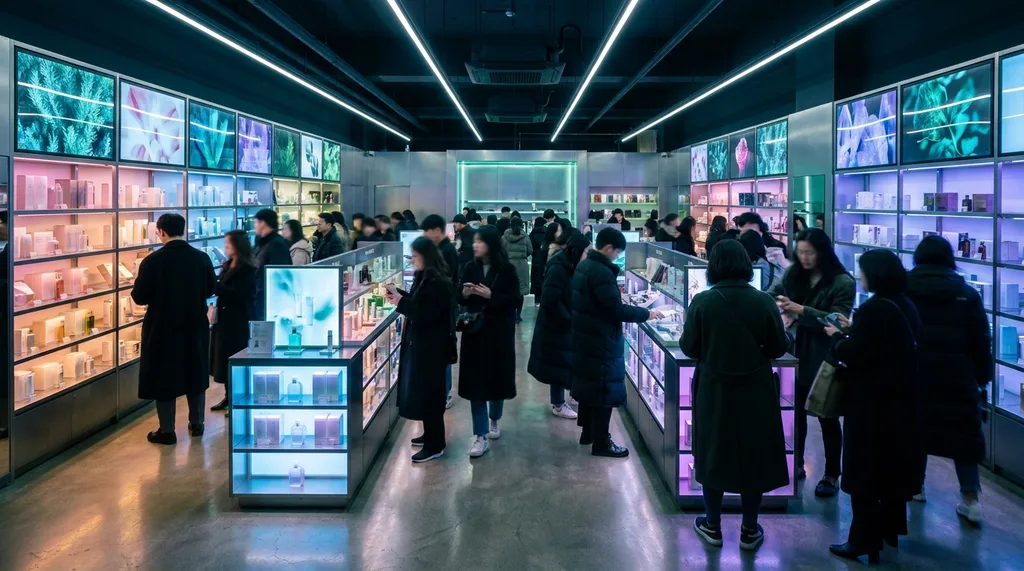
Walk into the midnight aisles of any Olive Young in Gangnam, and the illusion dissolves. There, you will find young women and seasoned skincare collectors alike bypassing the dusty luxury counters to stack their baskets with minimalist plastic bottles costing less than a casual lunch. Why does this shift happen? The answer does not lie in marketing narratives, nor does it hide behind the prestige of luxury heritage. It is found in a highly regulated, radically transparent ecosystem where clinical efficacy has become the only true currency.
> **Key Takeaways**
* **Prestige vs. Performance:** The traditional luxury markup is driven by packaging and marketing, whereas modern Korean skincare relies on clinical efficacy and high-value, standardized ingredient concentrations.
* **The Regulatory Shield:** South Korea’s Ministry of Food and Drug Safety (MFDS) strictly regulates functional ingredients, ensuring that budget-friendly products deliver identical active strengths to luxury alternatives.
* **The Danger of Over-Care:** Layering too many high-concentration active products damages the skin barrier; a minimalist, routine-based approach prioritizing barrier health yields superior long-term results.
---
## The Efficacy Currency: Why Prestige is Losing the Performance Test
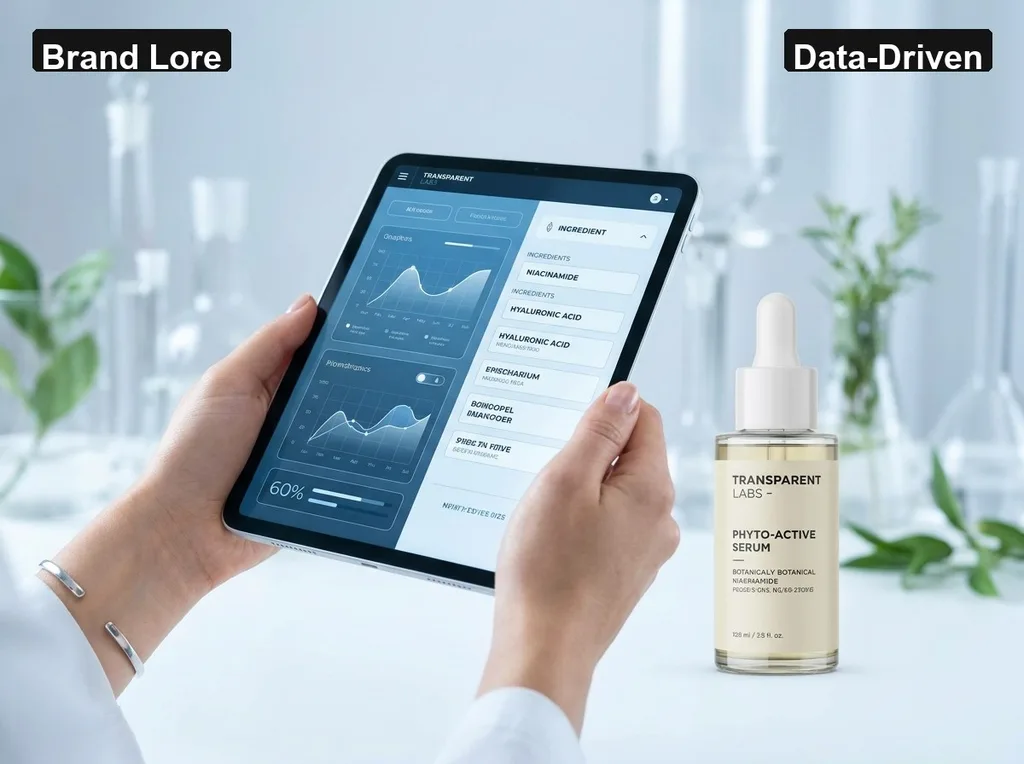
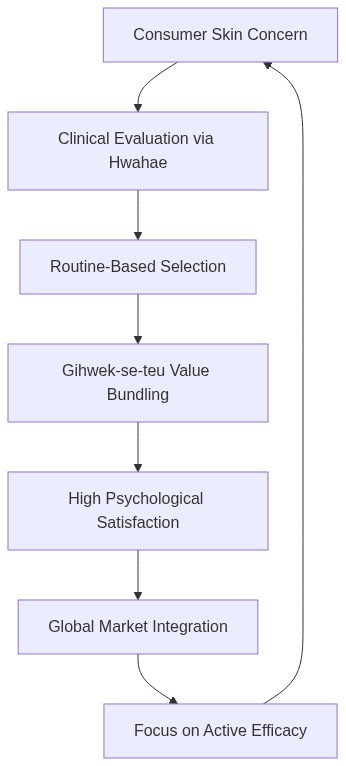
Driven by analytical platforms like Hwahae, consumers dissect ingredient lists rather than relying on prestige storytelling.
In the global beauty landscape, prestige has historically been built on scarcity and storytelling. In South Korea, however, consumers have cultivated a culture of deep beauty education. These consumers do not buy products based on a brand’s lineage; they buy based on ingredient percentages, formulation stability, and proven dermatological outcomes. Driven by analytical platforms like Hwahae—where millions of users dissect ingredient lists to flag potential irritants—the market has shifted dramatically toward raw performance.
This democratized demand is reflected in the sheer scale of the market. The global K-Beauty market, valued at an impressive USD 11.1 to 11.9 billion in 2025, is projected to skyrocket to between USD 21.2 and 43.5 billion by 2035. What is driving this explosive growth? It is not luxury houses. In fact, mass-market formulations represent a staggering 55.15% of cosmetic sales within South Korea. This massive market share is fueled by an export engine that saw an 18% year-over-year growth in shipments to the United States alone by late 2025.
The secret weapon behind this democratization is a regulatory concept known as *Go-si*.
> **[K-Beauty 101]** *Go-si* (Go-si) — Official government notification or regulatory standard. In K-beauty, it signals that an ingredient meets strict safety and efficacy requirements for "functional cosmetics," establishing a high level of government-vetted trust.
When the Ministry of Food and Drug Safety (MFDS) issues a *Go-si* for an ingredient—such as Niacinamide for brightening or Adenosine for wrinkle improvement—it establishes a precise, scientifically verified concentration range (typically 2% to 5% for whitening actives) required for a brand to legally claim functional benefits. Because these standards are public and highly regulated, any lab in Korea can formulate a highly stable, functional product that meets these exact parameters.
Consequently, a $15 mass-market serum and a $250 luxury cream often contain the exact same concentration of government-vetted actives. The only difference is the box it comes in and the fragrance added to the jar.
🎵 K-Mono Lofi — Seoul Study Beats
Read deeper with Seoul lo-fi in the background — curated by K-Mono Lofi
---
## The Anatomy of a Formula: Mass Market vs. Luxury
To understand why luxury price points rarely correlate with superior dermal performance, one must look closely at the formulation level. Traditional luxury skincare brands frequently allocate a massive portion of their budget to aesthetic elements: customized heavy-weight packaging, proprietary synthetic fragrances, and expensive global marketing campaigns.
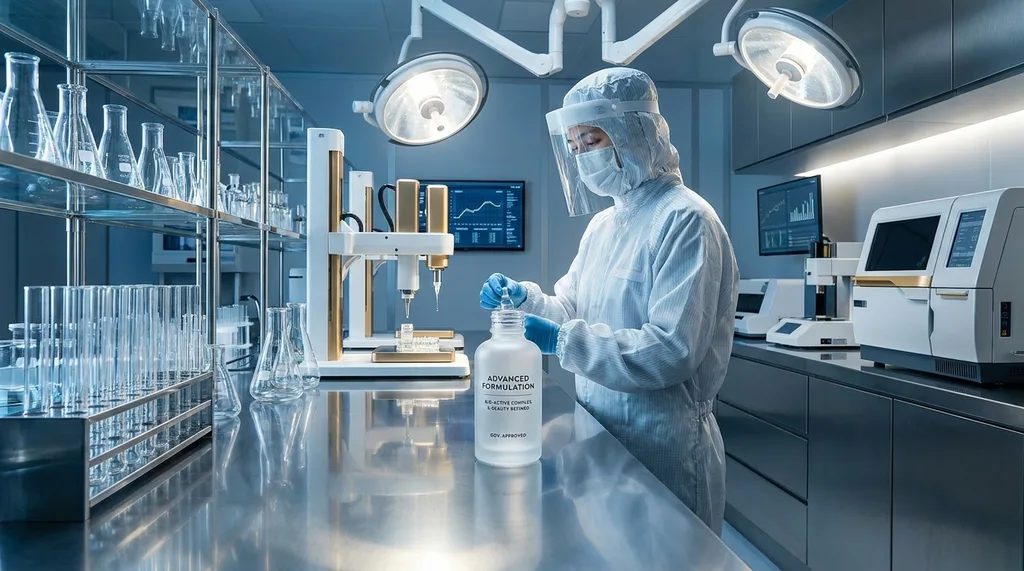
Korean cosmetic chemists, by contrast, rely on a highly streamlined supply chain. Because the majority of Korean skincare brands manufacture their products through a select few mega-laboratories (such as Kolmar Korea and Cosmax), they share access to state-of-the-art research, advanced delivery technologies, and high-quality raw materials. This shared infrastructure drastically reduces formulation costs, allowing independent brands to pass those savings directly to the consumer.
The Clinical Mass-Market Formula
Focus: High-efficacy active delivery. Key Markers: Uses standardized, clinically backed concentrations (like 2-5% Niacinamide or pure Centella derivatives) housed in minimalist packaging. The focus is entirely on bio-availability and targeted problem-solving.
The Traditional Luxury Formula
Focus: Sensory prestige and heritage story. Key Markers: Relies heavily on heavy glass bottles, proprietary fragrance blends, and rare botanical narratives. While aesthetically pleasing, the concentration of active clinical agents is often identical to mass-market counterparts.
This formulation philosophy is best illustrated by Niacinamide, a true workhorse of the modern routine. Clinical data shows that Niacinamide provides a 22% reduction in sebum production and a 35% to 68% reduction in pigment transfer when used in the standard 2% to 5% range.
While Western luxury brands often market "hyper-concentrated" 10% or 20% Niacinamide serums as superior, Korean dermatologists widely advise against these excessive percentages. High concentrations do not yield linear improvements; instead, they drastically increase the risk of contact dermatitis, redness, and barrier disruption. By keeping formulas within the optimal, regulated sweet spot, K-Beauty brands achieve maximum efficacy with minimal irritation—and at a fraction of the cost.
Beyond standard vitamins, Korean labs have pioneered the democratization of advanced bio-tech ingredients like PDRN (Polydeoxyribonucleotide)—purified DNA fragments traditionally used in high-end clinic injections—and Beta-Sitosterol, a powerhouse plant lipid. By stabilizing these ingredients in daily-use creams, mass-market brands provide consumers with clinic-grade regenerative science without the premium markup.
---
## The Pitfalls of Over-Care: When the Routine Becomes the Enemy
The accessibility of highly active, affordable products has created a unique, modern challenge: the rise of skincare overload, historically referred to in Korean beauty circles as *O-beo-ke-eo*.
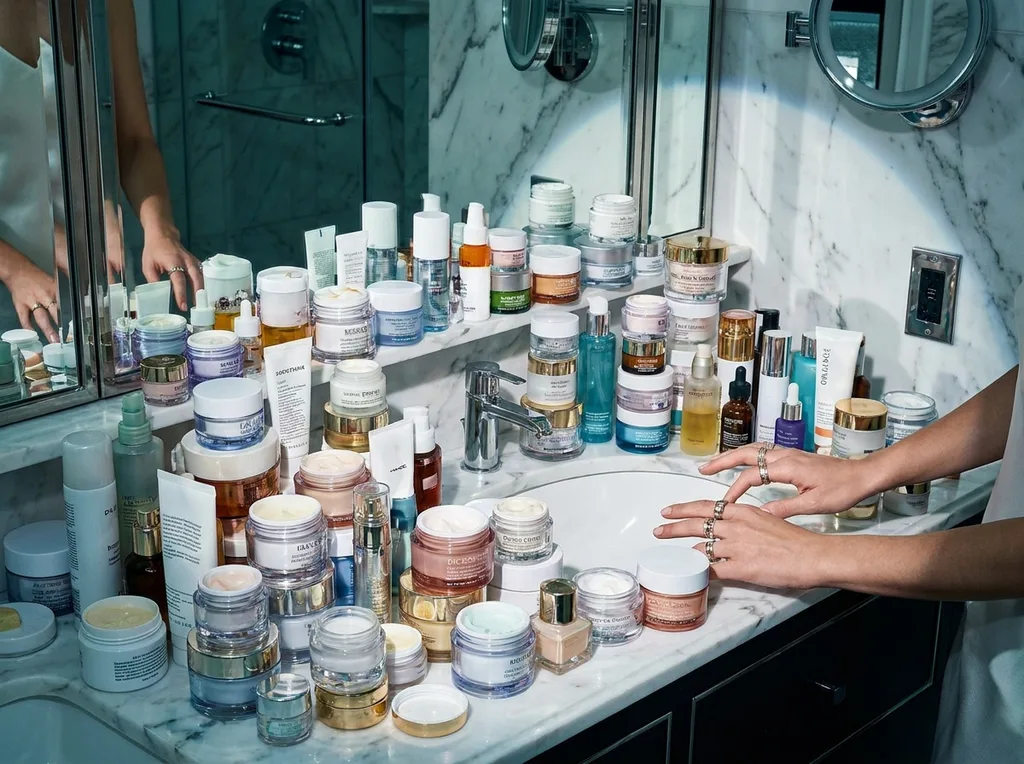
When consumers discover that high-performance ingredients are incredibly affordable, the temptation is to buy everything. A daily routine quickly balloons to include a high-strength vitamin C serum, a multi-acid exfoliator, a retinol ampoule, and multiple heavy barrier creams. This aggressive layering of active ingredients often triggers the very issues consumers are trying to fix: redness, persistent breakouts, chronic dehydration, and a severely compromised lipid barrier.
The traditional "10-step routine" popularized in the early days of global K-Beauty was never meant to be a daily prescription of harsh actives. Rather, it was a philosophy of deep, gentle hydration.
> **[K-Beauty 101]** *Gihwek-se-teu* (Gihwek-se-teu) — Promotional planning set with bundled items. A strategic packaging format offering high value-add, designed to encourage a cohesive, multi-step routine without product conflicts.
The modern skincare consumer is moving toward a more structured, synergistic approach. Instead of buying isolated, high-strength products that clash, they look for curated combinations designed to work in harmony. This focus on "price-to-psychological-satisfaction," or *Gasimbi*, has transformed how people shop.
> **[K-Beauty 101]** *Gasimbi* (Gasimbi) — Price-to-psychological-satisfaction ratio. This metric represents the modern Korean consumer's habit of prioritizing emotional fulfillment, safety, and routine-level value over raw prestige.
To protect the skin from self-induced damage, the industry is shifting toward minimalist, barrier-first formulations. Dermatologists emphasize that when introducing strong actives like retinol, they must always be balanced with barrier-repairing agents such as Cica (Centella Asiatica) derivatives. This deliberate pairing mitigates irritation and ensures the skin can actually tolerate and process the active ingredients.
⚠️ Formulation Warning: Layering multiple products containing niacinamide, exfoliators, and retinoids simultaneously can cause active ingredient competition, rendering the products ineffective while rapidly stripping the stratum corneum. Always introduce one active at a time and prioritize barrier recovery.
This article is designed to cut through the marketing noise and empower you with raw, clinical truths. If you are ready to stop overpaying for packaging and start building a scientifically sound, high-performance routine, join our community of ingredient-first skincare obsessives.
---
## Navigating the Market: How to Build Your Strategy
Building an effective skincare routine does not require choosing between extreme budget options or ultra-luxury creams. The most successful approach lies in a strategic division of your budget based on formulation complexity.
For simple, single-focus steps—such as hydrating toners, gentle cleansers, and basic barrier-support moisturizers—there is absolutely no scientific reason to pay a premium. The active ingredients in these products (such as Centella Asiatica, Hyaluronic Acid, and Glycerin) are highly abundant, inexpensive to source, and effortlessly formulated by mass-market labs.
Conversely, you should reserve your budget for products requiring advanced stabilization, complex delivery systems, or highly purified active ingredients. Stabilized Retinol, advanced Vitamin C (L-Ascorbic Acid) formulations, and specialized bio-fermented peptides benefit greatly from the rigorous quality control and specialized packaging of premium clinical brands.
| Routine Step | Recommended Budget Focus | Key Active Targets | Why It Matters |
| :--- | :--- | :--- | :--- |
| **Cleanser & Toner** | Mass-Market / Budget | Centella, Hyaluronic Acid | Simple formulas; high-cost luxury alternatives offer no therapeutic advantage. |
| **Targeted Ampoule** | Mid-Tier to Premium | Stabilized Retinol, PDRN | Requires protective packaging and advanced delivery vectors to remain active. |
| **Barrier Cream** | Mass-Market / Budget | Ceramide NP, Beta-Sitosterol | Mass-market labs excel at producing highly stable physiologic lipid ratios. |
| **Daily Protection** | Mid-Tier | Standardized UV Filters | Requires sophisticated sensory formulation to ensure daily compliance. |
This systematic division ensures you are paying for the actual chemistry inside the bottle, not the marketing campaign behind it. By focusing on ingredient synergy, clinical data, and your skin's unique barrier health, you can build a professional-grade routine that delivers real, lasting results without the luxury markup.
This article contains affiliate links. If you choose to purchase through these links, we may earn a small commission at no additional cost to you, which helps us continue delivering honest, unsponsored research.
✦ Partner Recommendation
Explore High-Efficacy K-Beauty
Compare clinically proven formulas across budget and premium tiers to find what fits your routine.
---
## Frequently Asked Questions
### Is a more expensive moisturizer always better for dry skin?
No. Dry skin requires a precise physiological ratio of ceramides, cholesterol, and fatty acids to repair the skin barrier. Because these lipids are standardized raw materials, mass-market Korean laboratories formulate exceptionally effective barrier creams at very accessible price points. Luxury moisturizers often charge a premium for proprietary fragrances and heavy glass jars, which do not improve barrier function.
### How do I know if my skincare routine is causing skin fatigue?
If your skin feels tight after washing, exhibits persistent redness, stings when applying basic moisturizers, or breaks out in unusual areas, you may be experiencing skincare overload. This happens when too many active ingredients are layered simultaneously, stripping the protective stratum corneum. The best solution is to strip your routine back to a basic cleanser, a soothing barrier cream, and SPF for two weeks.
### Why does Korean skincare focus so much on Niacinamide?
Niacinamide is a highly stable, multi-functional ingredient officially recognized by the Korean Ministry of Food and Drug Safety (MFDS) for its skin-brightening and barrier-strengthening properties. In the regulated 2% to 5% concentration range, it effectively reduces sebum production by 22% and significantly minimizes hyperpigmentation without causing the irritation associated with higher percentages.
---
> **⚠️ Disclaimer:** The information provided in this article is for educational and informational purposes only and should not be construed as professional medical advice, diagnosis, or treatment. Always consult with a board-certified dermatologist or qualified healthcare provider before introducing new active ingredients or altering your clinical skincare regimen, especially if you have pre-existing skin conditions.
 Written by Jun Mi Jung for Quiet Korea | Contact: rsl.2001.1975@gmail.com