Korean skincare common mistakes beginners make
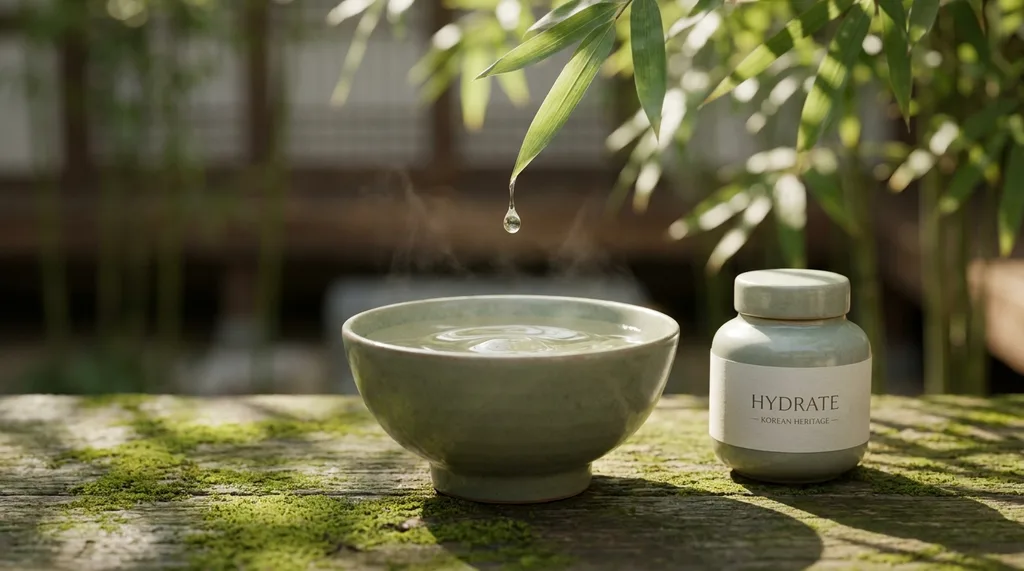
The allure of "glass skin" has transformed from a niche K-beauty trend into a global obsession. Walk into any Olive Young in Seoul at midnight, and you’ll see the reality behind the marketing: a young woman pressing her seventh layer of toner into her cheeks with the focus of someone defusing a bomb. But here is the secret that the viral social media clips never show: many of those people are, quite literally, drowning their skin.
Key Takeaways * K-Beauty success is not about product volume; it is a clinical discipline dictated by pH gradients and molecular weight. * Beginners often neutralize their active ingredients by layering incompatible formulas too quickly. * The goal of a routine is to protect the stratum corneum, not to saturate it with as many ingredients as possible.
The most common misconception for newcomers is that more is better. In reality, the skin’s stratum corneum acts as a highly selective barrier. When you pile on ten different products without respecting the chemistry of absorption, you aren’t creating a glowing complexion—you are creating a "compounded irritation." The true K-beauty experts, or Ko-deok (beauty obsessives), know that the secret isn't a long shopping list; it’s the strategic sequence of chemical interactions.

The pH Gradient: The Invisible Wall
Many enthusiasts treat the "thinnest-to-thickest" rule as gospel. It is a helpful texture guide, but it ignores the fundamental physics of the skin. If you are using a Vitamin C serum, you are working with an ingredient that requires an acidic environment—typically a pH of 2.5 to 3.5—to remain stable and effective.
If you immediately follow that serum with a neutral-pH moisturizer, you aren't just "sealing it in." You are actively neutralizing the acidity required for the active to function. You have effectively turned an expensive clinical treatment into an expensive face cream. This is where the "wait time protocol" becomes non-negotiable. Allowing 15 to 20 minutes for low-pH actives to absorb ensures the skin’s surface pH stabilizes before the next layer is introduced.
Understanding the "K-Beauty Formula"
The systematic layering known as the routine is not a marketing gimmick; it is an exercise in Pibu Gwahak (skincare science). However, the complexity of these stages often leads to Over-care, where the barrier is stripped by over-exfoliation or aggressive product mixing.
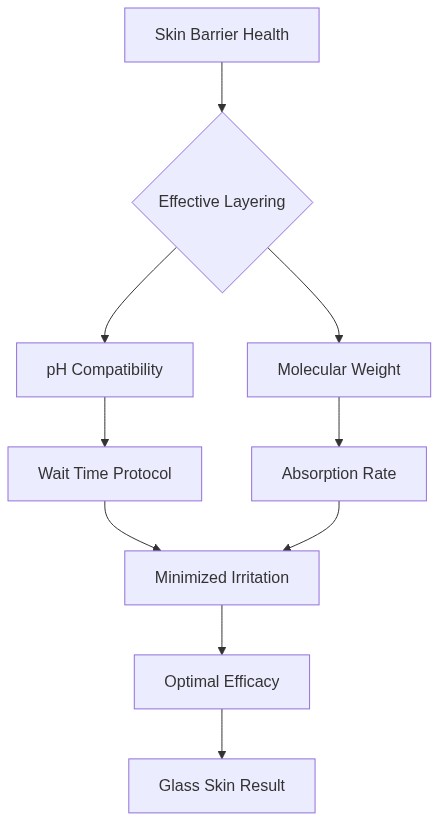
When you see someone with perfect, translucent skin, you are looking at the result of a barrier that is perfectly hydrated and, more importantly, undisturbed. Combining harsh ingredients—like using retinol in the same sequence as benzoyl peroxide—creates a chemical collision that ruins the barrier before the skin even has a chance to repair itself.
The Regulatory Reality Check
In South Korea, the Ministry of Food and Drug Safety (MFDS) maintains a rigorous Simsa (official evaluation) process for functional cosmetics. When you see a product labeled with high-performance ingredients, it has often undergone scrutiny that most global drugstore brands never face. Yet, even the best Gosi-wonryo (notified ingredients) cannot save skin that is being over-processed.
If you find your skin feeling tight, sensitive, or perpetually inflamed, you are likely in the middle of a self-inflicted barrier crisis. The remedy is almost always the same: strip the routine back to the basics. Cleanser, a balanced toner, and a non-irritating moisturizer. Let the skin recover its natural lipid structure before you even think about reintroducing concentrated actives.
🎵 K-Mono Lofi — Seoul Study Beats
Read deeper with Seoul lo-fi in the background — curated by K-Mono Lofi
Frequently Asked Questions
How long should I really wait between skincare steps? For active ingredients like Vitamin C, AHAs, or BHAs, wait at least 15 to 20 minutes. This allows the product to perform its function at the skin's natural pH before other products buffer it toward neutral.
Can I use retinol and vitamin C together? Technically, yes, but not at the same time. Use your Vitamin C in the morning to leverage its antioxidant properties against environmental stressors, and reserve retinol for your PM routine when your skin enters its natural repair cycle.
Why does my makeup break down after a 5-step routine? This is often a sign of "over-layering" with products that have heavy wax content. Your skin may be struggling to absorb the products, leaving a slick layer on the surface that acts as a solvent for your foundation. Try reducing the number of layers and allowing more dry time.
What is the "Functional Cosmetic" label? In Korea, this is a designation from the MFDS for products proven to provide specific benefits, such as whitening or wrinkle improvement. It signifies that the manufacturer has submitted clinical data to verify those claims, offering a higher level of trust than non-regulated products.
⚠️ Medical & Financial Disclaimer: This content is for educational purposes only and does not constitute medical advice. Skincare needs are highly individual. Always perform a patch test when trying new ingredients, and consult with a board-certified dermatologist before incorporating high-concentration actives into your routine, especially if you have sensitive skin or existing conditions.
⚠️ Disclaimer: This article is for informational and educational purposes only and does not constitute medical, dermatological, or financial advice. Individual results vary — consult a board-certified dermatologist or physician before starting any new skincare routine, supplement, or procedure, especially if pregnant, nursing, or taking other medications. This article may contain affiliate links — if you buy through them, we may earn a small commission at no extra cost to you.
✓ Researched and compiled using verified data as of the publication date.
 Written by Jun Mi Jung for Quiet Korea | Contact: rsl.2001.1975@gmail.com