Beyond the Brochure: The Reality of Booking Skin Boosters in Seoul
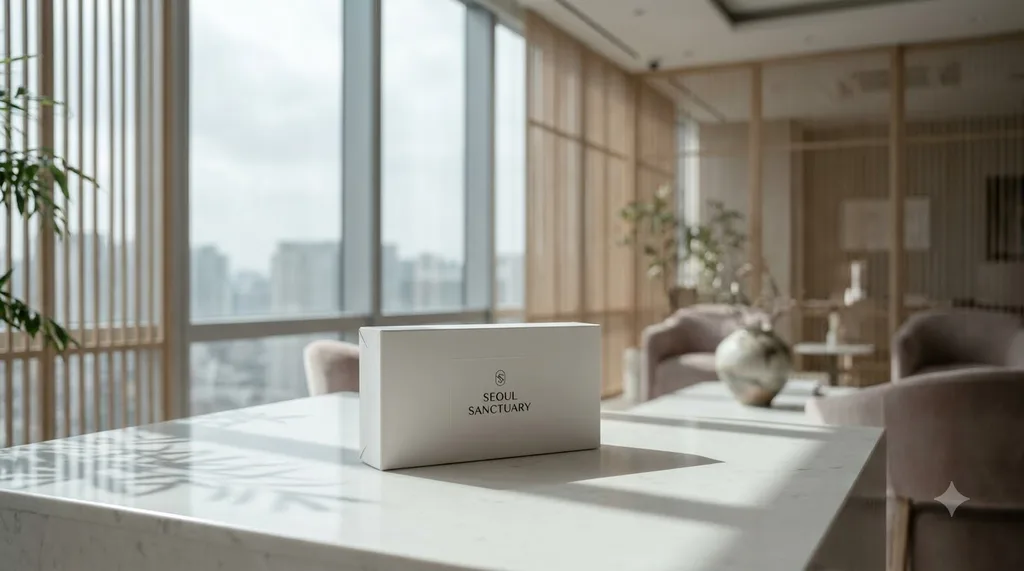
Every year, millions of travelers land in Incheon with a singular, quiet obsession: achieving that impossibly translucent, lit-from-within complexion that seems to belong exclusively to Seoul's pedestrians. For years, the conversation around South Korean aesthetic medicine was dominated by surgical transformations. But the numbers tell a radically different story. Non-invasive dermatology now commands nearly 63 percent of all foreign medical visits, eclipsing traditional plastic surgery entirely.
- The Shift from Surgery to Skin Quality
- Navigating the Booking Ecosystem: Apps Versus Brokers
- What Actually Happens to Your Skin: The Injection Reality
- The Safety Net: Regulations, Records, and Redress
- Explore Seoul Medical Tours & Wellness Activities
- Frequently Asked Questions
- Can I get skin boosters done on the same day as laser resurfacing or lifting treatments?
- How many sessions of Rejuran or Juvelook do I need to see visible results?
- What should I do if I experience hard lumps or nodules weeks after an injection?
It is the era of the "lunchtime procedure." Travelers are no longer flying to Gangnam for permanent alterations; they are coming for micro-droplets of polynucleotides, exosome infusions, and hydration-locking injectables that promise to rewrite skin quality from the inside out. Yet, beneath the glossy Instagram reels and streamlined booking apps lies a parallel ecosystem of volume clinics, commission-driven agencies, and aggressive marketing that preys on international visitors who cannot read the warning signs.
Key Takeaways - Dermatology Dominance: Non-invasive skin treatments now account for 62.9% of all foreign medical visits to South Korea, far outpacing surgical procedures. - The O4O Shift: Booking platforms like Gangnam Unni and physical concierge hubs have replaced sketchy offline brokers, offering transparent pricing and local event rates to international patients. - Strict Recovery Realities: Skin booster treatments like Rejuran and Juvelook require mandatory post-care discipline—including strict bans on saunas, alcohol, and active exfoliating acids for up to a week.
The Shift from Surgery to Skin Quality
If you walk down the wide avenues of Gangnam or the refined side streets of Apgujeong, you are treading on the highest concentration of aesthetic clinics on the planet. The sheer density of pibugwa (dermatology clinics) creates a hyper-competitive market where prices fluctuate daily and advanced technologies are adopted months before they clear regulatory hurdles in Western markets.
For the international visitor, this environment offers a staggering advantage. Advanced formulations like polynucleotides (PN) derived from salmon DNA, which work by activating cellular repair pathways, and hybrid collagen stimulators are accessible at a fraction of Western costs. But this accessibility comes with a catch. The information ecosystem in English is largely curated by intermediaries who earn commissions on patient referrals.
When you search for skin booster treatments online, you are rarely seeing the unfiltered landscape that locals navigate. You are seeing the clinics with the highest marketing budgets, translated brochures designed to reassure rather than inform, and package deals engineered for volume. Understanding how to look past the promotional veneer is the single most important skill a medical tourist can acquire.
🎵 K-Mono Lofi — Seoul Study Beats
Read deeper with Seoul lo-fi in the background — curated by K-Mono Lofi
Navigating the Booking Ecosystem: Apps Versus Brokers
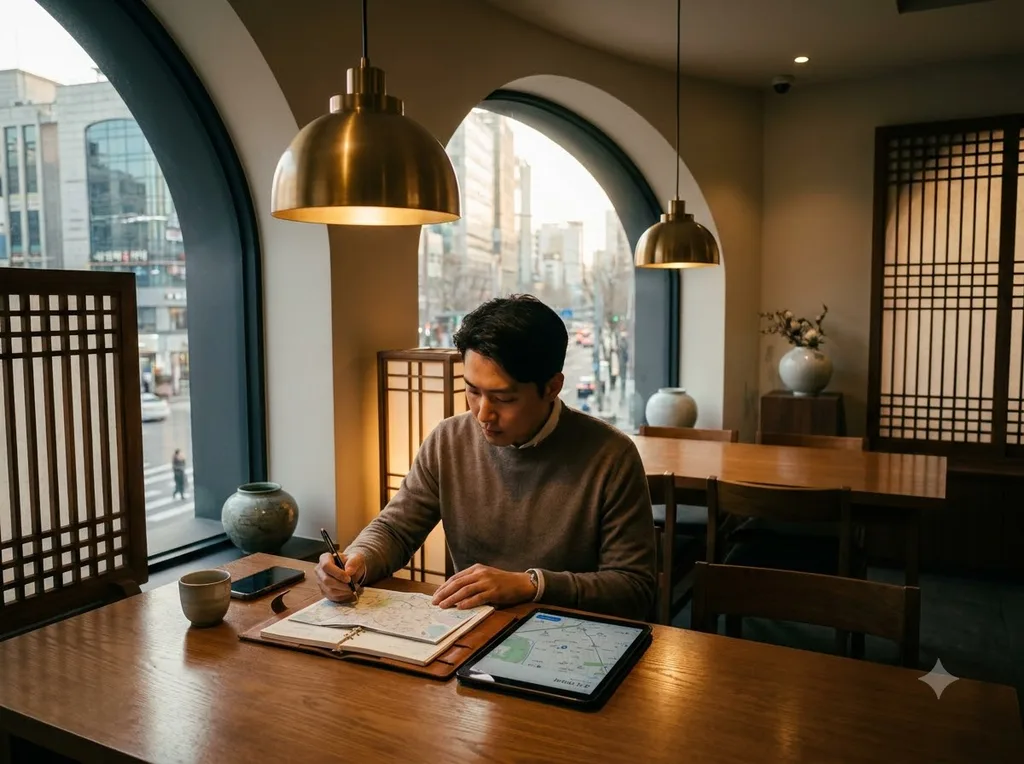
The days of walking into a random clinic off the street or trusting a hotel concierge whose cousin runs an agency are largely over. The modern medical tourist relies on digital platforms that have revolutionized how sang-dam (consultations) are initiated.
Apps like Gangnam Unni (meaning "Gangnam Sister") have transformed the market by forcing clinics to display transparent event pricing to the public. What locals pay on their phones is, in theory, what international visitors should be paying. To bridge the remaining language barrier—hangu-geo—these platforms have expanded into physical O4O (Online-for-Offline) concierge hubs, such as the Unni Guide Center in Nonhyeon-dong, where foreign patients can receive precise skin diagnostics and verified appointment scheduling.
[K-Beauty 101] 상담 (Sang-dam) — Medical consultation. In Korean clinics, this is the critical juncture where clinical necessity meets commercial sales. Distinguishing between a direct consultation with a board-certified dermatologist and a preliminary chat with a sajangsiljang (consultation manager or sales representative) is your first major safety checkpoint.
When evaluating a clinic through an app or a direct website, look for specific markers of legitimacy: - Direct Physician Access: Will the person injecting your face actually be a licensed medical doctor with specialized dermatological training, or a rotating general practitioner working on commission? - Transparent Product Verification: Reputable clinics will show you the unopened box of the skin booster (Rejuran, Juvelook, or exosome vials) in front of you before drawing it into a syringe. - English-Speaking Support: Ensure the clinic provides a dedicated tong-yeok (medical interpreter) rather than relying on a bilingual nurse who is multitasking between patients.
What Actually Happens to Your Skin: The Injection Reality
The term mul-gwang—often translated as the "water glow" look—is the aesthetic North Star for many visiting Seoul. But achieving it via dermal micro-injections involves a physical process that promotional videos rarely capture with total honesty.
Unlike topical serums that sit on the stratum corneum, skin boosters require hundreds of micro-punctures across the face to deliver active ingredients directly into the dermis. This mechanics yields a very specific, temporary side effect known locally as emboshing.
Furthermore, the post-procedural restrictions are non-negotiable if you want the treatment to succeed rather than backfire into inflammation: - Heat and Sweat: Visiting a traditional jjimjilbang (bathhouse), working out intensely, or drinking alcohol must be strictly avoided for at least seven days. Heat causes vasodilation, which metabolizes the injected compounds too quickly and prolongs swelling. - Active Skincare Pauses: Depending on the booster injected, you must temporarily bench your routine. Post-Rejuran protocols require avoiding AHA/BHA chemical exfoliants for a week. Juvelook recipients must pause retinoids, vitamin C, and acids for at least three days. - Sun Protection: Micro-channels in the skin make your barrier temporarily vulnerable to UV-induced hyperpigmentation. Daily, heavy-spectrum sunscreen application is mandatory.
The Safety Net: Regulations, Records, and Redress
The rapid expansion of the medical tourism sector has naturally attracted fringe products and volume-driven practices. One notable recent controversy involves experimental Extracellular Matrix (ECM) injectables derived from human tissues, which have faced intense scrutiny from the Korean National Assembly and the Ministry of Food and Drug Safety (MFDS) regarding the use of chemical surfactants like Sodium Dodecyl Sulfate during decellularization.
When you are in the chair, stick to globally and nationally well-documented agents with deep clinical histories in Asian skin types—such as polynucleotides operating via adenosine receptor pathways—rather than chasing the newest, most aggressively marketed "miracle matrix."
Should a clinical dispute arise, international patients are not entirely unprotected. The South Korean government operates official channels like the Korea Medical Dispute Mediation and Arbitration Agency, designed to handle grievances fairly. However, prevention is infinitely better than mediation.
Before you leave the clinic, always exercise your legal right to request your uimu gi-rok (complete medical records and product lot numbers). If you experience persistent symptoms—such as spreading heat, abnormal localized pain, or prolonged nodules—do not wait to message a forum back home. Go directly back to the clinic for an in-person evaluation, or seek out a certified dermatologist who can administer corrective hyaluronidase or anti-inflammatory management.
Frequently Asked Questions
Can I get skin boosters done on the same day as laser resurfacing or lifting treatments?
Many Gangnam clinics bundle lasers and skin boosters into single packages for convenience, but it depends entirely on your skin's baseline resilience. As a rule, non-ablative lasers or ultrasound lifting are performed first, followed immediately by skin booster micro-injections to maximize nutrient delivery into the freshly stimulated dermal matrix. However, aggressive resurfacing lasers combined with deep needling can overwhelm a compromised skin barrier—always consult a board-certified physician rather than a package scheduler.
How many sessions of Rejuran or Juvelook do I need to see visible results?
Unlike standard facials, skin boosters are cellular treatments that rely on your body's natural regenerative response. While hydration improvements appear within days, collagen synthesis and structural repair take time. Clinical consensus in Seoul typically recommends an initial series of three sessions spaced roughly four weeks apart, followed by maintenance treatments every six to twelve months.
What should I do if I experience hard lumps or nodules weeks after an injection?
Small, painless lumps immediately after treatment usually indicate the product is still diffusing from the dermal papillae. However, if hard, persistent nodules develop weeks later, it may signal a localized granulomatous reaction or improper superficial placement by an inexperienced practitioner. Return to the clinic immediately for an ultrasound evaluation and professional management, which may include mild corticosteroid injections or enzymatic dissolution if HA-based.
⚠️ Disclaimer: This article is for informational and educational purposes only and does not constitute formal medical, legal, or financial advice. Aesthetic medical procedures carry inherent biological risks, including bruising, infection, allergic reactions, and unexpected scarring. Always consult a board-certified dermatologist or qualified medical professional regarding your specific skin condition, medical history, and potential contraindications before undergoing any injectable treatment abroad.
✓ Researched and compiled using verified data as of the publication date.
 Written by Jun Mi Jung for Quiet Korea | Contact: rsl.2001.1975@gmail.com