Beyond the Bottle: The Secret Healing Sanctuaries of Korea
You’ve likely mastered the ten-step routine, curated your essences, and learned to decipher an ingredient label with the precision of a chemist. Yet, if you’ve ever looked at the radiant, resilient skin of women who have lived in Seoul for forty years and wondered why your own serum-heavy regimen doesn't quite replicate that glow, you are missing the piece of the puzzle that isn't sold in a bottle.
The secret isn't just in what they put on their faces; it's in how they treat their internal rhythm. In Korea, true skin healing is a practice of thermodynamics—a deliberate, ancestral manipulation of heat and mineral energy that Western clinics are only just beginning to categorize.
Key Takeaways * Korean wellness centers on "internal warming" to optimize blood circulation, a prerequisite for skin resilience that topicals cannot achieve alone. * Carbonate-rich hot springs (Tansan Oncheon) act as biological catalysts, accelerating tissue repair through increased vessel density. * Traditional Mugwort (Sajabal Ssuk) therapy is used to address the "internal coldness" that locals believe causes skin dullness and fatigue.
The Science of 'Healing Waters'
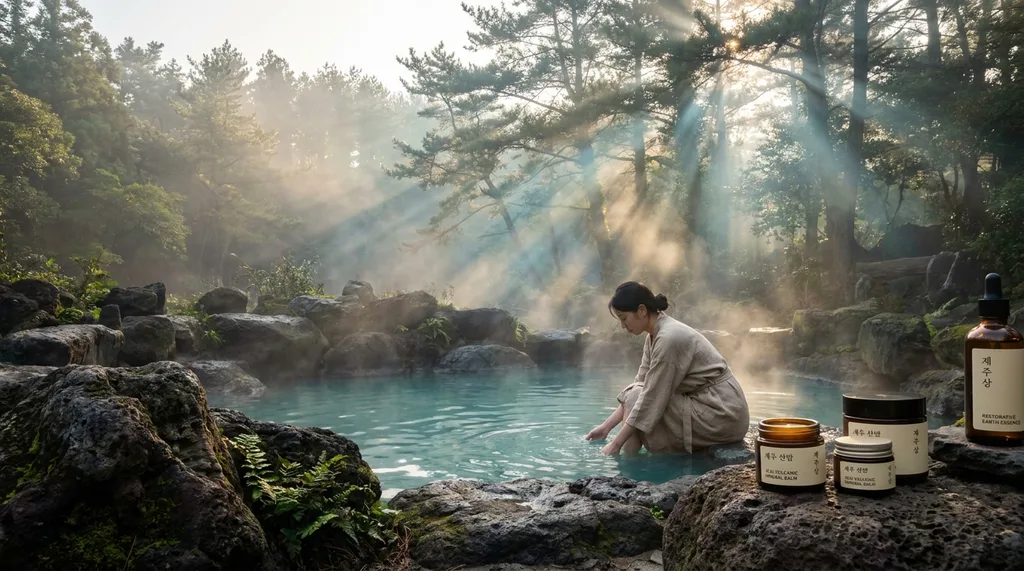
Walk into any high-end clinic in Gangnam, and you will see the future of dermatology. Drive three hours south to the base of Jeju’s Sanbangsan Mountain, and you will encounter something older, and perhaps more potent.
The Tansan Oncheon (Carbonate Hot Spring) experience isn't merely a soak; it is a physiological reset. When you submerge yourself in water enriched with natural carbonic acid, you aren't just relaxing. The water stimulates the skin's surface, triggering vasodilation—the widening of blood vessels. Clinical research shows that immersion in carbonate-enriched water at 42°C increases vessel density within the skin’s granulation tissue. This surge in blood flow creates a superhighway for nutrients, allowing the dermis to repair itself with an efficiency that home-care products struggle to match.
However, there is a fine line between restoration and "thermal aging." Dermatologists in Seoul are quick to warn that the casual, excessive use of high-heat saunas can compromise the skin barrier by triggering chronic transepidermal water loss. The secret to the "Korean glow" is the post-soak ritual: the immediate application of ceramide-rich mists and light, botanical-based ampoules to lock in the newly oxygenated, hydrated state.
The Ancient Logic of Internal Heat
If the hot spring is the catalyst for circulation, Jwahun (mugwort steam therapy) is the maintenance crew for the body's interior.
[K-Beauty 101] Sajabal Ssuk (Lion’s Paw Mugwort) — A premium variety of mugwort native to Ganghwa Island. It is prized for its high concentration of medicinal properties compared to generic mugwort, serving as the gold standard in traditional thermal wellness therapies.
In these quiet, scent-heavy rooms, the goal is to target "internal coldness." Traditional wisdom, which remains a pillar of Korean health, posits that a cold core leads to stagnant circulation and, inevitably, a lackluster complexion. By using the smoldering smoke of Sajabal Ssuk to warm the midsection, practitioners aim to reset the body's metabolic balance. It is a slow, deliberate practice—the antithesis of the "quick fix" beauty culture found elsewhere.
🎵 K-Mono Lofi — Seoul Study Beats
Read deeper with Seoul lo-fi in the background — curated by K-Mono Lofi
Navigating the Sanctuaries
For the traveler looking to go beyond the tourist facade, finding these spots requires a shift in mindset. You are not looking for a "spa menu" with massage add-ons; you are looking for mul joeun got—places known for having "good water."
Whether you are seeking the mineral-rich springs of Jeju or the traditional steam houses of the mainland, the best experiences are often those found through the "Naedon-naesan" (self-funded) review culture on local portals. These reviews are the lifeblood of the Korean beauty ecosystem, favoring genuine, messy, human experiences over polished corporate marketing.
Frequently Asked Questions
Are hot springs safe for sensitive or acne-prone skin? While mineral-rich water is often soothing, those with active eczema or broken skin barriers should exercise caution. High-temperature water can exacerbate inflammation if your barrier is already compromised; always rinse with cool, pH-balanced water immediately after your soak.
How often should I incorporate these 'healing' therapies? Local experts suggest that the "internal warming" benefits of mugwort therapy or hot spring soaks are best utilized as periodic "resets"—once a week or bi-weekly—rather than daily. Overexposure to heat can trigger collagen-degrading enzymes, potentially accelerating the signs of aging if not balanced with proper hydration.
Is there a specific routine to follow after a sauna or spring visit? Yes. Your goal is to replenish what was lost to the heat. Within five minutes of exiting the water, apply a ceramide-based toner or a birch-juice ampoule to your damp skin. This "damp-sealing" technique ensures that the skin's moisture barrier remains intact while your blood vessels are still dilated and receptive to nutrients.
⚠️ Disclaimer: This article is for educational purposes and does not constitute medical advice. Natural hot springs and traditional therapies are not substitutes for professional dermatological care. If you have specific skin conditions, cardiovascular issues, or are pregnant, consult your physician before engaging in high-heat thermal therapies. Always conduct a patch test before applying new skincare products, and consult a board-certified dermatologist for concerns regarding your skin barrier.
⚠️ Disclaimer: This article is for informational and educational purposes only and does not constitute medical, dermatological, or financial advice. Individual results vary — consult a board-certified dermatologist or physician before starting any new skincare routine, supplement, or procedure, especially if pregnant, nursing, or taking other medications. This article may contain affiliate links — if you buy through them, we may earn a small commission at no extra cost to you.
✓ Researched and compiled using verified data as of the publication date.
 Written by Jun Mi Jung for Quiet Korea | Contact: rsl.2001.1975@gmail.com